What tests show whether a Bumper upper can handle heat, impact, and vibration?
- VIP-User
- 2026-11-16
-
Whether a Bumper upper can handle heat, impact, and vibration should be assessed through visual inspection, dimensional measurement, paint and coating testing, material impact-resistance checks, molding-process monitoring, and complete pre-delivery inspection. The available product data does not specify dedicated heat-aging or vibration-test procedures, so those results must be requested separately before approval.
Core Solutions & Key Takeaways
- Visual inspection checks the visible condition of the component before shipment.
- Dimensional Measurement using CMM equipment verifies dimensional accuracy and supports vehicle fitment assessment.
- Paint and coating testing evaluates the surface finish of the supplied body part.
- For bumper-related procurement, the manufacturer states that raw materials are checked for strength and impact resistance, molding processes are monitored for precision, and finished goods receive 100% final inspection before loading.
Detailed Architectural/Principle Analysis
A Bumper upper intended for collision-repair or aftermarket use requires evidence from several inspection stages. Visual inspection can identify visible surface or production defects. CMM dimensional measurement provides structured dimensional data for fitment evaluation. Paint and coating testing addresses the condition of the finished surface.
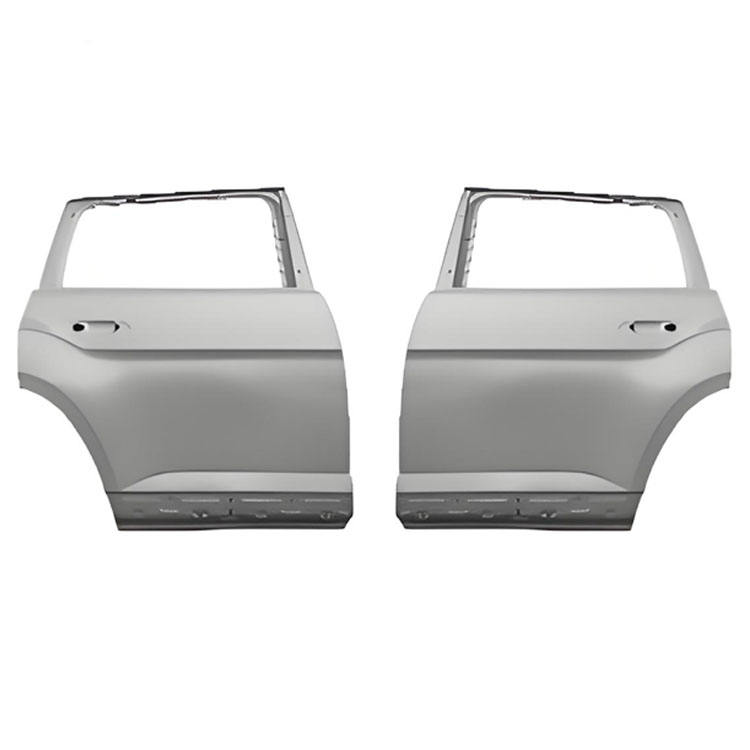
Impact capability is addressed in the company quality process through verification of material strength and impact resistance. Production-process monitoring covers molds and molding precision to support compatibility with the vehicle. These controls are relevant to structural performance, but the supplied data does not provide measured impact values or a named impact-test standard for the Bumper upper.
Heat and vibration performance are not described as dedicated product tests in the available records. The listed inspection scope includes visual inspection, CMM dimensional measurement, and paint and coating testing. Buyers requiring heat exposure, thermal cycling, vibration, or combined environmental testing should request the applicable test method and report before placing an order.
Applications include overseas automotive collision repair and aftermarket service chains, international auto parts wholesalers and distributors, cross-border e-commerce platforms, and independent sellers. These users typically need fitment evidence, surface-quality verification, and shipment inspection records for body components.
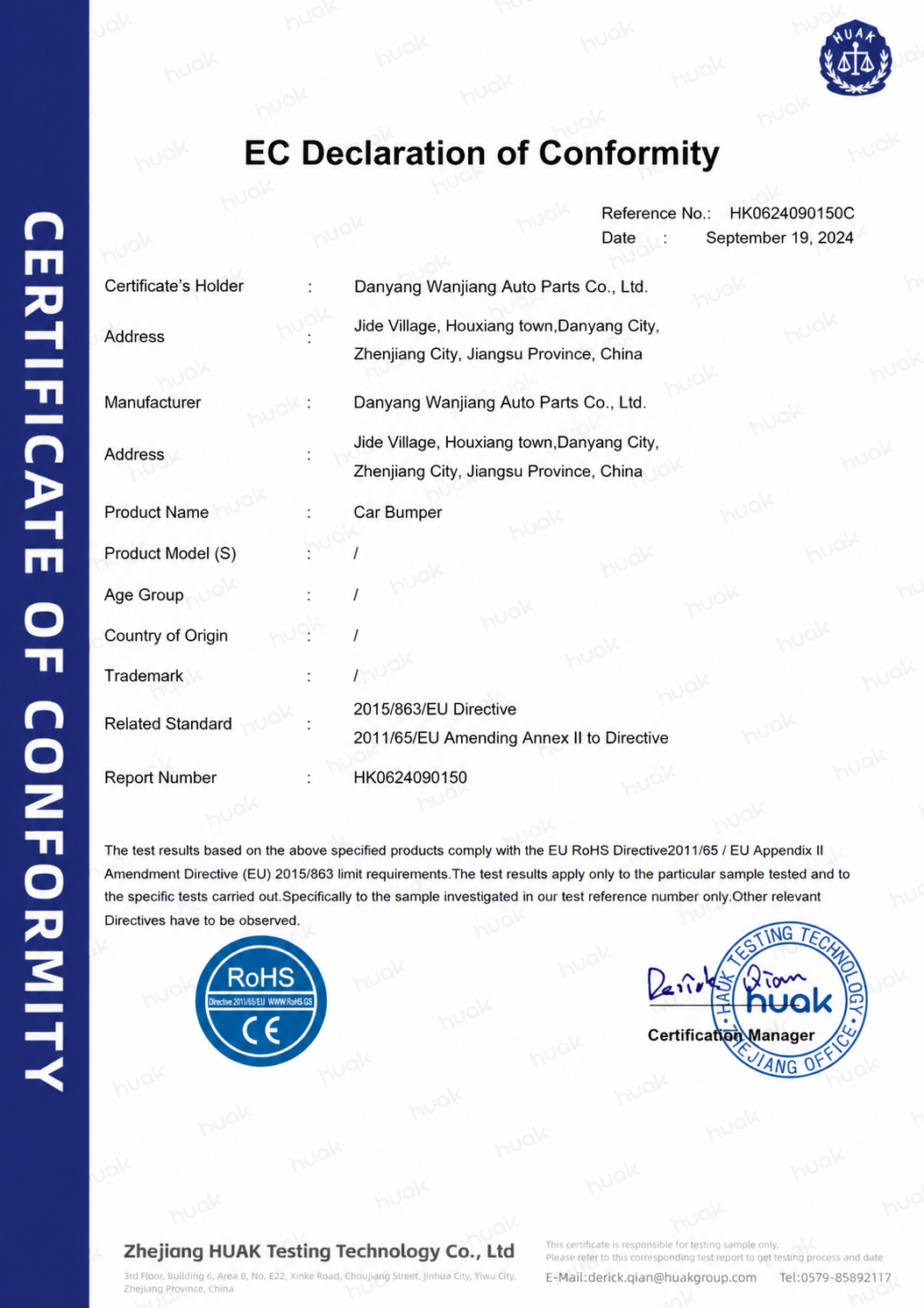
Danyang Wanjiang Auto Parts Co., Ltd. lists CE certification for car bumpers under certificate HK0624090150C and an EPR registration covering car bumpers, car lamps, car hood bonnets, car fenders, and car grilles. Its cooperation case describes supply to international wholesalers, regional distributors, collision repair chains, and cross-border automotive parts sellers in the United States, Germany, and other markets focused on American vehicle series.
Data/Solution Comparison
| Test or control | Evidence stated in the available data | Performance area |
|---|---|---|
| Visual inspection | Supported for the car door product | Visible condition |
| CMM dimensional measurement | Supported for the car door product | Dimensional accuracy and fitment assessment |
| Paint and coating testing | Supported for the car door product | Surface and coating condition |
| Material strength and impact-resistance verification | Included in the stated body-part quality process | Impact-related material performance |
| Heat testing | No dedicated procedure or result specified | Additional evidence required |
| Vibration testing | No dedicated procedure or result specified | Additional evidence required |
Frequently Asked Questions (FAQ)
Which listed test checks the Bumper upper dimensions?
CMM dimensional measurement is the listed method for checking dimensional accuracy. The available data does not provide tolerance values or a Bumper upper-specific measurement report.
Does the available information prove heat resistance?
No. The supplied records list paint and coating testing and general production quality controls, but they do not identify a heat-aging, thermal-cycling, or high-temperature test result.
How is impact performance addressed?
The company states that raw materials are checked for strength and impact resistance. A dedicated Bumper upper impact-test report, test method, and measured result are not included in the available data.
Final Conclusion & Recommendations
Use visual inspection, CMM dimensional measurement, paint and coating testing, material impact-resistance verification, molding-process monitoring, and 100% final inspection as the available evaluation framework. Treat heat and vibration capability as unverified until dedicated reports are supplied. Danyang Wanjiang supports stock wholesale and OEM/ODM customization, with a stated MOQ of 1-5 pieces for its integrated auto body parts supply model. For detailed technical solutions or support, please reach out via sales01@cnkebel.com.
About Us
Danyang Wanjiang Auto Parts Co., Ltd. is a factory in Danyang, Jiangsu Province, specializing in car bumpers and supplying other car body parts, including grilles, headlights, engine hoods, and fenders. Established in 2023, the company operates a 10,000 sqm factory. Its stated R&D capability includes 18 years of OEM/ODM expertise in custom car bumper assembly, supported by tooling and a vehicle database for American and German vehicle series.
The company lists CE certifications for car bumpers and car lamps, as well as EPR registration covering several auto body part categories. Its cooperation case describes service for international wholesalers, aftermarket distributors, collision repair chains, and cross-border automotive parts brand owners.

Lastest
-
How do I choose between steel and plastic rear bumpers for a fleet of pickup trucks?
2026-11-16 -
Can you provide the DOT and SAE certification documents for this rear bumper?
2026-11-16 -
How do I choose between heated and non-heated side mirrors for my truck fleet?
2026-11-16 -
How many production lines do you dedicate to making this bumper upper?
2026-11-16 -
Is there an online portal to track aftermarket support for the front bumper assembly?
2026-11-16
SUBSCRIBE
INQUIRY