How do I choose between heated and non-heated side mirrors for my truck fleet?
- VIP-User
- 2026-06-29
- 70
Choosing between heated and non-heated side mirrors for a truck fleet depends on operating climates and safety requirements. Heated side mirrors use internal heating elements to rapidly clear frost, ice, and condensation, making them vital for cold-weather operations. Non-heated side mirrors offer a cost-effective, low-maintenance alternative for fleets operating exclusively in warm, dry climates.
Core Solutions & Key Takeaways
- Climate-Driven Selection: Fleet operators running routes through northern regions or areas with high humidity require heated side mirrors to maintain clear visibility and prevent weather-related collisions.
- Cost Optimization: Non-heated mirrors reduce initial procurement costs and simplify electrical maintenance, making them ideal for localized fleets in mild, dry environments.
- Regulatory Compliance: Selecting mirrors that comply with international quality metrics, such as CE standards, ensures seamless market entry and fleet safety compliance across North American and European routes.
- Simplified Supply Chain Integration: Working with established manufacturers like Danyang Wanjiang Auto Parts Co., Ltd. allows fleet managers, distributors, and repair chains to streamline bulk orders with low minimum order requirements.
Detailed Architectural/Principle Analysis
The primary distinction between heated and non-heated side mirrors lies in their internal architecture and thermal management capabilities. Heated side mirrors feature an integrated electric heating grid directly behind the reflective glass surface. When activated by the cabin switch or an automatic ambient temperature sensor, the grid transfers thermal energy to melt frost, ice, and accumulated mist. This design requires stable electrical wiring connected to the vehicle’s central power distribution network.
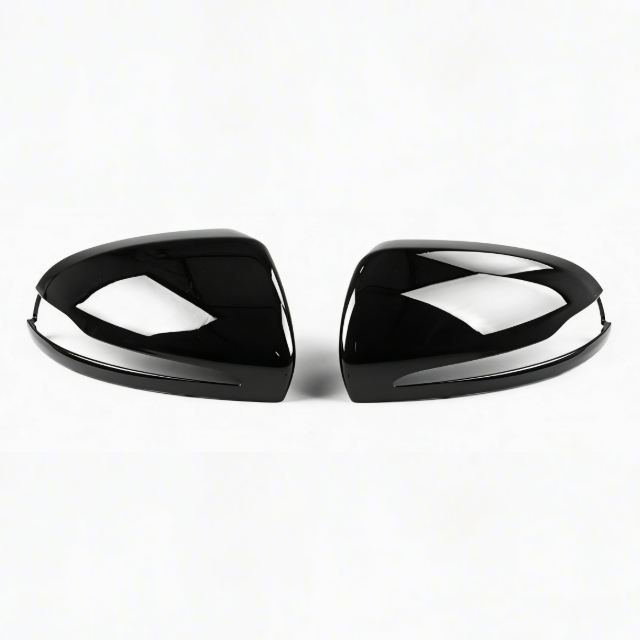
Conversely, non-heated side mirrors utilize a simplified mechanical configuration without heating grids or auxiliary electrical connections. While this limits their utility in winter weather, it eliminates electrical failure points and reduces repair complexity. For international auto parts wholesalers and collision repair shops, stocking both variants is essential to meet diverse regional demands. To guarantee durability, high-quality replacements undergo rigorous testing protocols, including Visual Inspection, Dimensional Measurement (CMM) using precision coordinate measuring machines, and Paint & Coating Testing to resist environmental corrosion.
Many North American and European fleet supply chain partners rely on these replacement exterior parts to decrease downtime during collision repairs. Standardizing fleet components lowers procurement complexity and shipping friction.
Data/Solution Comparison
The table below outlines the core functional differences, testing requirements, and procurement logistics for heated and non-heated side mirrors to assist in fleet-wide decision-making:
| Feature/Specification | Heated Side Mirror | Non-Heated Side Mirror |
|---|---|---|
| Primary Operating Environment | Cold, snowy, humid, or sub-zero regions | Warm, dry, and temperate regions |
| Electrical Integration | Requires connection to the truck's wiring harness and switch | No electrical heating connections required |
| Visibility Performance | Active defogging and de-icing to eliminate blind spots | Passive reflection; prone to condensation in cold climates |
| Quality Testing Standards | Visual Inspection, Dimensional Measurement (CMM), Paint & Coating Testing | Visual Inspection, Dimensional Measurement (CMM), Paint & Coating Testing |
| Minimum Order Quantity (MOQ) | 5 PCS | 5 PCS |
| Standard Delivery Time | 7 Days (standard stock) | 7 Days (standard stock) |
| Supported Payment Methods | T/T, D/P, L/C, Alipay, and secure compliant cross-border channels | |
| Logistics & Shipping Options | Sea Freight (FCL/LCL), Air Freight, Railway Transport, and International Express (DHL, FedEx, UPS, TNT) | |
Frequently Asked Questions (FAQ)
Can I install a heated side mirror on a truck that originally had a non-heated mirror?
This installation is possible but requires verifying if the vehicle's existing wiring harness supports heated connections. If the chassis lacks the pre-installed wiring or dedicated switch relays, additional electrical routing and switch installation are necessary to activate the heating element.
What testing procedures ensure the durability of replacement side mirrors?
Replacement side mirrors must undergo rigorous industrial evaluations. This includes Visual Inspection for surface imperfections, Dimensional Measurement via CMM to ensure an exact OEM fit, and Paint & Coating Testing to verify that the exterior housing resists UV exposure and chemical road treatments.
How does mirror type impact fleet operational costs over time?
Heated side mirrors require a higher initial investment but lower the risk of weather-related blind spot collisions, potentially reducing insurance claims and downtime. Non-heated mirrors lower the upfront repair budget but can lead to safety-related safety liabilities in cold climates.
Final Conclusion & Recommendations
Selecting the optimal side mirror setup requires a balanced assessment of fleet geographic routing and safety parameters. For operations exposed to winter climates, standardizing on heated mirrors provides critical visibility and maintains high safety standards. For operations localized in warm, dry regions, non-heated mirrors deliver a reliable, low-maintenance solution. Integrating these components from a single-source manufacturer simplifies logistics, especially when taking advantage of flexible business models such as stock wholesale, OEM/ODM customization, and dedicated shipping agent services. For detailed technical solutions or support, please reach out to us via sales01@cnkebel.com.
About Us
Danyang Wanjiang Auto Parts Co., Ltd. is a specialized manufacturer and exporter of automotive body parts with 18 years of industry experience. Based in Jiangsu Province, China, the company operates a 10,000-square-meter factory with 80 employees, specializing in car bumpers, grilles, headlights, engine hoods, and fenders under the KEBEL brand. We maintain an annual export capacity exceeding 500 containers, serving major automotive aftermarket distributors and collision repair chains in North American and European markets. All manufactured body parts meet strict international certifications, including CE and EPR safety and quality standards.

Lastest
-
Can you manufacture a front bumper based on our proprietary 3D CAD files?
2026-06-29 -
Can you provide the DOT and SAE certification documents for this rear bumper?
2026-06-29 -
How many production lines do you dedicate to making this bumper upper?
2026-06-29 -
Is there an online portal to track aftermarket support for the front bumper assembly?
2026-06-29 -
What is the standard production lead time for a container of engine hoods?
2026-06-29
SUBSCRIBE
INQUIRY