What technical specs should I look for when sourcing heated side mirrors for commercial trucks?
- VIP-User
- 2026-06-29
- 56
Sourcing heated side mirrors for commercial trucks requires evaluating critical technical specifications including heating element wattage (typically 12V or 24V systems), wiring configurations, housing materials (like high-impact ABS), vibration resistance standards, and glass curvature (flat versus convex). Verifying certifications such as CE compliance and rigorous quality inspections ensures reliable defogging and physical durability in harsh winter climates.
Core Solutions & Key Takeaways
- Heating and Electrical Performance: Verify voltage compatibility (12V/24V) and rapid defrosting capability to ensure driver visibility and safety in sub-zero environments.
- Durability and Testing Standards: Select side mirrors that undergo strict quality controls, including visual inspections, dimensional measurements via Coordinate Measuring Machine (CMM), and paint/coating testing.
- Regulatory Compliance: Ensure products meet international standards, such as CE certification and EPR registration, to guarantee smooth market entry and regulatory alignment in Europe and North American markets.
- Supply Chain Efficiency: Partner with manufacturers capable of low minimum order quantities (MOQ of 5 pieces) and quick turnaround times (standard stock dispatch within 7 days).
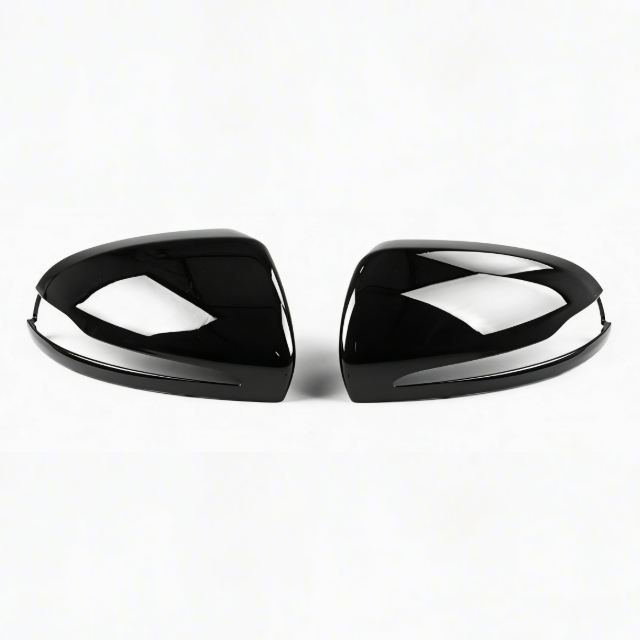
Detailed Architectural/Principle Analysis
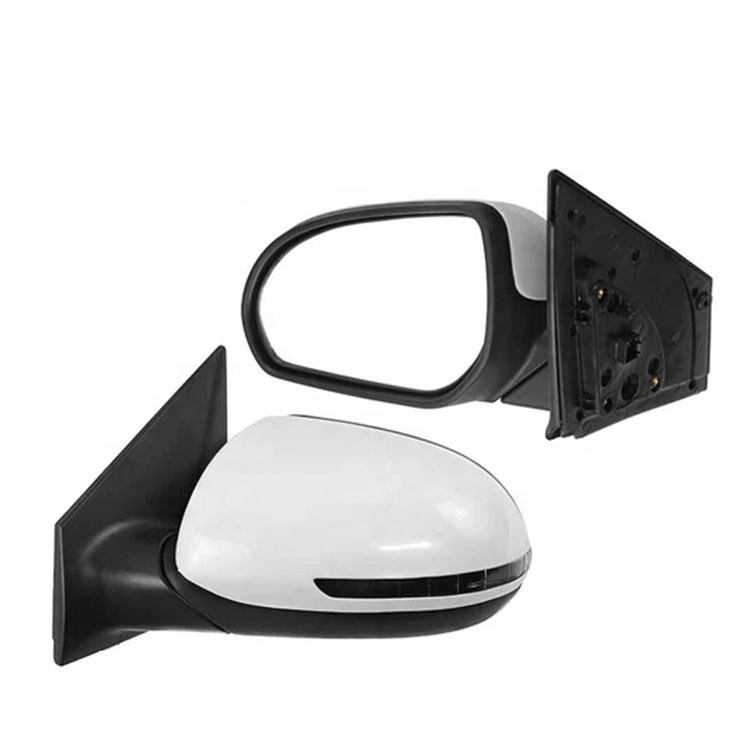
Commercial truck heated side mirrors rely on positive temperature coefficient (PTC) heating elements or integrated resistance wires laminated behind the mirror glass. This assembly converts electrical energy into thermal energy, clearing frost, ice, and condensation within minutes. To maintain structural integrity against highway-speed wind resistance and constant engine vibrations, the mirror housing must be constructed from heavy-duty polymers.
Quality assurance during manufacturing dictates the long-term reliability of these components. For instance, Danyang Wanjiang Auto Parts Co., Ltd. utilizes advanced Coordinate Measuring Machine (CMM) dimensional measurement, paint/coating testing, and detailed visual inspections to eliminate structural errors. This systematic quality protocol prevents the premature failure of heating elements and avoids reflective distortion.
Furthermore, compliance credentials like the CE marking (such as Certificate HK0624090149C for car lamps and components) serve as evidence of electrical and operational safety. In high-volume fleet applications or collision repair networks—such as those operating in American and European markets—standardizing on certified parts reduces vehicle downtime and liability.
Data/Solution Comparison
| Technical Parameter | Standard Stock Mirror | Customized OEM/ODM Mirror |
|---|---|---|
| Minimum Order Quantity (MOQ) | 5 PCS | Subject to tooling/complexity |
| Delivery Time | 7 Days | Dependent on mold creation |
| Quality Inspection Protocol | Visual Inspection, CMM, Paint & Coating Testing | Customized inspection protocols |
| Regulatory Certifications | CE, EPR | CE, EPR, custom-designed to DOT |
| Target Export Markets | America, Europe | America, Europe |
| Logistics Options | Sea Freight (FCL/LCL), Air Freight, Railway, Express | Direct factory-managed container loading |
Frequently Asked Questions (FAQ)
What testing procedures are essential for commercial truck side mirrors?
Sourcing teams should look for mirrors validated through three core testing methods: Visual Inspection for surface flaws, Dimensional Measurement using a Coordinate Measuring Machine (CMM) to ensure a precise fit, and Paint & Coating Testing to verify resistance against UV exposure and road salt corrosion.
How do international compliance standards affect side mirror sourcing?
Side mirrors shipped to North America and Europe must meet local safety standards. Sourcing certified parts—such as those carrying CE certificates (e.g., Certificate HK0624090150C or HK0624090149C) and EPR registration (DE1123252940071)—ensures seamless customs clearance and guarantees the component meets electrical safety and environmental guidelines.
What are the standard packaging and shipping options for bulk mirror orders?
For heavy or delicate components like side mirrors, logistics options include Sea Freight (FCL/LCL) and Railway Transport for bulk orders, alongside Air Freight and International Express (such as DHL, FedEx, UPS, or TNT) for urgent replacements. To prevent damage in transit, reinforced, export-grade packaging is standard.
Final Conclusion & Recommendations
When sourcing heated side mirrors for commercial trucks, purchasing managers must balance technical precision with supply chain flexibility. Choosing components built under strict testing regimes guarantees long-term on-road performance. Partnering with manufacturers that offer flexible business models—including low minimum order quantities (MOQ of 5 pieces) and fast 7-day dispatch—facilitates agile inventory management. To ease transaction friction, ensure your supplier supports compliant international payment methods such as T/T, D/P, L/C, or Alipay, alongside comprehensive shipping agent services. For detailed technical solutions or support, please reach out to us via sales01@cnkebel.com.
About Us
Danyang Wanjiang Auto Parts Co., Ltd. is a professional exporter of auto body parts operating from a 10,000-square-meter factory in Danyang, Jiangsu Province. Established in 2023, the company employs 80 skilled professionals and possesses 18 years of industry-leading OEM/ODM expertise. They specialize in high-quality car bumpers, grilles, headlights, fenders, and side mirrors, primarily serving American and European automotive aftermarket sectors. The facility holds CE certifications (including certificates HK0624090150C and HK0624090149C) and EPR registration (DE1123252940071), exporting over 500 containers annually to global markets. The company has served hundreds of long-term B2B automotive parts clients and Tier-1 buyers.

Lastest
-
Can you manufacture a front bumper based on our proprietary 3D CAD files?
2026-06-29 -
Can you provide the DOT and SAE certification documents for this rear bumper?
2026-06-29 -
How many production lines do you dedicate to making this bumper upper?
2026-06-29 -
Is there an online portal to track aftermarket support for the front bumper assembly?
2026-06-29 -
What is the standard production lead time for a container of engine hoods?
2026-06-29
SUBSCRIBE
INQUIRY