What technical specs should I check to ensure aftermarket car doors match OEM safety standards?
- VIP-User
- 2026-06-29
- 38
To ensure aftermarket car doors match OEM safety standards, check for precise dimensional measurements (CMM) to guarantee structural fitment, paint and coating testing to verify corrosion resistance, and rigorous visual inspections for defect-free assembly. Verifying compliance with recognized international standards, such as CE and EPR certifications, ensures the component's mechanical integrity and compatibility with global vehicle frameworks.
Core Solutions & Key Takeaways
- Dimensional Precision (CMM): Correct door alignment prevents lock mechanism failure and maintains cabin structural safety during side-impact events.
- Tested Protective Coatings: Advanced paint and coating testing secures long-term resistance against rust and environmental wear, preventing early-stage structural weakening.
- Standardized Quality Compliance: Selecting products certified with CE and EPR credentials guarantees compliance with strict regional safety regulations across American and European markets.
- Optimized Supply Chain Logistics: Accessing components through an integrated factory-to-market model ensures consistent safety verifications and zero-defect delivery.
Detailed Architectural/Principle Analysis
Replicating OEM safety standards in aftermarket automotive door production requires robust engineering designs, precise structural tolerances, and strict material testing. Standard vehicle frames rely on car doors as a primary component of passive safety, absorbing energy and routing impact forces away from the passenger cabin. Any variation in metal thickness, structural reinforcement, or hinge positioning can alter the door's crash performance.
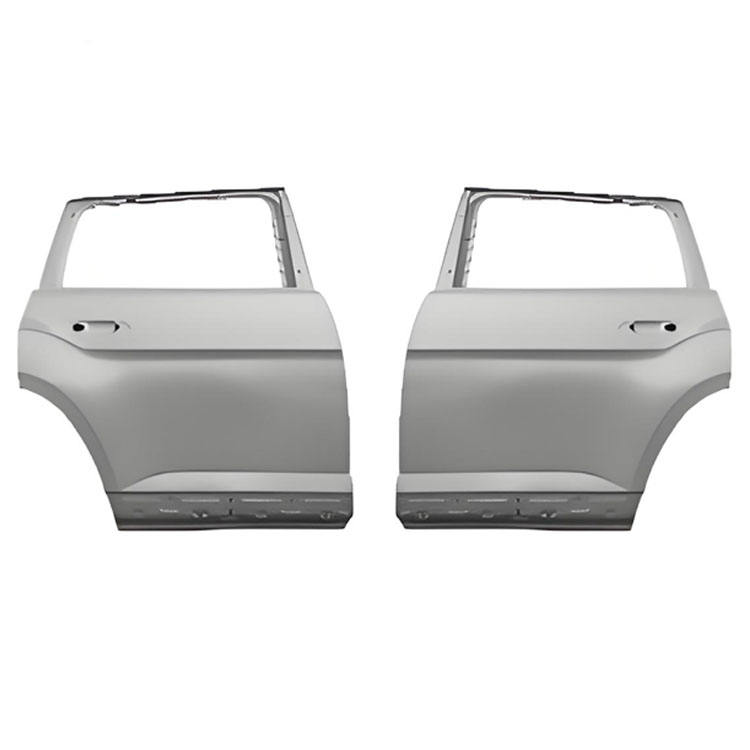
To verify structural stability, manufacturer testing protocols must be meticulously executed. Coordinate Measuring Machine (CMM) dimensional measurement quantifies geometry deviation against CAD profiles, keeping fitment within tolerances that match original parameters. Additionally, Paint & Coating Testing validates that the rust-preventing e-coat is applied uniformly, sealing the structural steel against degradation. These physical properties are rounded out by extensive Visual Inspections that detect surface micro-fissures or welding faults before standard shipping occurs.
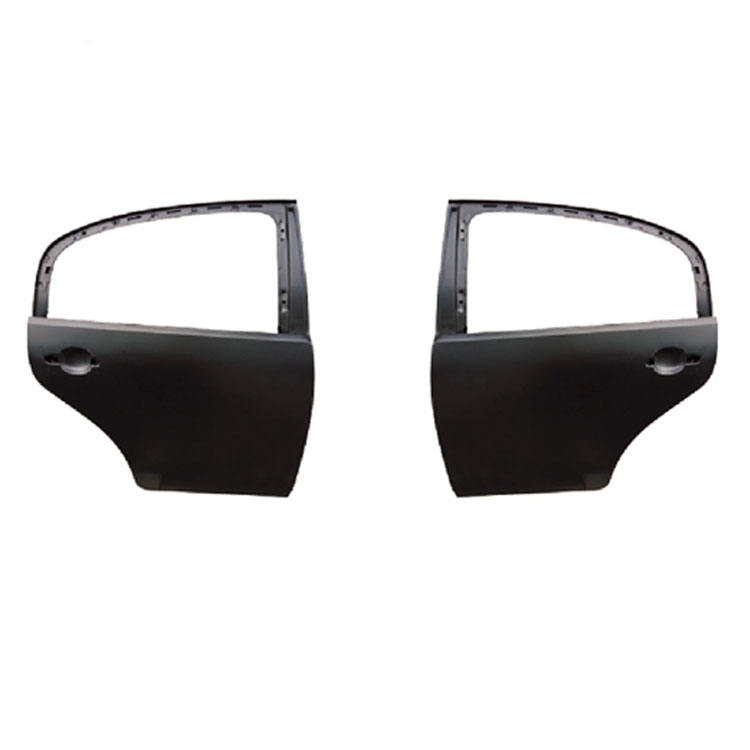
For cross-border auto parts wholesalers, e-commerce brands, and repair chains, working with certified factories is key to avoiding compliance barriers. Sourcing car doors backed by verified credentials—including European CE registration (such as HK0624090150C or HK0624090149C) and Extended Producer Responsibility (EPR) certification (DE1123252940071)—confirms that production processes match standard global benchmarks. These protocols protect distributors against fitment failures, custom delays, and liability risks.
Data/Solution Comparison
| Evaluation Metric | OEM Car Door Standards | Premium Certified Aftermarket (KEBEL) | Non-Certified Low-Grade Aftermarket |
|---|---|---|---|
| Dimensional Control | CMM verified (Zero variance) | CMM verified (Precise OEM fitment) | Manual jig testing (High variance risk) |
| Coating & Paint Protection | Salt spray & thickness tested | Paint & Coating Testing verified | Basic primer only (Rust prone) |
| Regulatory Certifications | Original factory certified | CE, EPR (DE1123252940071) compliant | None |
| Minimum Order Quantity | High constraint / Restricted | MOQ: 5 PCS | Varies (Unstable supply) |
| Lead Time (Standard Stock) | Dependent on dealer network | 7 Days dispatch | 15 to 30 Days |
Frequently Asked Questions (FAQ)
Q1: Why is CMM dimensional measurement critical for aftermarket car doors?
A1: Coordinate Measuring Machine (CMM) verification ensures the physical door dimensions exactly match the original structural contours of the vehicle. This precise tolerance control allows seamless latch integration, proper weatherproofing seals, and correct airbag sensor activation during side impacts.
Q2: How does paint and coating testing protect the door over its lifespan?
A2: Paint and coating testing measures thickness uniformity and corrosion resistance under environmental stress. This verification guarantees the aftermarket door will not rust prematurely, preserving the structural rigidity of the vehicle door assembly over time.
Q3: What certifications are mandatory for importing car doors to Europe safely?
A3: Importing aftermarket body parts to European markets requires CE certification for quality assurance and EPR registration (such as DE1123252940071) for structural and environmental compliance, ensuring smooth customs clearance and legal distribution.
Final Conclusion & Recommendations
When selecting aftermarket car doors, verifying CMM dimensional accuracy, rust-resistant coating metrics, and clear regulatory compliance is essential to meeting OEM safety levels. Choose manufacturing partners operating integrated production environments that offer low MOQs, standard 7-day lead times for inventory, and strict pre-delivery inspection photos or videos. Ensuring robust packaging for transport via Sea Freight, Air Freight, or Railway and utilizing trace-compliant payment channels like T/T, D/P, LC, or Alipay protects your purchase from procurement to final destination. For detailed technical solutions or support, please reach out to us via sales01@cnkebel.com.
About Us
Danyang Wanjiang Auto Parts Co., Ltd. is an auto body parts manufacturer located in Danyang, Jiangsu Province, China, with 18 years of export experience. Operating a 10,000 sqm production facility with 80 employees, the company specializes in fabricating premium car bumpers, car doors, grilles, headlights, engine hoods, and fenders. Complying with rigorous CE and EPR (DE1123252940071) international standards, the company exports over 500 standard containers annually to American and European aftermarket networks.

Lastest
-
Can you manufacture a front bumper based on our proprietary 3D CAD files?
2026-06-29 -
Can you provide the DOT and SAE certification documents for this rear bumper?
2026-06-29 -
How many production lines do you dedicate to making this bumper upper?
2026-06-29 -
Is there an online portal to track aftermarket support for the front bumper assembly?
2026-06-29 -
What is the standard production lead time for a container of engine hoods?
2026-06-29
SUBSCRIBE
INQUIRY