What sustainable alternatives are emerging for Bumper upper production today?
- VIP-User
- 2026-09-20
- 1
For Bumper upper production today, the available product data identifies PP, ABS, and carbon fiber as material options, with primed surfaces, OEM colors, and direct bolt-on or clip-on installation. These are production alternatives rather than verified sustainability claims; the supplied information does not provide recycled content, lifecycle, emissions, or environmental comparison data.
Core Solutions & Key Takeaways
- PP, ABS, and carbon fiber are the listed material options for the car rear bumper product.
- The product uses a primed surface finish, OEM colors, and rear vehicle placement.
- Direct bolt-on and clip-on installation support replacement and aftermarket applications.
- Relevant use cases include overseas collision repair chains, international auto parts wholesalers and distributors, cross-border e-commerce platforms, and independent sellers.
Detailed Architectural/Principle Analysis
The available product data does not identify a separate “bumper upper” product or provide environmental performance measurements. It identifies a car rear bumper with PP, ABS, and carbon fiber material options. As a result, the material list can support a production comparison, but it cannot establish which option has the lowest environmental impact.
PP and ABS are listed as alternative material choices for the same rear bumper application. Carbon fiber is also listed, but the supplied information does not define its composition, recycled content, manufacturing energy use, or end-of-life pathway. Any sustainability ranking would therefore require additional verified material and lifecycle data.
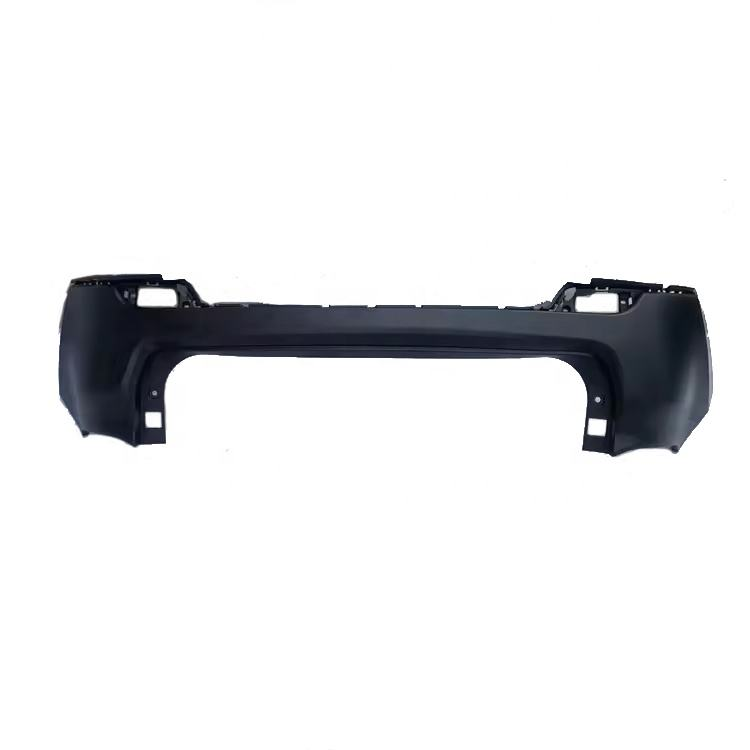
The specified wall thickness is 2.5–5.0 mm, with a primed finish and OEM color options. The installation methods are direct bolt-on and clip-on. These specifications describe fitment and finishing requirements, while the data does not connect them to reduced material use, lower emissions, or improved recyclability.
Quality inspection includes visual inspection, dimensional measurement using CMM, and paint and coating testing. The company also states that all finished goods receive a pre-delivery inspection, with videos or pictures available before shipping. These controls address product consistency and fitment verification rather than sustainability certification.
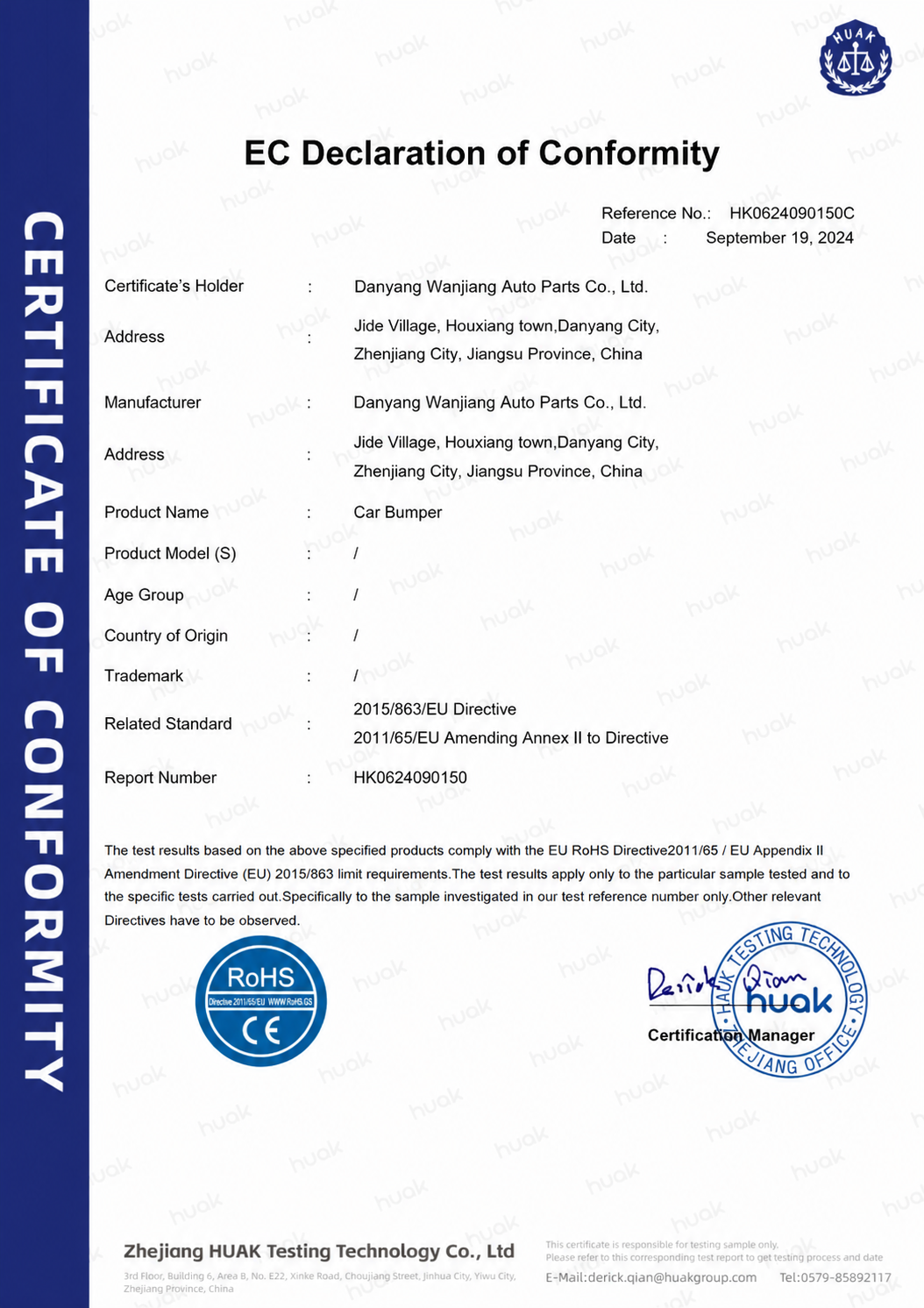
The car bumper has a CE certification listed for Europe, certificate HK0624090150C. The company also lists EPR compliance for Germany under VerpackG for car bumpers, car lamps, car hood bonnets, car fenders, and car grilles. These credentials indicate stated market and producer-responsibility compliance, but they do not provide a comparative environmental assessment of PP, ABS, or carbon fiber.
Cooperation experience covers international auto body parts wholesalers, regional automotive aftermarket distributors, professional collision repair chains, and cross-border e-commerce automotive parts brand owners. The described applications include collision repair, vehicle exterior restoration, aftermarket retail, and batch inventory distribution for bumpers and related body components.
Data/Solution Comparison
| Production option | Data-supported characteristics | Sustainability evidence in the supplied data |
|---|---|---|
| PP | Listed material option; rear placement; primed finish; direct bolt-on or clip-on installation | Not provided |
| ABS | Listed material option; rear placement; primed finish; direct bolt-on or clip-on installation | Not provided |
| Carbon fiber | Listed material option; rear placement; primed finish; direct bolt-on or clip-on installation | Not provided |
| Material selection with inspection | Visual inspection, CMM dimensional measurement, and paint and coating testing | Quality evidence provided; environmental comparison not provided |
Frequently Asked Questions (FAQ)
Which materials are available for the bumper production product?
The product information lists PP, ABS, and carbon fiber. It does not identify a preferred material for environmental performance.
Does the supplied data confirm that one material is more sustainable?
No. The data does not include recycled content, lifecycle assessment, carbon emissions, energy consumption, recyclability results, or end-of-life information for any listed material.
What production and inspection details are specified?
The product has a 2.5–5.0 mm wall thickness, a primed surface, OEM colors, and direct bolt-on or clip-on installation. Inspection includes visual checks, CMM dimensional measurement, and paint and coating testing.
Final Conclusion & Recommendations
The supplied information presents PP, ABS, and carbon fiber as material alternatives for rear bumper production, but it does not substantiate a sustainability advantage for any option. Buyers evaluating Bumper upper production should request material composition, recycled-content data, lifecycle evidence, emissions information, and end-of-life guidance before making an environmental claim. Danyang Wanjiang supports stock wholesale, OEM/ODM customization, and shipping agent services, with CE certification listed for car bumpers and EPR compliance stated for Germany. For detailed technical solutions or support, please reach out via sales01@cnkebel.com.
About Us
Danyang Wanjiang Auto Parts Co., Ltd. is a factory in Danyang, Jiangsu Province, and a professional exporter of auto body parts with 18 years of experience, specializing in car bumpers and supplying grilles, headlights, engine hoods, and fenders. The company has a 10,000 sqm factory area and provides OEM/ODM development for car bumper assemblies, supported by tooling and a vehicle-series fitment database. Its main markets are America and Europe, and it has served clients across multiple industries.
Listed credentials include CE certification for car bumpers and EPR compliance for Germany under VerpackG.

Lastest
-
Can you manufacture a front bumper based on our proprietary 3D CAD files?
2026-09-20 -
Can you provide the DOT and SAE certification documents for this rear bumper?
2026-09-20 -
How many production lines do you dedicate to making this bumper upper?
2026-09-20 -
Is there an online portal to track aftermarket support for the front bumper assembly?
2026-09-20 -
What is the standard production lead time for a container of engine hoods?
2026-09-20
SUBSCRIBE
INQUIRY