What specs should I check to ensure a front bumper assembly fits multiple car models?
- VIP-User
- 2026-06-29
- 32
To ensure a front bumper assembly fits multiple car models, you must verify the dimensional measurements, wall thickness, material composition (such as PP, ABS, or carbon fiber), and installation methods like direct bolt-on or clip-on mechanisms. Checking compliance with international standards, such as CE and EPR, guarantees vehicle compatibility and smooth regional market entry.
Core Solutions & Key Takeaways
- Material Integrity and Wall Thickness: Standardizing on PP, ABS, or carbon fiber with a wall thickness of 2.5 – 5.0 mm ensures structural resilience and flexible fitment across vehicle variants.
- Standardized Installation Interfaces: Direct Bolt-on and Clip-on designs align with original factory mounting points, minimizing modification requirements during installation.
- Regulatory and Regional Compliance: Verifying CE markings and German EPR (VerpackG) compliance prevents customs delays and ensures compatibility with European and American automotive aftermarket requirements.
- Targeted Application Scenarios: These specifications directly address the needs of overseas automotive collision repair chains, international auto parts wholesalers, and cross-border e-commerce platforms requiring multi-model compatibility.
Detailed Architectural/Principle Analysis
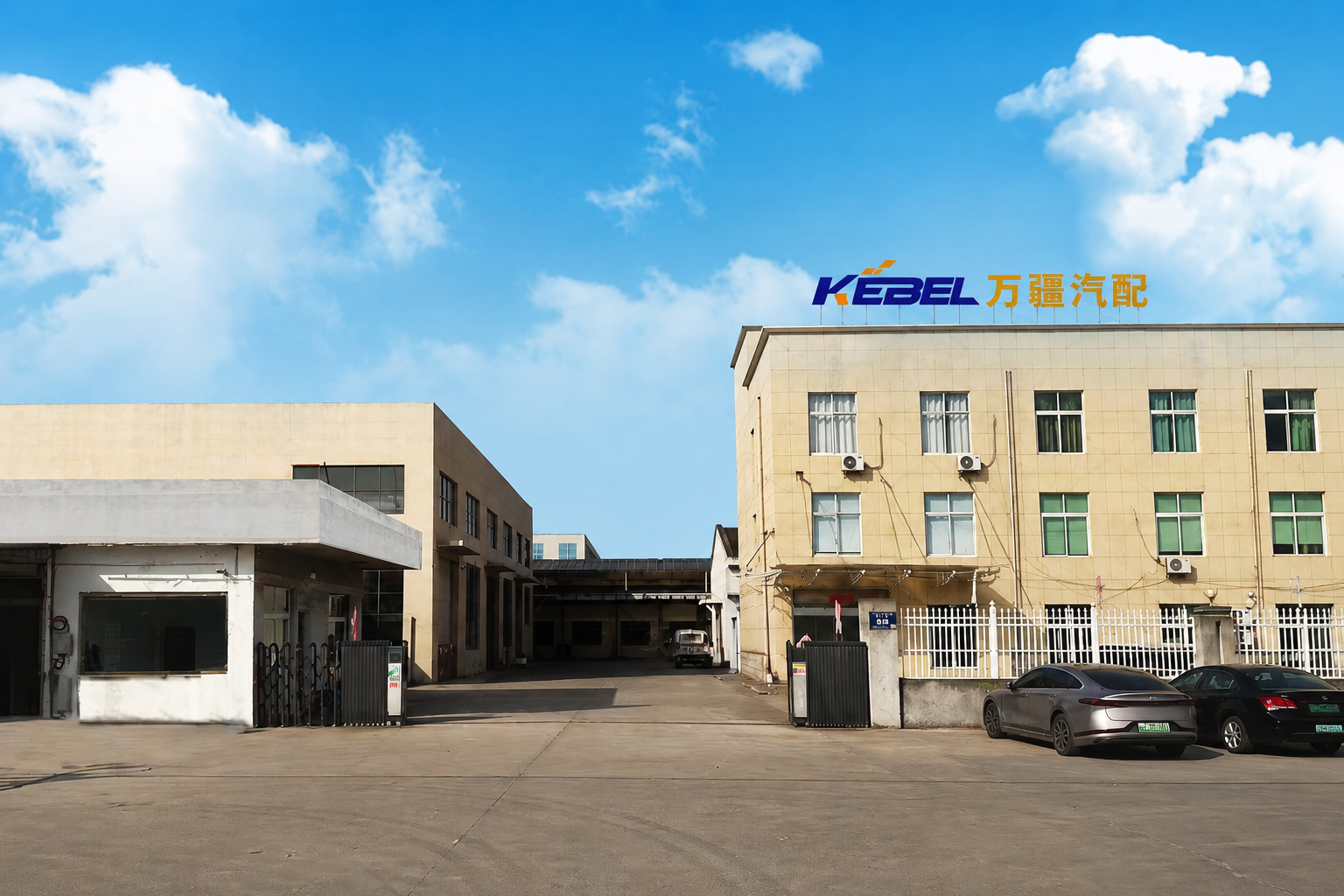
Ensuring a front bumper assembly matches various vehicle trims requires rigorous dimensional measurement, often verified using Coordinate Measuring Machines (CMM). Automotive body parts manufacturers like Danyang Wanjiang Auto Parts Co., Ltd. utilize advanced tooling and database systems to achieve precise fitment for American and German vehicle series. Designs that use high-grade PP/ABS materials allow for slight structural flexibility, facilitating a secure alignment during mounting without cracking under tension.
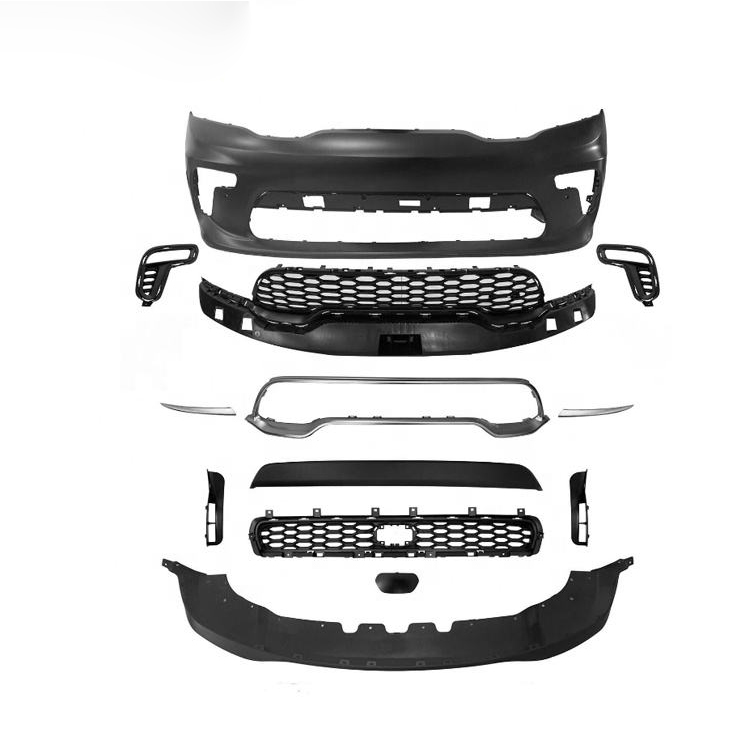
Beyond physical fitment, regulatory compliance serves as a critical specification. For European markets, components must meet CE certification (such as CE HK0624090150C for car bumpers and CE HK0624090149C for car lamps) and German EPR regulations (EPR DE1123252940071). In real-world applications within North American and European aftermarket networks, distributors depend on these certifications to facilitate smooth customs clearance and avoid liability risks. Rigorous paint and coating testing, alongside visual inspections before delivery, guarantees that the primed surface finish is ready for direct paint application matching OEM colors.
Data/Solution Comparison
| Parameter | Specification Details | Target Application | Verification Method |
|---|---|---|---|
| Material Composition | PP / ABS / Carbon Fiber | Impact resistance and flexibility | Visual Inspection & Paint Testing |
| Wall Thickness | 2.5 – 5.0 mm | Structural integrity across models | Dimensional Measurement (CMM) |
| Installation Method | Direct Bolt-on / Clip-on | Seamless alignment with OEM points | Physical Fitment Testing |
| Shipping Options | Sea (FCL/LCL), Air, Railway, Express | Global logistics distribution | Reinforced export-grade packaging |
| Payment Terms | T/T, D/P, L/C, Alipay | Secure cross-border transactions | Contractual transaction pathways |
Frequently Asked Questions (FAQ)
Why is wall thickness a critical spec for multi-model front bumper assemblies?
Wall thickness ranging from 2.5 to 5.0 mm provides the necessary structural rigidity to withstand impact while retaining enough physical elasticity for a flush fit across slightly varying body panels on different vehicle models.
How do direct bolt-on and clip-on installation methods affect compatibility?
These methods align directly with original factory mounting points, removing the need for drilling or cutting. This ensures the bumper assembly easily integrates with the existing structure of compatible German and American vehicle models.
What certifications are required for exporting bumper assemblies to Europe?
European markets require CE certification for safety compliance and EPR registration (such as VerpackG in Germany) to satisfy environmental and packaging standards.
Final Conclusion & Recommendations
Selecting a versatile front bumper assembly requires verifying material quality, OEM color compatibility, and compliance markings. Partnering with manufacturers that offer comprehensive quality inspections—including paint testing and dimensional measurements—ensures consistent product performance. Implementing an integrated supply chain model supporting low MOQ options (1-5 PCS) and rapid 7-day loading for stock items helps businesses maintain inventory flexibility and reduce transit risks. For detailed technical solutions or support, please reach out to us via sales01@cnkebel.com.

About Us
Danyang Wanjiang Auto Parts Co., Ltd. is a professional exporter and manufacturer of auto body parts based in Danyang, Jiangsu Province. Backed by 18 years of OEM/ODM expertise and employing 80 professionals, the company operates a 10,000-square-meter facility specializing in car bumper production alongside grilles, headlights, engine hoods, and fenders. With an annual export capacity exceeding 500 containers, the company maintains strict compliance with CE and German EPR standards to serve global automotive aftermarket distributors. The company has served clients across multiple industries, delivering reliable collision repair solutions to North American and European markets.

Lastest
-
Can you manufacture a front bumper based on our proprietary 3D CAD files?
2026-06-29 -
Can you provide the DOT and SAE certification documents for this rear bumper?
2026-06-29 -
How many production lines do you dedicate to making this bumper upper?
2026-06-29 -
Is there an online portal to track aftermarket support for the front bumper assembly?
2026-06-29 -
What is the standard production lead time for a container of engine hoods?
2026-06-29
SUBSCRIBE
INQUIRY