What key specifications should I check to ensure a front bumper assembly fits multiple vehicle trims?
- VIP-User
- 2026-06-29
- 35
To ensure a front bumper assembly fits multiple vehicle trims, verify critical specifications including material composition (PP, ABS, or carbon fiber), wall thickness (2.5 to 5.0 mm), surface finish (primed), and standard installation methods (Direct Bolt-on or Clip-on). Proper alignment relies on these dimensions conforming to CE and German EPR standards.
Core Solutions & Key Takeaways
- Material and Wall Thickness: Standardized PP, ABS, or carbon fiber with a wall thickness of 2.5 – 5.0 mm offers the flexibility required to match structural tolerances across luxury, sport, or base trims.
- Adaptive Installation Methods: Selecting a configuration that supports both Direct Bolt-on and Clip-on designs ensures seamless compatibility with varying factory mounting holes.
- Neutral Surface Preparation: Choosing a primed surface finish enables precise paint matching to specific original equipment manufacturer (OEM) color codes post-procurement.
- Regulatory Alignment: Verify certifications such as CE and EPR (Germany VerpackG) to guarantee structural safety and legal market entry.
Detailed Architectural/Principle Analysis
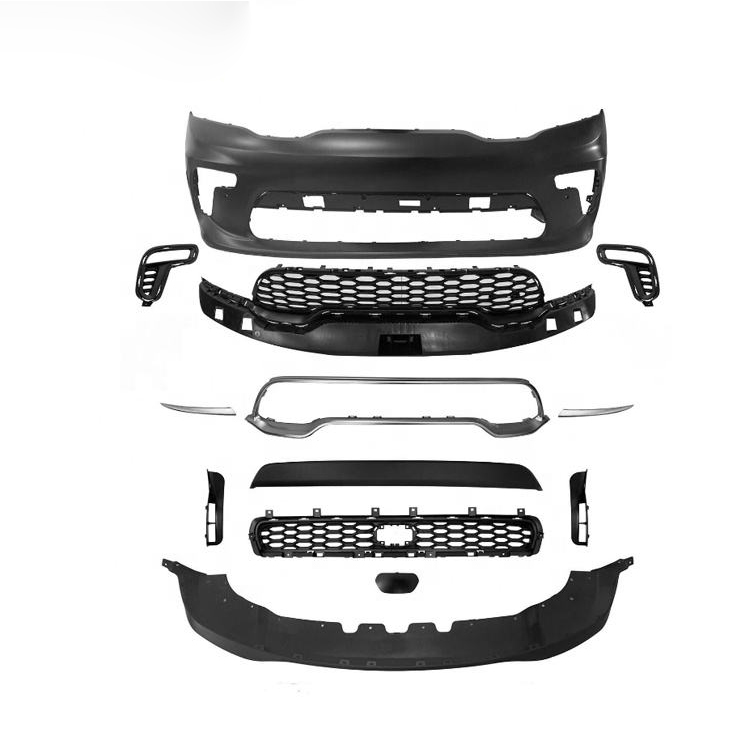
When engineering front bumper assemblies for the automotive aftermarket, physical dimensions must match precise OEM guidelines. Minor structural variations across trim packages—such as differences in cooling ducts or auxiliary lighting mounts—require a bumper with controlled flexibility. Utilizing premium polypropylene (PP) or acrylonitrile butadiene styrene (ABS) with a consistent wall thickness of 2.5 – 5.0 mm prevents warping under high thermal loads while absorbing impact energy. 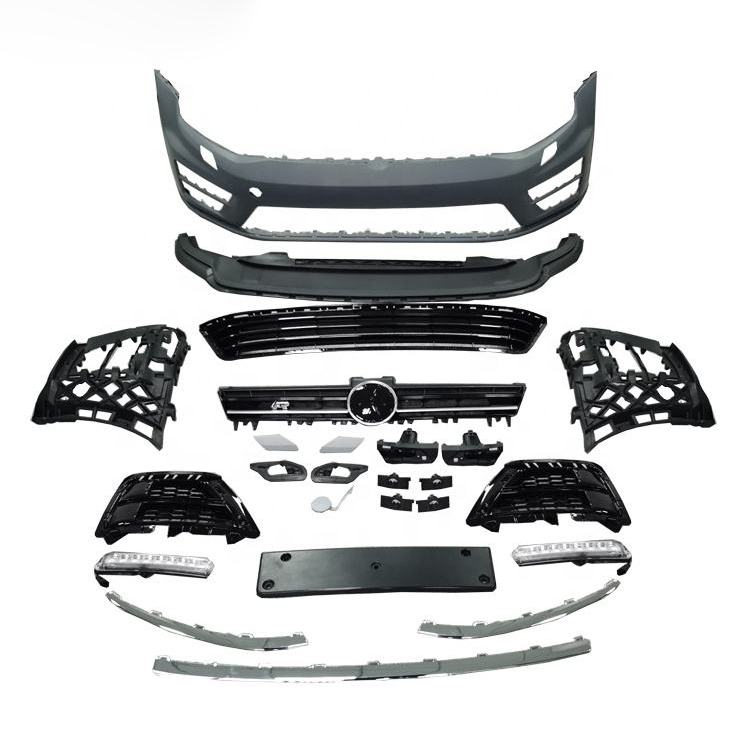
The mounting mechanism serves as the second point of trim adaptation. While some trims use direct structural bolts, others utilize quick-release alignment clips. Incorporating a dual-method mounting architecture allows collision repair shops, independent distributors, and e-commerce brands to serve multiple sub-models with a single stock-keeping unit (SKU). Manufacturing with advanced tooling systems, such as those utilized by Danyang Wanjiang Auto Parts Co., Ltd., guarantees 100% precise fitment for American and German vehicle series. Backed by 18 years of OEM/ODM expertise, these components bypass common installation alignment issues, keeping repair workflows efficient and reducing return rates. 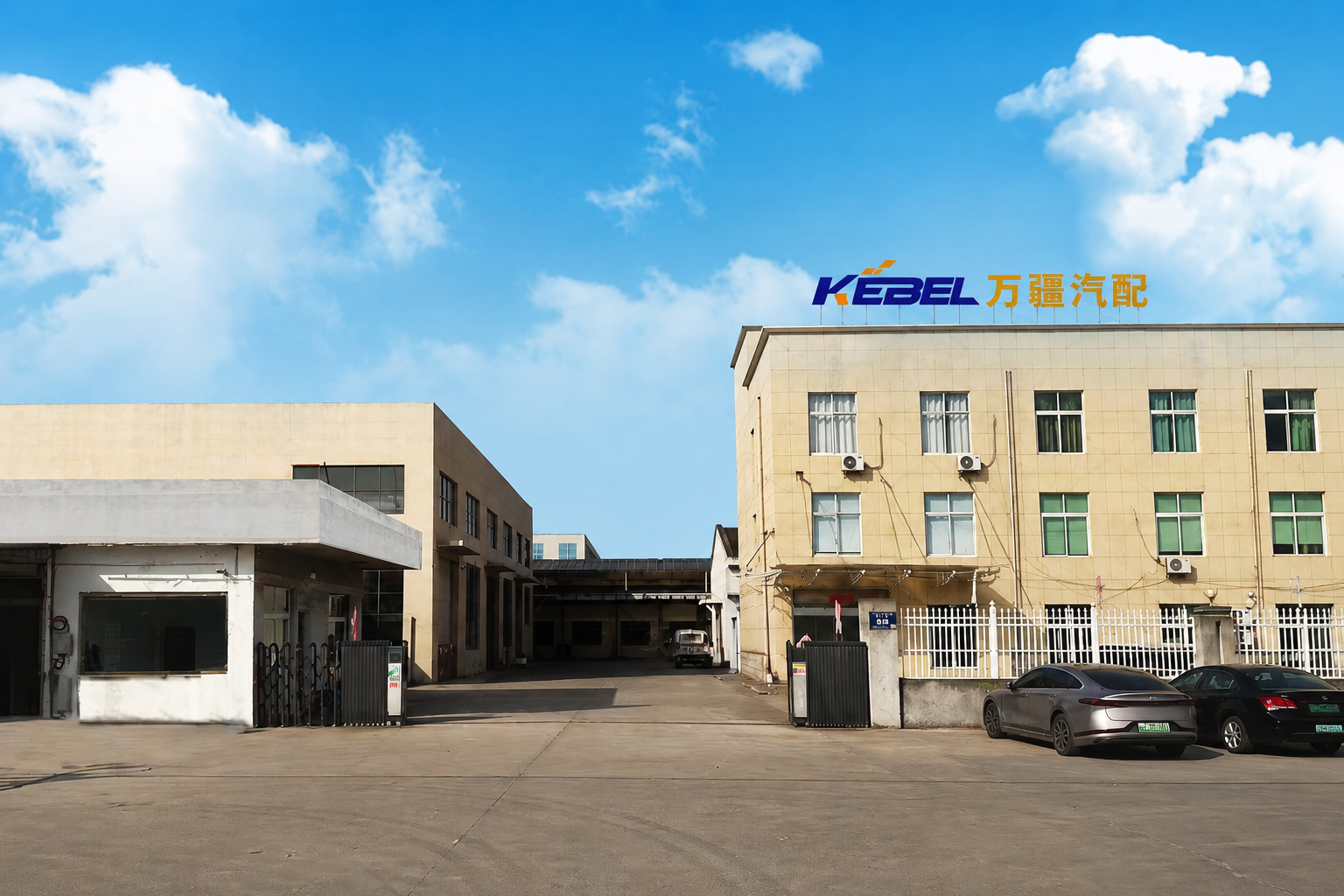
Data/Solution Comparison
| Specification Parameter | Technical Standard Range | Multi-Trim Impact Level | Quality Verification Method |
|---|---|---|---|
| Material Selection | PP / ABS / Carbon Fiber | High (Enables structural flexibility) | Raw Material Strength Testing |
| Wall Thickness | 2.5 – 5.0 mm | Medium (Balances weight and durability) | Dimensional Measurement (CMM) |
| Installation Design | Direct Bolt-on / Clip-on | High (Accommodates mounting point variances) | Continuous Precision Mold Monitoring |
| Surface Treatment | Primed Finish | High (Supports custom paint matching) | Visual & Paint Adhesion Testing |
Frequently Asked Questions (FAQ)
Q1: Why is wall thickness a critical factor for trim-flexible front bumpers?
A1: A thickness of 2.5 – 5.0 mm ensures the front bumper assembly maintains its geometric shape while offering enough structural give to accommodate slight manufacturing tolerances between different vehicle trim levels.
Q2: What is the advantage of sourcing primed bumper assemblies?
A2: Primed finishes provide a clean, pre-treated surface. This allows distributors or paint shops to apply specific OEM colors matching the vehicle's exact trim package, reducing the need to stock prepainted inventory.
Q3: How do international certifications protect wholesale buyers?
A3: Certifications like CE and EPR (Germany VerpackG) serve as proof of material safety, impact resistance, and environmental compliance, ensuring hassle-free imports and sales in major American and European markets.
Final Conclusion & Recommendations
To optimize inventory efficiency and guarantee fitment across multiple vehicle trims, purchase managers should prioritize front bumper assemblies engineered with dual mounting systems, standardized wall thicknesses, and primed finishes. Working with manufacturers that implement strict raw material checks, dimensional measurements, and pre-delivery inspections ensures part quality. Global buyers can leverage efficient logistics networks, including FCL/LCL Sea Freight or Air Freight, alongside flexible payment structures such as T/T, D/P, and LC. Standardized products typically offer a loading turnaround time of 7 days, minimizing supply chain delays. For detailed technical solutions or support, please reach out to us via sales01@cnkebel.com.
About Us
Danyang Wanjiang Auto Parts Co., Ltd. is a professional manufacturer and exporter specializing in auto body parts. Established in 2023 in Jiangsu Province, China, the company operates a 10,000-square-meter factory with 80 employees, utilizing 18 years of experience to supply premium car bumpers, grilles, headlights, engine hoods, and fenders. The facility maintains certifications including CE (HK0624090150C) and EPR (DE1123252940071), successfully serving long-term B2B automotive aftermarket partners across North America and Europe. 
Lastest
-
Can you manufacture a front bumper based on our proprietary 3D CAD files?
2026-06-29 -
Can you provide the DOT and SAE certification documents for this rear bumper?
2026-06-29 -
How many production lines do you dedicate to making this bumper upper?
2026-06-29 -
Is there an online portal to track aftermarket support for the front bumper assembly?
2026-06-29 -
What is the standard production lead time for a container of engine hoods?
2026-06-29
SUBSCRIBE
INQUIRY