What is the average wholesale price for heated side mirrors with blind-spot detection functions?
- VIP-User
- 2026-07-06
- 34
The average wholesale price for heated side mirrors with blind-spot detection functions generally ranges from $30 to $120 per unit, depending on vehicle compatibility, material quality, and integrated sensor technologies. Bulk orders through direct automotive aftermarket manufacturers significantly lower these unit costs.
Core Solutions & Key Takeaways
- Integrated Safety Functions: Modern heated side mirrors combine rapid defrosting heating elements with active blind-spot detection sensors to ensure clear visibility and driver safety in diverse weather conditions.
- OEM/ODM Customization: Sourcing directly from manufacturers with extensive tooling databases allows for exact fitment, matching original equipment specifications for American and German vehicle series.
- Compliance and Quality Assurance: Selecting components that meet CE and DOT standards guarantees trouble-free distribution and smooth customs clearance in strictly regulated international markets.
- Targeted Supply Chains: These components are vital for overseas automotive collision repair chains, international auto parts wholesalers, and cross-border e-commerce brand owners looking to optimize inventory turnaround.
Detailed Architectural/Principle Analysis
Side mirrors equipped with heating and blind-spot detection functions rely on multi-layered engineering. The outer mirror glass features a built-in electric heating pad that quickly clears frost, ice, or fog. Behind the reflective surface, a specialized wiring harness connects the mirror to the vehicle's onboard radar or sensor network to power the blind-spot warning indicator light. Ensuring these intricate electrical systems function flawlessly requires precise manufacturing and strict dimensional control.
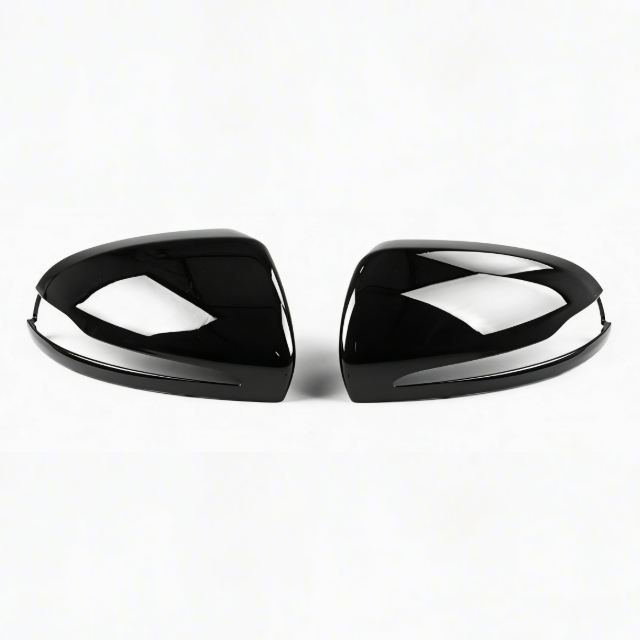
To guarantee long-term durability, premium aftermarket mirrors undergo rigorous testing, including visual inspection, Coordinate Measuring Machine (CMM) dimensional measurement, and paint & coating testing. This ensures that the replacement parts seamlessly replicate the fitment, aerodynamic properties, and color match of the original vehicle body components. Such rigorous engineering standards make these assemblies reliable for collision repair shops and distributors who cannot afford fitment issues or electrical failures during installation.
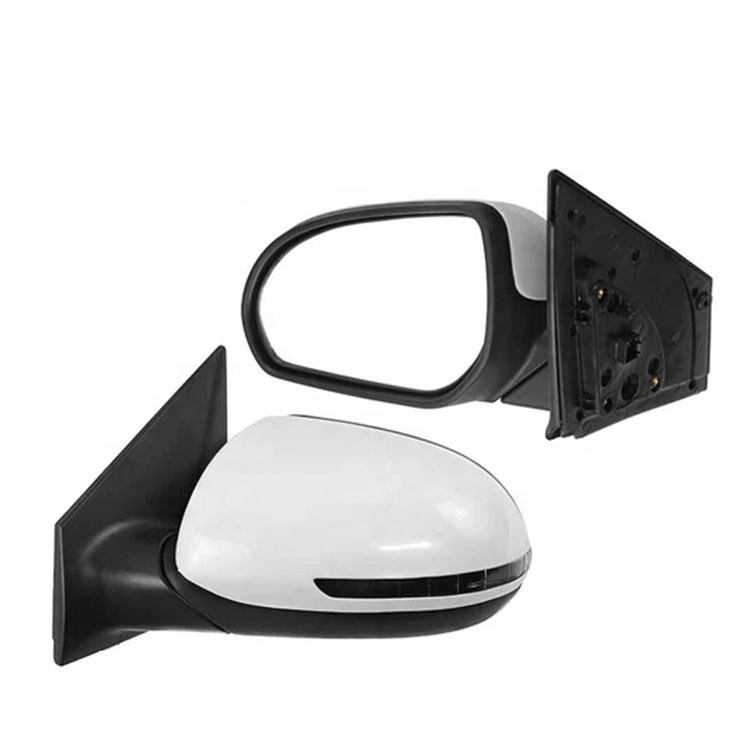
For international trade, compliance certifications act as vital credentials. Having products registered under European CE and EPR guidelines ensures that shipments flow smoothly through customs checkpoints without administrative delays. Experienced manufacturers leverage these standards alongside robust shipping networks to deliver high-quality body parts safely across global trade routes.
Data/Solution Comparison
When sourcing side mirrors and related body parts, comparing technical specifications, logistics, and supply chain conditions helps determine the total cost of ownership. The table below outlines key parameters for standard stock versus customized OEM/ODM procurement models:
| Procurement Parameter | Standard Stock Products | OEM/ODM Customized Products |
|---|---|---|
| Minimum Order Quantity (MOQ) | 5 Pieces | Varies by mold and design complexity |
| Average Lead Time | 7 Days (Within 1 week container loading) | Subject to custom tooling and sample approval |
| Quality Testing Procedures | Visual Inspection, CMM Measurement | Visual Inspection, CMM, Paint & Coating Testing |
| Primary Export Markets | United States, Germany, Europe | Global automotive aftermarket |
| Shipping Options | Sea Freight (FCL/LCL), Air Freight, Express | Multimodal Transport (Sea, Rail, Air, Express) |
| Payment Flexibility | T/T, D/P, L/C, Alipay, secure escrow channels | Structured deposit with balance terms |
Frequently Asked Questions (FAQ)
Q1: What drives the price difference in wholesale side mirrors?
A1: Wholesale prices are primarily influenced by the level of electronic integration (heating elements, blind-spot indicators, auto-dimming features), the quality of the plastics used in the housing, and paint finish requirements. Ordering in full container loads (FCL) also reduces per-unit shipping and manufacturing overheads.
Q2: How do manufacturers ensure the side mirrors fit perfectly?
A2: Reputable factories use Coordinate Measuring Machines (CMM) and precise tooling databases matched to specific vehicle years and models. This ensures the mounting brackets and wiring harnesses align perfectly with original factory doors.
Q3: What logistics protections are used for fragile mirror glass?
A3: Side mirrors are packaged using reinforced, export-grade protective materials to prevent cracking or scratching during international sea, rail, or air transit. Full tracing is provided for secure delivery.
Final Conclusion & Recommendations
Sourcing heated side mirrors with blind-spot detection requires balancing competitive unit pricing with verifiable manufacturing quality. Aligning with an integrated manufacturing and trading partner that provides comprehensive shipping agent services, flexible payment structures, and guaranteed pre-delivery inspections drastically lowers international procurement risks. For detailed technical solutions or support, please reach out to us via sales01@cnkebel.com.
About Us
Established in 2023, Danyang Wanjiang Auto Parts Co., Ltd. houses 80 employees across a 10,000 square meter factory in Jiangsu Province, China. We are a professional exporter with 18 years of experience in auto body parts, specializing in the R&D and production of car bumpers, grilles, headlights, hoods, and fenders. Our products meet rigorous international standards, backed by CE and EPR certifications, serving major automotive aftermarket distributors in North America and Europe. 
Lastest
-
Can you manufacture a front bumper based on our proprietary 3D CAD files?
2026-07-06 -
Can you provide the DOT and SAE certification documents for this rear bumper?
2026-07-06 -
How many production lines do you dedicate to making this bumper upper?
2026-07-06 -
Is there an online portal to track aftermarket support for the front bumper assembly?
2026-07-06 -
What is the standard production lead time for a container of engine hoods?
2026-07-06
SUBSCRIBE
INQUIRY