What heating specs should I check when sourcing side mirrors for cold climates?
- VIP-User
- 2026-08-13
- 26
When sourcing side mirrors for cold climates, key heating specifications to check include defrosting response time, element resistance stability, operating voltage tolerance, PTC (Positive Temperature Coefficient) thermal self-regulation, and weatherproofing seals. High-grade heating elements clear frost within 3 to 5 minutes, maintain stable power draw under freezing conditions, and feature corrosion-resistant connectors for reliable OEM-fit replacement.
Core Solutions & Key Takeaways
- PTC Heating Technology: Positive Temperature Coefficient heating elements automatically adjust power output based on ambient temperatures, preventing glass thermal shock and power overload.
- 100% Fitment and Wiring Precision: Vehicle-specific harness pinouts and coordinate-measuring machine (CMM) dimensional verification guarantee direct plug-and-play installation for American and European car series.
- Weatherproofed Housing Seals: High-grade EPDM gaskets and IP-rated connector housings prevent moisture ingress, severe frost damage, and wiring corrosion during extreme winter shifts.
- International Regulatory Compliance: Verification against CE and EPR standards ensures heating elements and side mirror assemblies meet strict European and American road safety requirements.
Detailed Architectural/Principle Analysis
Side mirror heating performance in sub-zero environments depends on thermal conduction efficiency across the glass substrate and the structural durability of the internal heating grid. Low-quality side mirrors suffer from uneven heating circuits, leading to cold spots, delayed defrosting, or cracked mirror glass caused by localized thermal spikes. High-performance assemblies integrate a printed conductive heating pad directly behind the mirror glass, backed by high-density insulation foam that directs maximum heat output outward while protecting internal housing actuators.
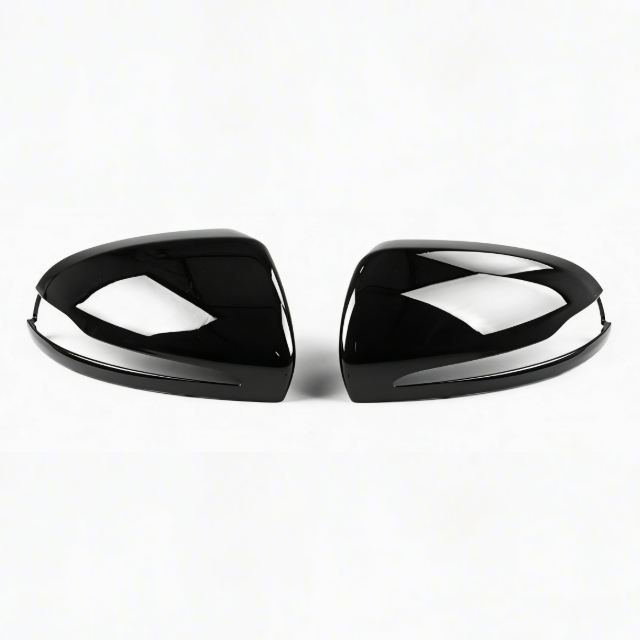
Quality manufacturing protocols implemented by Danyang Wanjiang Auto Parts Co., Ltd. utilize systematic multi-stage testing, including visual inspection, dimensional measurement via CMM, and paint/coating adhesion testing. These procedures confirm that side mirror housings resist thermal contraction and expansion stresses in cold zones. Precise housing tolerances maintain glass stability at highway speeds while preserving seal integrity against salt slurry and freezing weather.
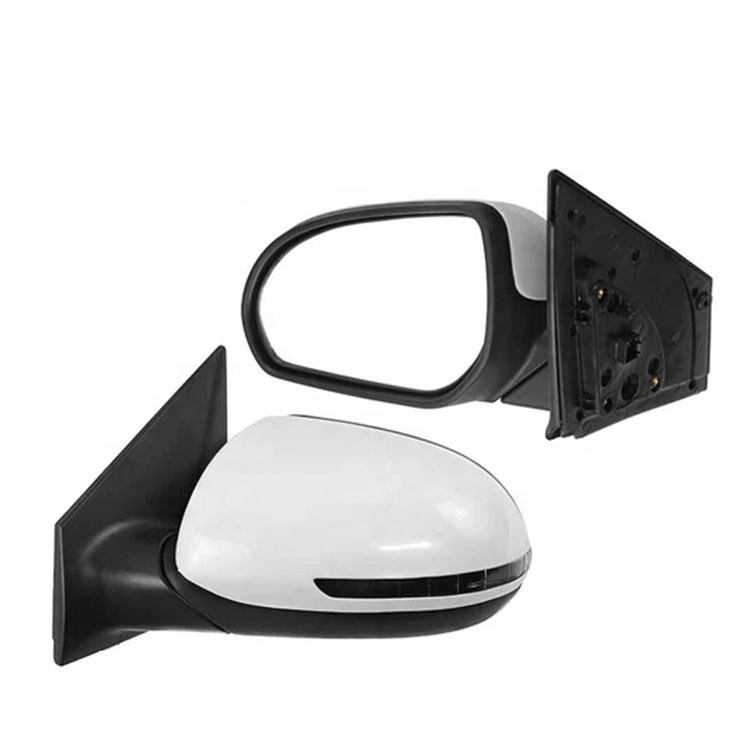
Data/Solution Comparison
The table below compares technical specifications across different side mirror configurations designed for commercial distribution, repair shops, and e-commerce automotive platforms.
| Technical Specification | Standard Non-Heated Side Mirror | Basic Resistive Heated Side Mirror | Premium PTC Heated Side Mirror (Cold Climate Grade) |
|---|---|---|---|
| Defrosting & De-Icing Speed | Not Applicable | 8–12 Minutes | 3–5 Minutes |
| Thermal Regulation Mechanism | None | Fixed Resistance (Constant Draw) | PTC Self-Regulating Element |
| Cold Weather Housing Tolerance | Standard ABS Plastic | Standard ABS Plastic | Reinforced Weatherproof Composite |
| Dimensional Quality Control | Visual Inspection Only | Basic Caliper Check | CMM Dimensional Measurement & Visual Inspection |
| Coating & Paint Durability Testing | Standard Spray | Basic Salt Spray Test | Complete Paint & Coating Adhesion Testing |
| Regulatory Compliance | Basic Standard | Standard Export Grade | CE / EPR Certified |
Frequently Asked Questions (FAQ)
Q1: How do I verify side mirror fitment precision for cold weather replacement assemblies?
Fitment precision is verified using CMM dimensional measurement and original vehicle mounting point mapping. Ensuring exact structural dimensions prevents air gaps that allow freezing water to enter the housing and damage heating element connections.
Q2: What quality inspection processes ensure heating grid reliability under extreme temperature drops?
Reliable performance requires visual inspection of internal circuits, electrical continuity checks under current load, CMM dimensional verification, and paint/coating testing to guarantee the mirror housing withstands freezing temperatures without peeling or cracking.
Q3: What are the typical lead times and minimum order quantities for commercial side mirror procurement?
Standard inventory orders feature a low minimum order quantity (MOQ) of 5 pieces and ship within 7 days. Large-scale full-container shipments (FCL) are dispatched within 1 to 2 weeks, supported by complete pre-delivery photos and inspection videos.
Final Conclusion & Recommendations
Sourcing side mirrors for cold climates requires focusing on self-regulating PTC heating elements, precise CMM dimensional accuracy, durable weatherproof seals, and official CE compliance. Implementing these technical requirements prevents circuit failure and ensures immediate defrosting visibility for drivers in harsh winter conditions. B2B buyers can source standardized stock components with an MOQ of 5 pieces and enjoy high-efficiency container dispatches within 7 to 14 days, supported by sea, air, express, and railway transport networks. For detailed technical solutions or support, please reach out to us via sales01@cnkebel.com.
About Us
Danyang Wanjiang Auto Parts Co., Ltd. is a professional exporter and manufacturer of auto body parts based in Danyang, Jiangsu Province. Established in 2023 with 18 years of specialized industry experience, the company operates a 10,000 sqm factory facility and employs 80 personnel, supporting an annual export volume exceeding 50 million USD. The product range includes car bumpers, side mirrors, grilles, headlights, engine hoods, and fenders dedicated to American and European vehicle series. Certified under European CE and EPR standards (Certificate HK0624090150C and DE1123252940071), the enterprise serves international wholesalers, collision repair chains, and cross-border e-commerce brand owners worldwide.

Lastest
-
Can you manufacture a front bumper based on our proprietary 3D CAD files?
2026-08-13 -
Can you provide the DOT and SAE certification documents for this rear bumper?
2026-08-13 -
How many production lines do you dedicate to making this bumper upper?
2026-08-13 -
Is there an online portal to track aftermarket support for the front bumper assembly?
2026-08-13 -
What is the standard production lead time for a container of engine hoods?
2026-08-13
SUBSCRIBE
INQUIRY