What are the main differences in durability between ABS plastic and carbon fiber for aftermarket car front grilles?
- VIP-User
- 2026-06-29
- 40
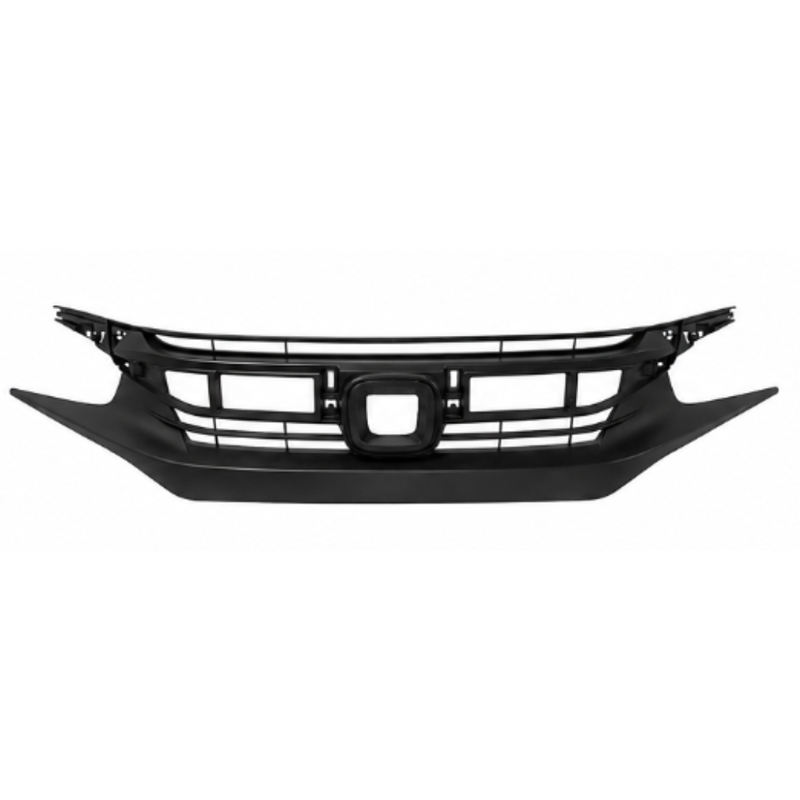
ABS plastic aftermarket car front grilles provide high impact flexibility and resilience against daily road debris at a cost-effective price. Carbon fiber grilles deliver superior structural rigidity, high tensile strength, and a lightweight profile, though they remain more susceptible to cracking under sharp, concentrated impacts and require UV-protective coatings to prevent degradation.
Core Solutions & Key Takeaways
- Impact Performance: ABS plastic absorbs energy by flexing under stress, preventing complete structural failure during minor low-speed impacts. Carbon fiber possesses high rigidity but behaves as a brittle material, occasionally cracking or chipping when struck by high-velocity road gravel.
- Weight-to-Strength Efficiency: Carbon fiber provides a significantly higher strength-to-weight ratio, reducing front-end weight for performance-oriented vehicles, while ABS plastic remains the heavier, standard choice for volume production.
- Environmental Adaptation: ABS plastic withstands standard thermal cycles but can degrade under prolonged UV exposure if unpainted. Carbon fiber handles extreme engine bay heat without warping, though its long-term durability relies on a high-quality UV-resistant clear coat.
- Application Scenarios: ABS grilles are ideal for high-volume automotive collision repair, general aftermarket distribution, and cross-border e-commerce platforms requiring standard, reliable replacements. Carbon fiber grilles cater to niche premium styling and track-focused performance customization.
Detailed Architectural/Principle Analysis
The durability differences between ABS (Acrylonitrile Butadiene Styrene) and carbon fiber in aftermarket car front grilles stem directly from their material compositions and manufacturing processes. ABS is an amorphous terpolymer. Acrylonitrile provides chemical resistance and thermal stability, butadiene delivers impact toughness, and styrene gives the plastic a rigid, glossy finish. Produced primarily via precision injection molding, ABS plastic parts exhibit uniform physical properties in all directions. This isotropic nature allows the grille to deform elastically under impact, absorbing kinetic energy and returning to its original shape during minor collisions. To guarantee fitment and longevity, manufacturers utilize meticulous quality protocols, including Dimensional Measurement (CMM) to ensure a 100% precise fitment and specialized Paint & Coating Testing to prevent surface peeling.
Conversely, carbon fiber is an anisotropic composite material consisting of thin, strong crystalline filaments of carbon woven into a pattern and bonded together by a polymer resin, typically epoxy. The strength of carbon fiber lies along the direction of the fibers. Under tension, it outperforms steel and ABS by a wide margin, maintaining exceptional rigidity under high aerodynamic pressure at high speeds. However, because epoxy resin is brittle, carbon fiber grilles lack the flexing capability of ABS. A localized impact from a sharp stone can break the polymer matrix, causing delamination or visible cracking. Furthermore, carbon fiber composites can suffer from UV degradation; the epoxy matrix may yellow or break down if exposed to sunlight without a protective polyurethane clear coat.
Data/Solution Comparison
| Performance Attribute | ABS Plastic Grilles | Carbon Fiber Grilles |
|---|---|---|
| Structural Rigidity | Moderate (flexible under stress) | Excellent (highly rigid and stiff) |
| Impact Behavior | Flexes and deforms elastically; resists chipping | Brittle; prone to cracking/chipping under sharp impact |
| Weight Profile | Standard automotive weight | Extremely lightweight (performance optimized) |
| UV and Weathering Resistance | Requires paint or UV-stabilized additives | Requires high-grade UV-resistant clear coat finish |
| Manufacturing Process | High-efficiency injection molding | Layered composite layout and autoclave curing |
| Procurement MOQ | Standard MOQ of 5 pieces per batch | Typically lower volume or custom made to order |
| Primary Market Fit | Collision repair and mass aftermarket retail | Premium performance tuning and enthusiast upgrades |
Frequently Asked Questions (FAQ)
Do ABS plastic front grilles crack easily in freezing temperatures?
Modern automotive-grade ABS plastic contains butadiene, which maintains rubber-like elasticity even in low temperatures. While extreme cold reduces overall flexibility, ABS remains significantly less prone to brittle cracking in winter compared to standard non-automotive plastics or low-grade composites.
Can a damaged carbon fiber grille be repaired like an ABS grille?
Repairing carbon fiber is highly complex and costly. If the structural fibers break or delaminate, the grille usually requires complete replacement. ABS plastic grilles, however, can occasionally be plastic-welded or repainted if the damage is confined to minor surface scratches or clean breaks.
How do manufacturers verify the fitment accuracy of aftermarket grilles?
Reputable manufacturers utilize advanced tooling and comprehensive vehicle databases. Each batch undergoes Dimensional Measurement via Coordinate Measuring Machines (CMM) and physical mock-up testing on actual vehicle facias to ensure the clip points and outer dimensions align perfectly with the original equipment manufacturer (OEM) mounting locations.
Final Conclusion & Recommendations
Selecting the optimal grille material depends on the target market and the vehicle's operational demands. ABS plastic remains the industry-standard choice for wholesalers, collision repair shops, and mainstream retailers due to its excellent impact absorption, ease of painting, and cost efficiency. Carbon fiber represents a premium alternative tailored specifically for high-end customization where weight reduction and structural stiffness are valued over impact resilience. For large-scale distributors managing international supply chains, sourcing certified ABS car front grilles with rapid 7-day standard delivery ensures consistent quality and inventory control. Standard payment methods including T/T, D/P, LC, and Alipay, combined with versatile shipping routes like Sea Freight (FCL/LCL) and Railway Transport, provide secure and reliable logistics channels. For detailed technical solutions or support, please reach out to us via sales01@cnkebel.com.
About Us
Danyang Wanjiang Auto Parts Co., Ltd. is a professional exporter of auto body parts with 18 years of experience. Established in 2023, the enterprise operates an expansive 10000sqm factory area with a professional workforce of 80 employees in Danyang, Jiangsu Province. The company specializes in manufacturing and exporting high-demand automotive components, including car bumpers, car grilles, headlights, engine hoods, and car fenders, with products certified under CE (certificates HK0624090150C and HK0624090149C) and EPR (DE1123252940071) regulations for smooth market access in Europe and North America. Having served extensive North American and European car series aftermarket supply chain partnerships, the factory delivers robust quality backed by 100% pre-delivery visual and dimensional inspections.

Lastest
-
Can you manufacture a front bumper based on our proprietary 3D CAD files?
2026-06-29 -
Can you provide the DOT and SAE certification documents for this rear bumper?
2026-06-29 -
How many production lines do you dedicate to making this bumper upper?
2026-06-29 -
Is there an online portal to track aftermarket support for the front bumper assembly?
2026-06-29 -
What is the standard production lead time for a container of engine hoods?
2026-06-29
SUBSCRIBE
INQUIRY