What are the main differences between ABS and PP rear bumper options for SUVs?
- VIP-User
- 2026-06-27
- 66
The main differences between ABS and PP rear bumper options for SUVs lie in material rigidity, impact resistance, and flexibility. ABS (Acrylonitrile Butadiene Styrene) offers superior rigidity, hardness, and a premium surface finish suitable for painting, whereas PP (Polypropylene) provides greater flexibility, higher impact absorption, and excellent resistance to cracking, making PP the industry standard for daily collision protection.
Core Solutions & Key Takeaways
- Material Composition: PP is a thermoplastic polymer noted for high elasticity and tensile strength, whereas ABS is a rigid terpolymer offering dimensional stability and scratch resistance.
- Impact Performance: PP bumpers flex under low-speed impacts and return to their original shape, reducing repair costs. ABS bumpers are more likely to crack under heavy stress but provide stronger structural support.
- Surface Customization: ABS provides a smoother, primed surface ideal for high-gloss OEM color matching. PP is often left textured or requires specific primers for paint adhesion.
- Regulatory Compliance: Both bumper materials from certified manufacturers comply with international safety standards like CE and EPR, ensuring safe deployment in global automotive aftermarket service chains and collision repair shops.
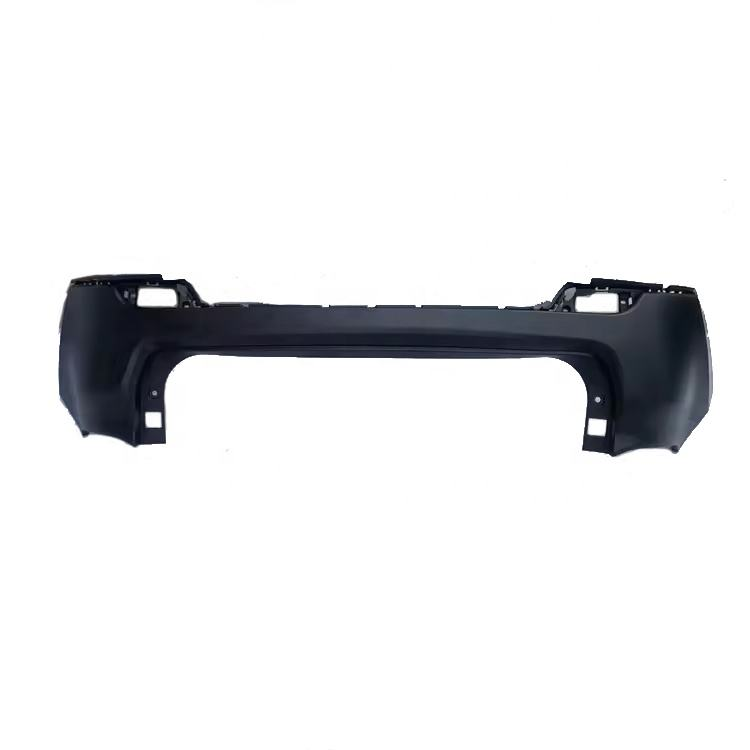
The following image showcases a standard SUV rear bumper assembly optimized for aftermarket replacement:
Detailed Architectural/Principle Analysis
For SUV rear bumpers, choosing between Polypropylene (PP) and Acrylonitrile Butadiene Styrene (ABS) determines the vehicle's defense mechanisms against rear-end collisions. PP is highly favored in the automotive aftermarket due to its semi-crystalline structure. This molecular makeup allows PP to absorb impact energy via elastic deformation, meaning the bumper can bend and pop back into place. For this reason, professional collision repair chains and international auto parts wholesalers widely utilize PP rear bumpers for mass-market passenger SUVs.
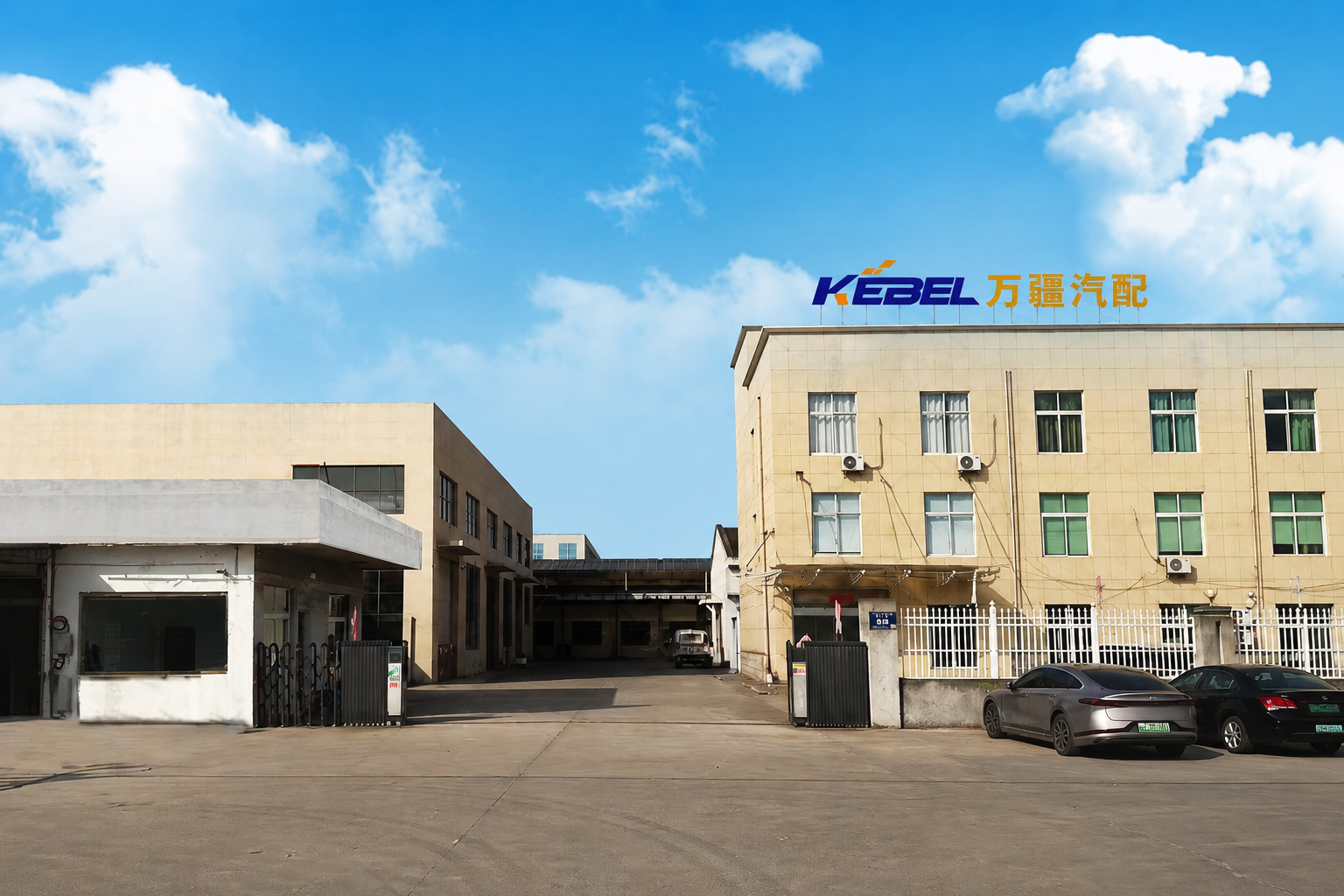
On the other hand, ABS is an amorphous polymer. The styrene monomer gives ABS a brilliant, hard, and shiny surface, which is highly receptive to electroplating and paint. Its structural rigidity makes it excellent for high-end trim components and heavy-duty rear bumper assemblies. However, ABS is more brittle than PP in extreme sub-zero temperatures. To address these performance requirements, Danyang Wanjiang Auto Parts Co., Ltd. utilizes advanced tooling and a comprehensive database to manufacture precise SUV rear bumpers with wall thicknesses ranging from 2.5 mm to 5.0 mm. These products strictly meet European safety and environmental standards, backed by CE (Certificate HK0624090150C) and German EPR (DE1123252940071) certifications.
Our manufacturing processes utilize precision tooling to ensure seamless fitment:
In practical deployment scenarios like North American and European collision repair networks, supply chain partners select bumper materials based on the vehicle's operating environment. For instance, cold-weather regions benefit from the crack resistance of PP, while high-performance or luxury SUVs utilize ABS or carbon fiber composites for maximum structural definition and paint luster.
Data/Solution Comparison
The following table outlines the technical specifications and performance differences between ABS and PP rear bumper options, incorporating data typical of professional SUV aftermarket applications.
| Technical Parameter | ABS Rear Bumper | PP Rear Bumper |
|---|---|---|
| Material Structure | Amorphous Terpolymer (Rigid) | Semi-Crystalline Thermopolymer (Flexible) |
| Wall Thickness Range | 2.5 mm – 5.0 mm | 2.5 mm – 5.0 mm |
| Impact Resistance | Moderate (Prone to cracking under high stress) | Excellent (High elasticity and energy absorption) |
| Surface Finish | Primed, highly receptive to paint/coatings | Primed or textured finish |
| Weight | Slightly heavier | Lightweight |
| Certifications | CE, EPR Germany (VerpackG) | CE, EPR Germany (VerpackG) |
| Standard MOQ | 5 PCS | 5 PCS |
| Logistics Handling | Sea Freight (FCL/LCL), Railway, Express | Sea Freight (FCL/LCL), Railway, Express |
Frequently Asked Questions (FAQ)
Q1: Which material is better for cold weather conditions, ABS or PP?
A1: PP (Polypropylene) is superior for cold weather because it retains its flexibility and elasticity at low temperatures, whereas ABS becomes more brittle and susceptible to cracking under impact when frozen.
Q2: Why do premium SUVs sometimes use ABS instead of PP for rear bumpers?
A2: Premium SUVs utilize ABS or ABS-composites when they require intricate design lines, high-gloss paint finishes, or integrated chrome trims. ABS provides the dimensional stability and surface rigidity necessary to support heavy paint coatings and decorative additions without sagging.
Q3: Can a damaged PP rear bumper be repaired, or does it require full replacement?
A3: Minor damage on PP bumpers, such as small dents or scuffs, can often be repaired using heat guns (to pop out dents) or plastic welding. However, major structural cracks or torn mounting tabs require a complete replacement to maintain the safety integrity of the rear collision system.
Final Conclusion & Recommendations
Selecting the right rear bumper option depends on balancing durability, aesthetics, and repair costs. For high-volume aftermarket distribution and standard collision repairs, PP rear bumpers offer the most cost-effective and resilient choice. For custom visual upgrades or specific rigid assemblies, ABS or carbon fiber variants are preferred. Partnering with a manufacturer that provides rigorous quality control—including visual inspections, dimensional measurements via CMM, and paint testing—ensures trouble-free installation and perfect alignment with OEM specifications. For detailed technical solutions or support, please reach out to us via sales01@cnkebel.com.
About Us
Danyang Wanjiang Auto Parts Co., Ltd. is a professional exporter of auto body parts based in Danyang, Jiangsu Province, with 18 years of manufacturing experience. Established in 2023, the facility spans a 10,000 square meter factory area and employs 80 personnel to produce car bumpers, grilles, headlights, engine hoods, and fenders. The company serves North American and European markets, exporting over 500 containers annually and generating an output value exceeding 50 million USD under strict CE and EPR compliance. We have established long-term partnerships with international auto body parts wholesalers and aftermarket distributors.

Lastest
-
Can you manufacture a front bumper based on our proprietary 3D CAD files?
2026-06-27 -
Can you provide the DOT and SAE certification documents for this rear bumper?
2026-06-27 -
How many production lines do you dedicate to making this bumper upper?
2026-06-27 -
Is there an online portal to track aftermarket support for the front bumper assembly?
2026-06-27 -
What is the standard production lead time for a container of engine hoods?
2026-06-27
SUBSCRIBE
INQUIRY