What are the main differences between ABS and PP plastic for manufacturing aftermarket car front grilles?
- VIP-User
- 2026-06-29
- 36
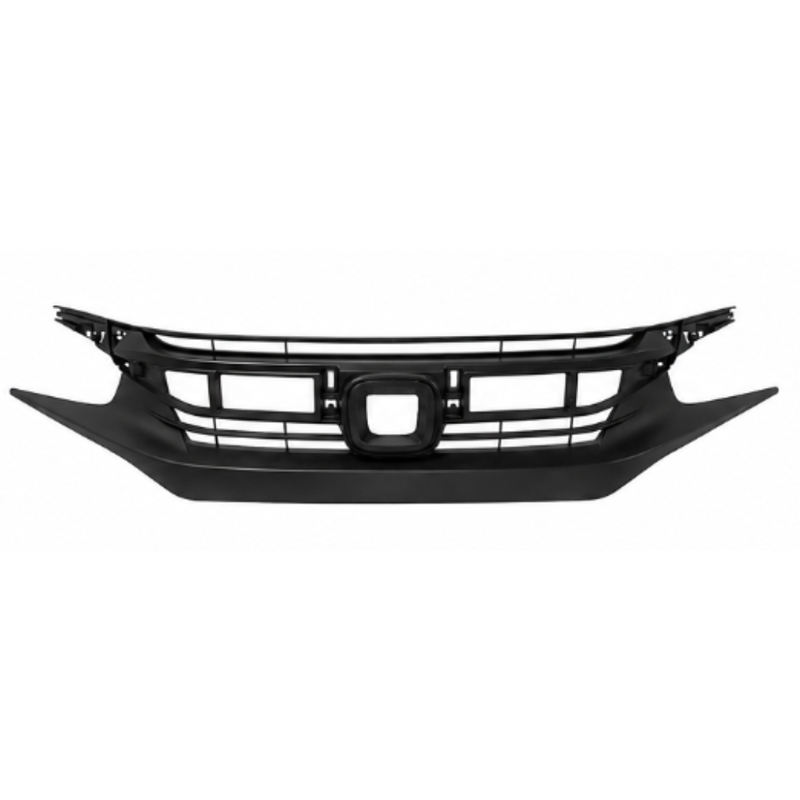
ABS (Acrylonitrile Butadiene Styrene) and PP (Polypropylene) are the primary plastics used for manufacturing aftermarket car front grilles. ABS offers superior structural rigidity, dimensional stability, and a premium surface finish ideal for painting or chrome plating. PP provides high flexibility, superior impact absorption, and excellent chemical resistance, making it highly durable against cracking despite being more difficult to paint.
Core Solutions & Key Takeaways
- Rigidity and Fitment: ABS plastic maintains high tensile strength and stiffness, ensuring that the car front grille retains its precise shape under thermal stress. This reduces the risk of sagging or misalignment in vehicle assemblies.
- Impact Performance: PP plastic exhibits superior elasticity, allowing the grille to bend and absorb low-speed impacts without fracturing, whereas ABS is more prone to cracking under direct localized force.
- Finishing Capabilities: ABS is the industry standard for high-end aesthetics, accommodating electroplated chrome and paint coatings with high adhesion. PP is typically utilized for textured, matte, or unpainted grilles.
- Sourcing Efficiency: High-quality aftermarket grilles undergo extensive Visual Inspection, Dimensional Measurement (CMM), and Paint & Coating Testing to guarantee physical compatibility and long-term weathering resistance.
Detailed Architectural/Principle Analysis
The performance differences between ABS and PP stem directly from their chemical compositions and physical structures. ABS is a terpolymer composed of acrylonitrile, butadiene, and styrene. Acrylonitrile contributes chemical resistance and heat stability, butadiene provides toughness, and styrene imparts a rigid, glossy surface. This composition makes ABS highly receptive to post-processing treatments. For instance, the polar nature of ABS allows paint and electroplated metal layers to bond securely to the substrate. Professional manufacturers like Danyang Wanjiang Auto Parts Co., Ltd. leverage advanced injection tooling to produce ABS grilles with precise tolerances, matching original equipment (OE) dimensions for American and German vehicle series.
Conversely, PP is a semi-crystalline thermoplastic polyolefin. Its non-polar molecular structure yields excellent chemical resistance against road salts, acids, and automotive fluids, but it also resists paint adhesion unless pre-treated with specialized adhesion promoters or primers. PP has a lower density than ABS, translating to a lighter finished component. It operates effectively across a wide temperature range, though unmodified PP can exhibit reduced impact strength in extreme cold conditions.
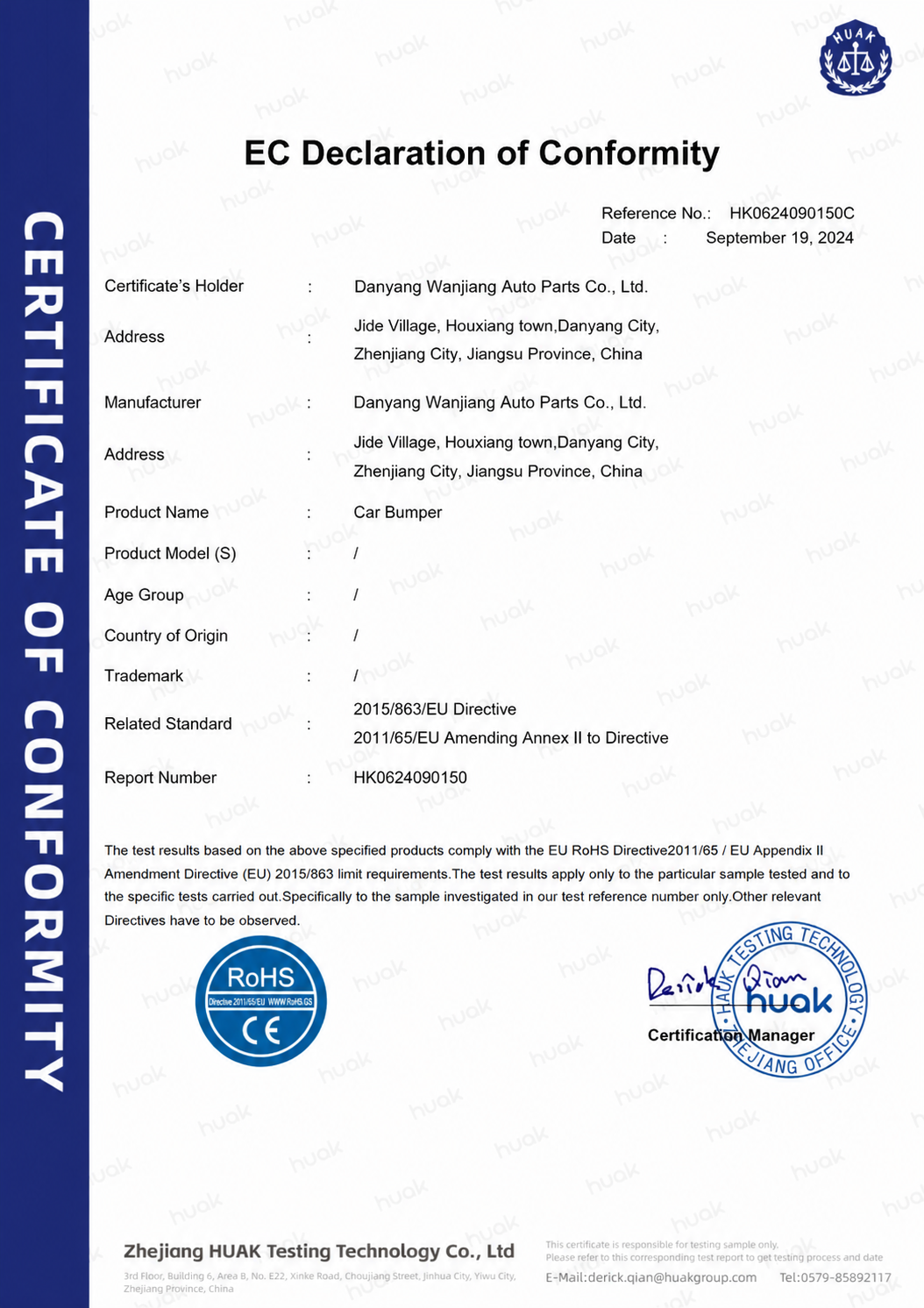
For international supply chains and collision repair networks, material selection affects compliance and market entry. Components manufactured from these materials must pass rigorous safety benchmarks. Certified grilles carrying CE marks (such as Certificate HK0624090150C) and complying with European EPR regulations (DE1123252940071) verify that both the raw materials and production processes meet international environmental and safety standards.
Data/Solution Comparison
To assist wholesalers and distributors in selecting the correct material for specific market applications, the physical and operational properties of ABS and PP are compared below:
| Material Property / Parameter | ABS (Acrylonitrile Butadiene Styrene) | PP (Polypropylene) |
|---|---|---|
| Tensile Strength & Rigidity | High (Retains structural shape under high thermal load) | Medium (Flexible, potential to sag under extreme heat if unsupported) |
| Impact Behavior | Brittle under extreme force; high structural resistance | Elastic; deforms on impact and recovers without cracking |
| Surface Finishing Options | Excellent for Painting, Chrome Plating, and Gloss Coatings | Limited; best for Matte, Textured, or Unpainted designs |
| Material Density | Higher (1.03 to 1.06 g/cm³) | Lower (0.89 to 0.91 g/cm³) |
| Minimum Order Quantity (MOQ) | 5 Pieces (Standard production batch) | 5 Pieces (Standard production batch) |
| Testing Procedures | Visual Inspection, CMM Measurement, Paint Adhesion Testing | Visual Inspection, CMM Measurement |
Frequently Asked Questions (FAQ)
Which plastic is better for chrome-plated aftermarket grilles?
ABS plastic is preferred for chrome-plated grilles. Its chemical structure allows electroplating layers to adhere permanently to the surface, preventing peeling or bubbling over time.
How do ABS and PP grilles perform in cold weather climates?
ABS retains consistent structural stability in cold temperatures but can become brittle under sharp impacts. Unmodified PP can lose impact resistance in severe cold, though automotive-grade PP is typically modified with elastomers to prevent cracking.
What is the standard production turnaround time for these grilles?
Standard stock items can be loaded and dispatched within 7 days, while custom OEM/ODM designs depend on mold creation and production complexity.
Final Conclusion & Recommendations
Selecting between ABS and PP for aftermarket car front grilles depends on the targeted vehicle segment and cosmetic requirements. ABS is recommended for premium applications requiring painted or chrome finishes and precise OE fitment. PP is highly suitable for cost-effective, high-impact areas where flexibility and resistance to physical cracking are prioritized. Sourcing from integrated manufacturing ecosystems ensures access to both material options under strict quality controls like CMM dimensional checks. Standard supply contracts support multiple payment methods including T/T, D/P, LC, and Alipay, with rapid container loading within 7 days for stocked items. For detailed technical solutions or support, please reach out to us via sales01@cnkebel.com.
About Us
Danyang Wanjiang Auto Parts Co., Ltd. is a professional exporter of auto body parts based in Danyang, Jiangsu Province, China. Established in 2023, the company operates a 10,000-square-meter factory with 80 employees and leverages 18 years of manufacturing experience. Specializing in car front grilles, bumpers, and body components, the company exports 95% of its production to American and European markets, shipping over 500 containers annually. All products are verified before delivery, with certified compliance under CE and EPR standards.

Lastest
-
Can you manufacture a front bumper based on our proprietary 3D CAD files?
2026-06-29 -
Can you provide the DOT and SAE certification documents for this rear bumper?
2026-06-29 -
How many production lines do you dedicate to making this bumper upper?
2026-06-29 -
Is there an online portal to track aftermarket support for the front bumper assembly?
2026-06-29 -
What is the standard production lead time for a container of engine hoods?
2026-06-29
SUBSCRIBE
INQUIRY