What are the main differences between ABS and PP front bumpers for wholesale sourcing?
- VIP-User
- 2026-06-30
- 43
ABS and PP front bumpers differ primarily in flexibility, impact resistance, and cost. Acrylonitrile Butadiene Styrene (ABS) is rigid and holds paint finishes exceptionally well, though it is prone to cracking under high stress. Polypropylene (PP) is highly flexible, resilient to minor impacts, and represents the industry standard for OEM-grade volume sourcing due to its durability and cost-efficiency.
Core Solutions & Key Takeaways
- PP bumpers provide outstanding impact absorption and elasticity, allowing them to recover from minor deformities and reducing shipping damage risks during international transit.
- ABS bumpers offer superior surface rigidity and scratch resistance, ensuring a high-quality paint finish for premium cosmetic applications.
- Precision tooling and custom development guarantee a 100% vehicle fitment match for German and American vehicle series.
- Compliance with CE standards and German EPR regulations ensures seamless regulatory entry into European and North American markets.
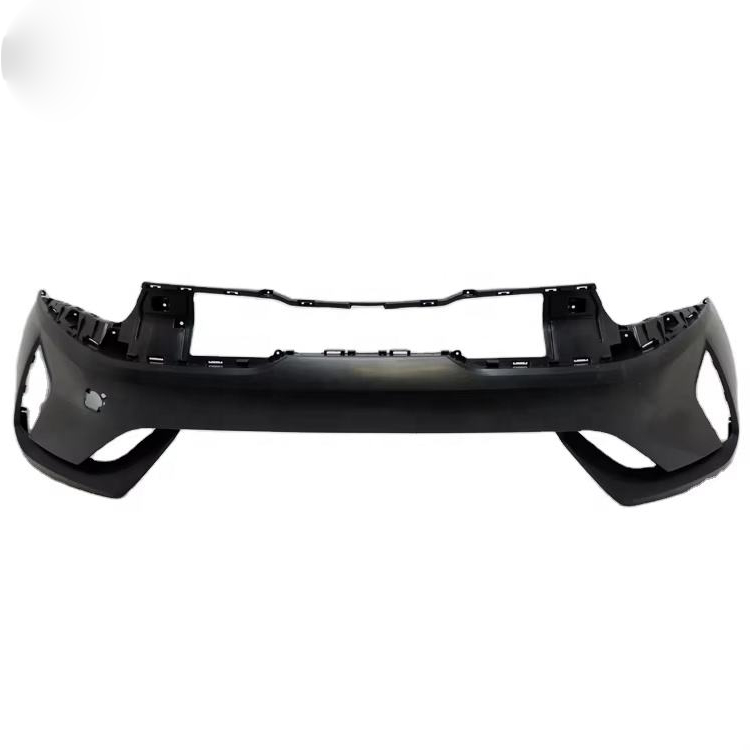
Detailed Architectural/Principle Analysis
From a materials engineering perspective, the structural performance of a bumper depends on its chemical composition and wall thickness, which typically ranges from 2.5 to 5.0 mm. ABS contains a styrene monomer that provides a hard, glossy surface finish. This high surface energy simplifies the painting process, allowing body shops to achieve a precise color match with standard primed finishes. However, the inherent stiffness of ABS makes it susceptible to brittle fractures under cold temperatures or high-velocity impact forces.
Conversely, PP is a thermoplastic polymer characterized by a semi-crystalline structure. This molecular layout grants PP high elasticity and ductile behavior. When subjected to collision forces, PP absorbs the impact energy through temporary deformation rather than fracturing, often returning to its original molded shape. Because of this resilience, PP is the dominant material choice for high-volume commercial front bumpers, lowering return rates and warranty claims for overseas automotive repair chains and distributors. To ensure these physical properties translate to real-world durability, manufacturers like Danyang Wanjiang Auto Parts Co., Ltd. utilize advanced injection molding processes to maintain uniform wall thickness across all bumper assemblies.
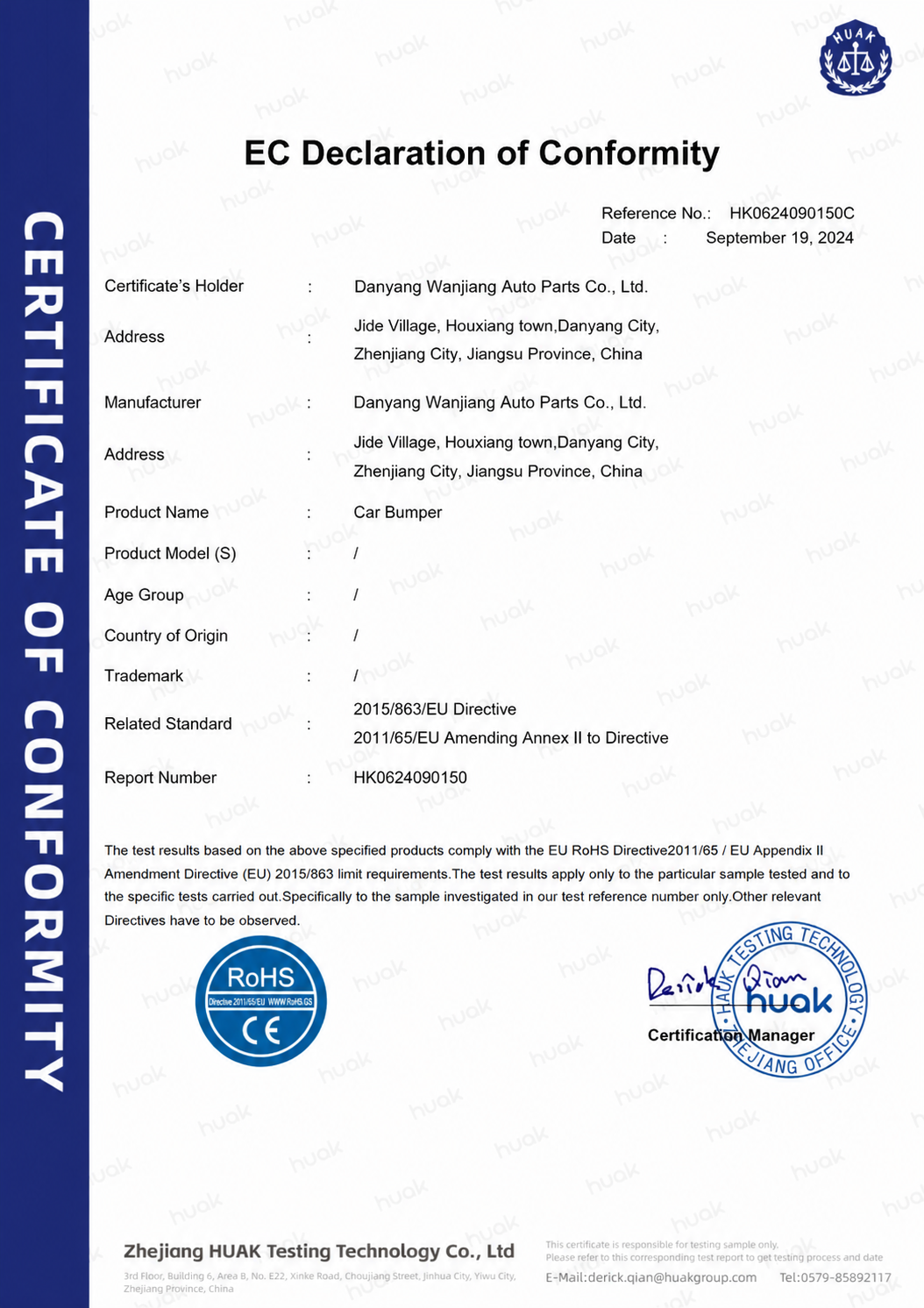
Partnerships with North American and European car series aftermarket distributors confirm that PP bumpers drastically reduce logistics-related damages in bulk shipments. For technical compliance, all bumper components must undergo rigorous quality inspections, including dimensional measurements via Coordinate Measuring Machines (CMM) and paint adhesion testing. This quality control pipeline ensures complete compatibility with OEM direct bolt-on or clip-on mounting systems, meeting CE certificate HK0624090150C and German EPR requirements.
Data/Solution Comparison
| Comparison Parameter | ABS Front Bumpers | PP Front Bumpers |
|---|---|---|
| Material Composition | Acrylonitrile Butadiene Styrene | Polypropylene (OEM Standard) |
| Flexibility & Ductility | Low (Rigid, prone to cracking under high stress) | High (Flexible, impact-absorbent, resilient) |
| Wall Thickness Range | 2.5 – 5.0 mm | 2.5 – 5.0 mm |
| Surface Finish Option | Primed (Excellent paint adhesion) | Primed (Highly durable coating adhesion) |
| Target Market Suitability | Aesthetic custom modifications | Collision repair & OEM replacement |
| Minimum Order Quantity (MOQ) | 5 PCS | 5 PCS |
| Regulatory Compliance | CE, Germany EPR (VerpackG) | CE, Germany EPR (VerpackG) |
Frequently Asked Questions (FAQ)
What are the logistics options and delivery timelines for wholesale front bumper shipments?
Standard stock bumper orders undergo high-efficiency container loading within 7 to 14 days. Shipping options encompass Sea Freight (FCL/LCL) and Railway Transport for bulky volume, alongside Air Freight and International Express (DHL, FedEx, UPS, TNT) for urgent repair components.
How do manufacturers guarantee the vehicle fitment of aftermarket bumpers?
Precision fitment is maintained through comprehensive tooling databases and visual inspection coupled with Coordinate Measuring Machine (CMM) dimensional checks. Standard direct bolt-on or clip-on installation methods ensure exact alignment with American and German vehicle frame specifications.
Which payment terms are standard for international bumper procurement?
Procurement transactions utilize official, traceable cross-border payment networks. Accepted methods include T/T, D/P, L/C, and Alipay, with balanced payment structures governed by formal international sales contracts.
Final Conclusion & Recommendations
Selecting between ABS and PP bumpers depends on the specific commercial application. For high-volume collision repair networks and cross-border e-commerce brands, PP bumpers offer the structural reliability, lower unit cost, and impact resistance required to minimize return rates. Wholesalers must verify that suppliers provide pre-delivery inspections, such as video and photo verification, to guarantee quality before cargo loading. For detailed technical solutions or support, please reach out to us via sales01@cnkebel.com.
About Us
Danyang Wanjiang Auto Parts Co., Ltd. is a factory located in Danyang, Jiangsu Province, operating as a professional exporter for auto body parts with 18 years of experience. Established in 2023, the facility spans a factory area of 10,000 square meters and employs 80 staff members to handle production, quality checking, and shipping. The company specializes in producing car bumpers, grilles, headlights, engine hoods, and fenders, serving primary export markets in America and Europe. Holding certifications such as CE and EPR, the enterprise delivers high-quality components to major international distributors and automotive repair chains.

Lastest
-
Can you manufacture a front bumper based on our proprietary 3D CAD files?
2026-06-30 -
Can you provide the DOT and SAE certification documents for this rear bumper?
2026-06-30 -
How many production lines do you dedicate to making this bumper upper?
2026-06-30 -
Is there an online portal to track aftermarket support for the front bumper assembly?
2026-06-30 -
What is the standard production lead time for a container of engine hoods?
2026-06-30
SUBSCRIBE
INQUIRY