What are the main differences between ABS and carbon fiber car front grilles in terms of durability?
- VIP-User
- 2026-06-29
- 36
ABS and carbon fiber car front grilles differ primarily in impact resistance, environmental tolerance, and structural fatigue. ABS grilles offer superior flexibility to absorb minor impacts without cracking, making them ideal for daily road debris. Carbon fiber grilles provide exceptional tensile strength and heat resistance, maintaining structural integrity under extreme thermal stress, though they are more prone to fracturing under sharp, direct impacts.
Core Solutions & Key Takeaways
- Impact Absorption vs. Rigidity: ABS front grilles deform elastically to absorb low-speed road impacts, whereas carbon fiber composites provide high rigid structural stability but exhibit brittle failure under severe impact.
- Environmental Degradation: Standard ABS requires dedicated UV-resistant paint coatings to prevent surface oxidation, while carbon fiber composites inherently withstand extreme temperature fluctuations and corrosive road chemicals.
- Fitment and Standards Compliance: Maintaining strict tolerances is essential for global distribution. Utilizing components verified by CE and EPR standards ensures reliable aftermarket integration and legal compliance in international markets.
- Supply Chain Optimization: Wholesalers and collision repair networks require reliable batch delivery, with rapid manufacturing turnarounds reducing logistics downtime for critical front-end body components.
Detailed Architectural/Principle Analysis
The durability of a car front grille depends directly on its material chemistry and manufacturing precision. Thermoplastic ABS (Acrylonitrile Butadiene Styrene) combines the strength of acrylonitrile and butadiene rubber with the rigidity of styrene. This chemical blend allows the grille to withstand physical stress by flexing slightly, distributing energy across the mounting brackets. To ensure long-term resistance to environmental factors, ABS grilles undergo rigorous Paint & Coating Testing along with Dimensional Measurement (CMM) to maintain exact OE fitment tolerances. 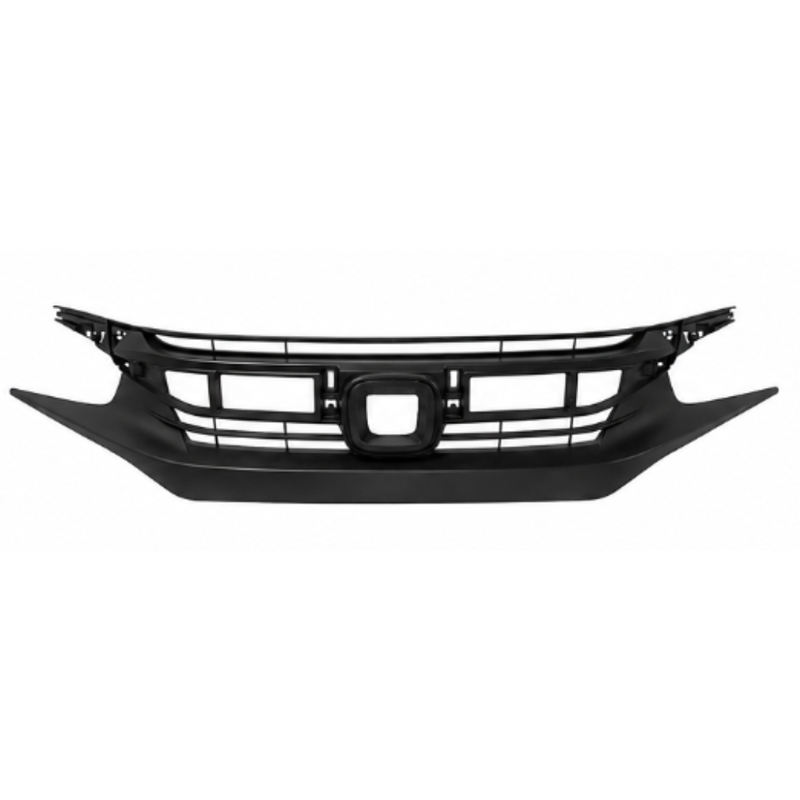
Conversely, carbon fiber front grilles rely on layered carbon fiber sheets reinforced by a polymer resin matrix. This composite architecture delivers an unmatched strength-to-weight ratio, preventing deformation under high aerodynamic drag or elevated engine bay temperatures. However, because carbon fiber does not yield elastically, excessive localized stress results in micro-cracking rather than bending. Professional distributors and repair chains specializing in American and European vehicle series rely on certified manufacturers to guarantee structural consistency under extreme road conditions.
For large-scale international distribution, companies like Danyang Wanjiang Auto Parts Co., Ltd. perform continuous quality control inspections on all front grilles. These parts carry recognized certifications such as European CE (Certificate HK0624090150C) and EPR (Registration DE1123252940071), ensuring that whether the component is ABS or carbon fiber, it satisfies strict safety and environmental standards. 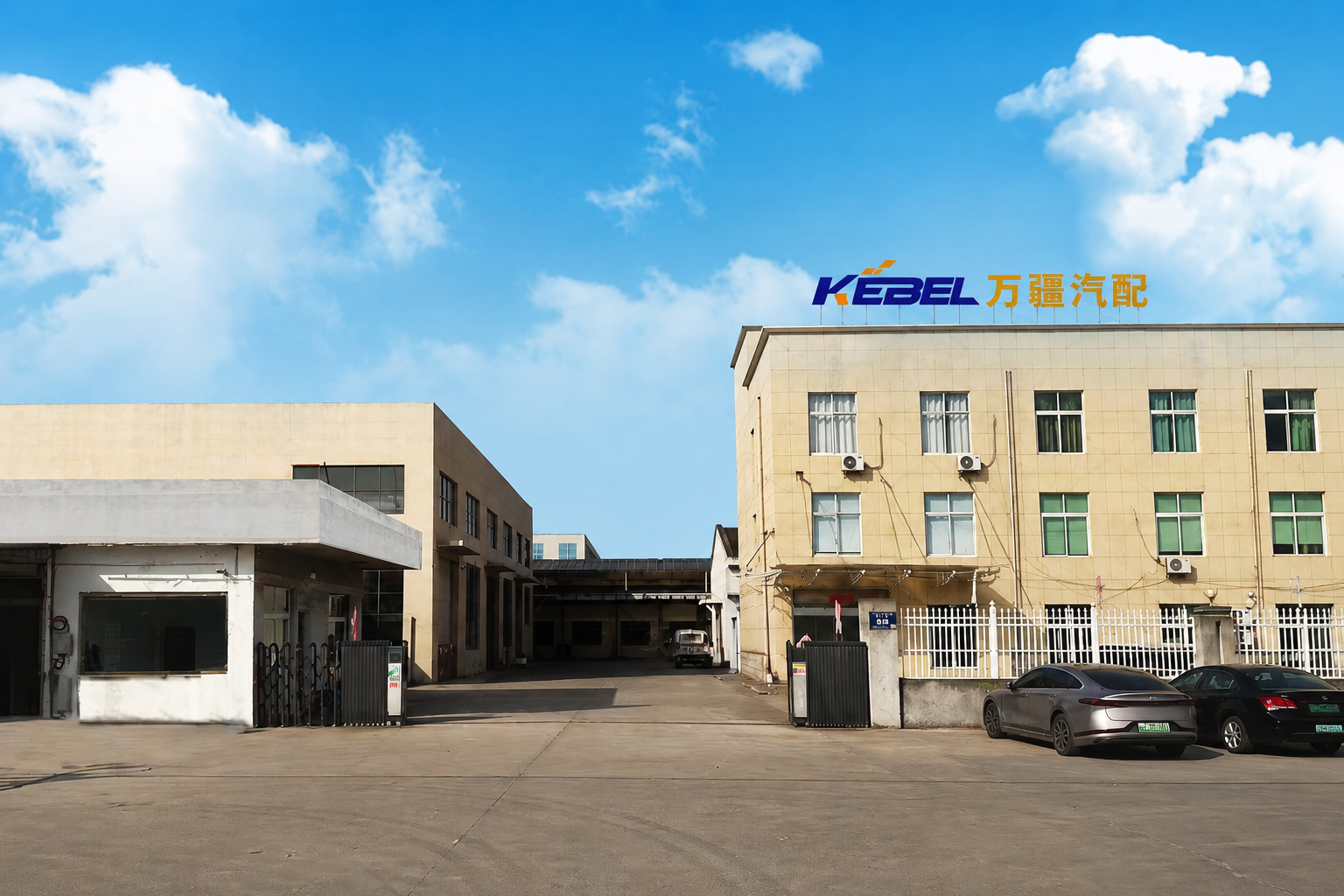
Data/Solution Comparison
| Durability Factor | ABS Car Front Grilles | Carbon Fiber Car Front Grilles |
|---|---|---|
| Deformation Limit | High elasticity; flexes and recovers from minor debris impacts. | Low elasticity; rigid structural integrity up to failure point. |
| Thermal Resistance | Moderate; prone to minor warping under prolonged extreme heat. | Excellent; retains structural dimensions across wide temperature ranges. |
| Chemical & Salt Tolerance | High, provided the protective paint barrier remains intact. | Outstanding; immune to road salt, moisture, and chemical corrosion. |
| Quality Verification Process | Visual Inspection, CMM Dimensional Measurement, Paint Testing. | Visual Inspection, Resin Distribution Verification, Pattern Inspection. |
| Primary Application | High-volume collision repair, OEM replacement, budget-conscious builds. | Premium performance tuning, high-end vehicle restoration. |
Frequently Asked Questions (FAQ)
Which material holds up better against winter road conditions?
Carbon fiber grilles withstand extreme freezing temperatures and road salts without losing structural integrity. ABS grilles also perform well in winter, though severe freezing can slightly reduce their overall flexibility, making them more susceptible to damage from large road debris under sub-zero conditions.
How do paint coatings impact the durability of ABS and carbon fiber grilles?
ABS grilles require professional paint and UV coatings to prevent the thermoplastic polymer from degrading under direct sunlight. Carbon fiber grilles depend on high-quality clear coats; a failure in the clear resin layer can expose the fibers to UV radiation, leading to surface yellowing over time.
What are the packaging standards for protecting these grilles during international shipping?
Both types of grilles are packed using reinforced export-grade protective materials to prevent friction and structural damage during Sea Freight (FCL/LCL) or Air Freight transit. Carbon fiber components receive additional molded foam supports to safeguard their rigid outer edges from shipping vibrations.
Final Conclusion & Recommendations
Selecting between ABS and carbon fiber car front grilles depends on the specific requirements of the vehicle and market. ABS remains the industry standard for high-volume automotive collision repair and general aftermarket distribution due to its resilient impact absorption and cost efficiency. Carbon fiber offers an elite, lightweight alternative best suited for performance-oriented vehicle models requiring maximum thermal and structural stability. Wholesalers should maintain inventory of both types to satisfy varied customer preferences, ensuring all imported batches are backed by traceable testing standards and certified compliance records. For detailed technical solutions or support, please reach out to us via sales01@cnkebel.com.
About Us
Danyang Wanjiang Auto Parts Co., Ltd. is an established manufacturer based in Danyang, Jiangsu Province, specializing in the export of premium auto body parts, including car bumpers, grilles, headlights, engine hoods, and fenders. Established in 2023 with an 18-year heritage of professional export experience, the company operates a 10,000-square-meter factory with 80 employees, serving major aftermarket distributors across America and Europe. The enterprise holds official CE and EPR certifications and has served clients across multiple industries with custom OEM/ODM development and container-loading logistics within 7 days. 
Lastest
-
Can you manufacture a front bumper based on our proprietary 3D CAD files?
2026-06-29 -
Can you provide the DOT and SAE certification documents for this rear bumper?
2026-06-29 -
How many production lines do you dedicate to making this bumper upper?
2026-06-29 -
Is there an online portal to track aftermarket support for the front bumper assembly?
2026-06-29 -
What is the standard production lead time for a container of engine hoods?
2026-06-29
SUBSCRIBE
INQUIRY