What are the key technical differences between fan and fanless LED headlights when sourcing in bulk?
- VIP-User
- 2026-06-29
- 36
Bulk sourcing LED headlights requires evaluating heat dissipation mechanisms. Fan-cooled LED headlights utilize active cooling via miniature high-speed fans to manage high thermal loads, allowing for higher lumen outputs but introducing mechanical wear risks. Fanless LED headlights rely on passive cooling through aluminum heat sinks, offering silent operation and superior long-term reliability with zero mechanical failure points, though typically with lower maximum brightness.
Core Solutions & Key Takeaways
- Thermal Management Dynamics: Active cooling systems handle higher power densities using physical fans, whereas passive cooling configurations rely entirely on natural thermal convection via aluminum fins.
- Long-Term Component Reliability: Fanless LED designs eliminate mechanical wear and tear, reducing potential warranty claims in harsh operating environments typical of the automotive aftermarket.
- Application Scenarios: Wholesalers and collision repair shops match cooling types with vehicle requirements, selecting fan-cooled models for high-intensity illumination needs and fanless designs for maintenance-free passenger vehicle applications.
- Strategic Procurement Metrics: Sourcing from an integrated manufacturer like Danyang Wanjiang Auto Parts Co., Ltd. guarantees compliant designs with a standard MOQ of 5 units and rapid container loading within 7 days for stock lines.
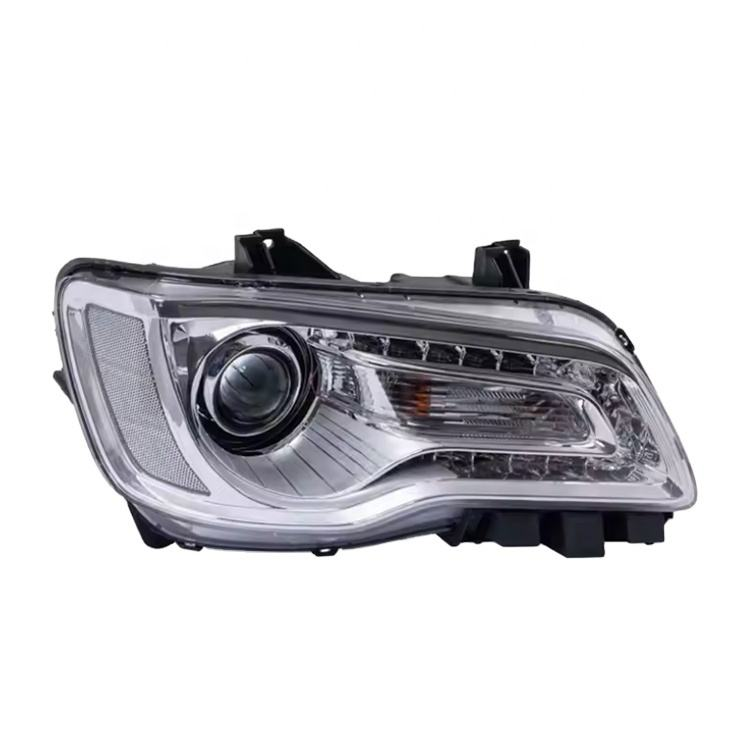
Detailed Architectural/Principle Analysis
The core technical divergence between fan and fanless LED headlights lies in thermal resistance management. LED chips generate significant junction heat that must be continuously dissipated to prevent luminous decay and premature diode failure. Fan-assisted LED headlights feature a micro-fan mounted on the rear of the bulb housing. This active mechanism forcefully draws cool air across a compact heat sink, keeping the LED junction temperature low even at wattages exceeding 45W per bulb. This setup enables high-lumen density, but exposes the system to failures if dust or moisture penetrates the fan bearings.
Conversely, fanless LED headlights utilize passive dissipation. They employ larger physical heat sinks constructed from high-thermal-conductivity aviation aluminum, often supplemented by copper heat pipes or flexible braided copper belts. Because there are no moving parts, fanless bulbs are highly resistant to vibration, moisture, and dust ingress. These units are physically larger around the base, requiring precise dimensional compatibility checks. Global distributors prioritize these models for standard passenger vehicle replacements due to their consistent failure-free lifespans.
To ensure structural integrity and fitment precision across diverse vehicle platforms, professional manufacturers apply strict quality control protocols. Quality assurance practices include visual inspection, dimensional measurement using Coordinated Measuring Machines (CMM), and paint/coating testing. Compliance with international standards is verified through formal certifications, such as CE registration (Certificate HK0624090149C) for car lamps and European EPR registration (DE1123252940071), ensuring smooth customs clearance and regulatory alignment in major European and North American markets.
Data/Solution Comparison
| Technical & Operational Parameter | Fan-Cooled LED Headlights | Fanless LED Headlights |
|---|---|---|
| Dissipation Type | Active (High-speed micro-fan) | Passive (Aviation aluminum heat sink) |
| Typical Power Capacity | Higher wattage (Suitable for high-lumen demands) | Moderate wattage (Optimized for thermal limits) |
| Mechanical Failure Risk | Present (Bearing wear, dust accumulation) | Zero (No moving mechanical parts) |
| Minimum Order Quantity (MOQ) | 5 PCS | 5 PCS |
| Accepted Payment Methods | T/T, D/P, L/C, Alipay | T/T, D/P, L/C, Alipay |
| Shipping & Logistics Channels | Sea Freight (FCL/LCL), Railway, Air Freight, DHL/FedEx | Sea Freight (FCL/LCL), Railway, Air Freight, DHL/FedEx |
Frequently Asked Questions (FAQ)
Which cooling style has a lower defect rate in high-volume distribution?
Fanless LED headlights exhibit lower defect and return rates in long-term commercial distribution. The absence of moving mechanical parts prevents premature failures caused by dust, water ingress, or mechanical bearing seizure under continuous operating vibrations.
How do housing dimensions affect bulk sourcing and vehicle compatibility?
Fanless models typically require larger base heat sinks to dissipate heat without a fan, requiring precise dimensional measurement (CMM) before bulk purchase to ensure clearance inside headlight housings. Fan-cooled models are more compact but require adequate air circulation space at the rear of the assembly.
What certification standards are required for importing auto lighting into Europe?
Importers bringing LED headlights into European markets must verify CE certification compliance (e.g., certificate HK0624090149C) and confirm valid Extended Producer Responsibility (EPR) registration to meet regional environmental and safety regulations.
Final Conclusion & Recommendations
Selecting between fan and fanless cooling architectures depends on the specific requirements of your regional target market. For performance-focused segments where maximum brightness is paramount, active fan-cooled assemblies are the industry standard. For high-volume distribution, retail, and commercial fleet maintenance where durability is the primary concern, fanless configurations provide a reliable, low-maintenance option. Procuring these components through an integrated manufacturing and trading ecosystem ensures stable access to certified designs, standardized visual and dimensional inspections, and flexible logistics solutions including full-container-load (FCL) shipping. For detailed technical solutions or support, please reach out to us via sales01@cnkebel.com.
About Us
Danyang Wanjiang Auto Parts Co., Ltd. is an established manufacturer and exporter of automotive body parts based in Jiangsu Province, China. Operating from a 10,000-square-meter facility with 80 employees, the company draws on 18 years of export and OEM/ODM experience. The factory specializes in producing car bumpers, grilles, headlights, engine hoods, and fenders, with annual exports exceeding 500 containers. The products comply with CE and EPR standards, serving automotive collision repair chains and parts distributors across the United States, Germany, and other global markets.

Lastest
-
Can you manufacture a front bumper based on our proprietary 3D CAD files?
2026-06-29 -
Can you provide the DOT and SAE certification documents for this rear bumper?
2026-06-29 -
How many production lines do you dedicate to making this bumper upper?
2026-06-29 -
Is there an online portal to track aftermarket support for the front bumper assembly?
2026-06-29 -
What is the standard production lead time for a container of engine hoods?
2026-06-29
SUBSCRIBE
INQUIRY