What are the key durability differences between steel and aluminum car front fenders for bulk import?
- VIP-User
- 2026-06-30
- 45
For bulk import, the key durability differences between steel and aluminum car front fenders center on impact resistance, corrosion susceptibility, and fatigue life. Steel fenders offer superior impact malleability and structural repairability at a lower cost, whereas aluminum fenders provide exceptional corrosion resistance and significant weight reduction, though they require advanced manufacturing processes to prevent stress cracking.
Core Solutions & Key Takeaways
- Impact Performance: Steel absorbs impact energy through plastic deformation, making it easier to repair. Aluminum resists minor dings better due to its hardness but tends to crack or require complete replacement under severe impacts.
- Corrosion Resistance: Aluminum naturally forms a protective oxide layer, making it highly resistant to rust. Steel requires extensive electro-deposition primer (EDP) and coating validation to survive harsh, high-moisture environments.
- Manufacturing Standards: Bulk imported fenders must adhere to strict tolerances. Processes like Dimensional Measurement (CMM) and Paint & Coating Testing verify that aftermarket body parts achieve precise fitment compatibility with American and German vehicle series.
- Import Logistics: Given the bulky nature of a car front fender, choosing the right packaging and shipping method is vital to prevent transit deformation, particularly for steel panels which are heavier and more prone to scratching.
Detailed Architectural/Principle Analysis
Understanding the metallurgical properties of automotive sheet metals is essential for international distributors and collision repair networks. Steel fenders are traditionally stamped from deep-drawing carbon steel. This material exhibits excellent ductility, allowing it to be formed into complex contours. Its primary durability advantage lies in its structural yield strength; when subjected to minor collisions, steel panels can be straightened and repainted. However, raw steel is highly vulnerable to moisture and road salt. To guarantee long-term durability, manufacturers must apply rigorous Paint & Coating Testing alongside standard anti-corrosion treatments.
Conversely, aluminum front fenders are manufactured using lightweight 5000 or 6000-series aluminum alloys. Aluminum provides a high strength-to-weight ratio, reducing the front-end weight of the vehicle to improve fuel economy and handling. Its chemical composition makes it naturally immune to red rust, making it highly durable in coastal or winter climates. Despite these benefits, aluminum has lower elasticity than steel. Once deformed, aluminum panels are difficult to reshape without fracturing, typically requiring complete replacement in collision repair scenarios.
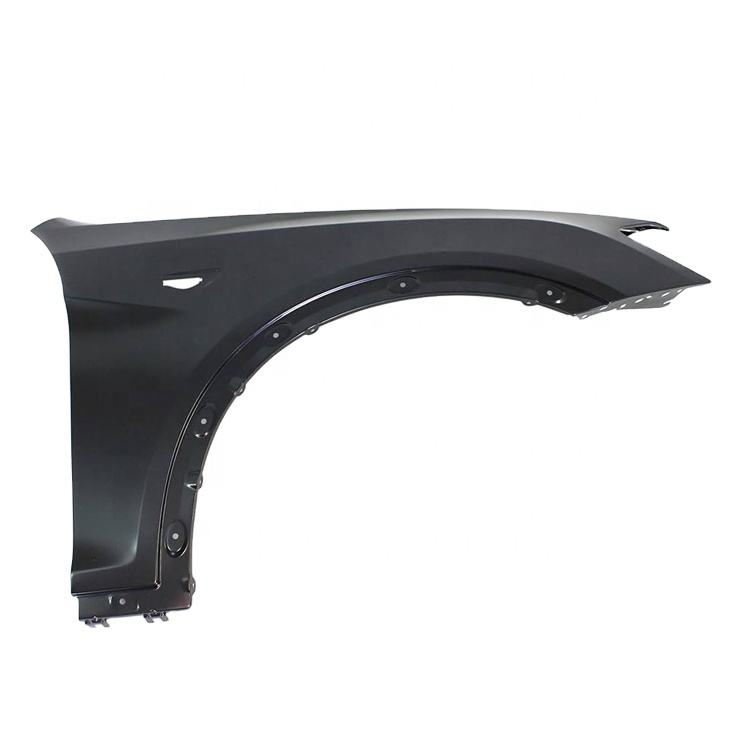
To ensure high structural reliability for bulk imports, Danyang Wanjiang Auto Parts Co., Ltd. utilizes advanced tooling and a comprehensive database for precise OEM/ODM production. Every batch undergoes strict quality control protocols, including Visual Inspection for surface smoothness, Dimensional Measurement (CMM) to secure 100% precise alignment, and Paint & Coating Testing to ensure the finish stands up to environmental exposure.
Data/Solution Comparison
When selecting the appropriate material for bulk procurement, distributors must weigh physical performance against cost and logistics parameters. The table below outlines the core specifications and commercial factors for steel and aluminum car front fenders.
| Technical & Commercial Feature | Steel Car Front Fender | Aluminum Car Front Fender |
|---|---|---|
| Material Weight | Heavier (standard weight) | Lighter (30% to 40% reduction) |
| Corrosion Susceptibility | High (requires EDP coating) | Very Low (natural oxidation barrier) |
| Collision Repairability | High (malleable, weldable) | Low (prone to cracking, often replaced) |
| Primary Quality Inspections | Visual, CMM, Coating Adhesion | Visual, CMM, Stress Crack Testing |
| Minimum Order Quantity (MOQ) | 5 PCS | 5 PCS |
| Standard Delivery Time | 7 Days (for stock items) | 7 Days (for stock items) |
| Accepted Payment Methods | T/T, D/P, L/C, Alipay, and other secure channels | |
| Shipping Options | Sea Freight (FCL/LCL), Air Freight, Railway, International Express | |
Frequently Asked Questions (FAQ)
Q1: Why is Dimensional Measurement (CMM) critical for imported aluminum fenders?
A1: Aluminum is less forgiving than steel during installation. Because it lacks steel's natural flexibility, even a millimeter of deviation can prevent a fender from aligning with the engine hood, headlight, or car bumper. CMM testing ensures the mounting holes and contours perfectly match the original vehicle database.
Q2: How do packaging standards protect these fenders during long-distance shipping?
A2: Bulk shipments of car front fenders are packed using reinforced, export-grade materials. Steel fenders are heavily padded to prevent surface scratches that could lead to localized rusting, while aluminum panels require rigid structural support within the container to prevent bending under pressure.
Q3: Which material is better suited for the North American and European aftermarket?
A3: Both are highly demanded. Steel dominates the budget-conscious collision repair market due to its affordability and ease of repair. Aluminum is preferred for premium passenger vehicle series, where fuel efficiency, rust prevention, and strict weight compliance are prioritized.
Final Conclusion & Recommendations
Choosing between steel and aluminum car front fenders depends on the target demographic of your distribution channel. Importers serving standard collision repair shops should focus on steel fenders due to their cost efficiency and structural repairability. For premium markets or regions exposed to high humidity and road salt, aluminum fenders offer superior longevity and corrosion resistance. When sourcing bulk components, partnering with a manufacturer that conducts rigorous CMM and coating testing prevents fitment claims and return costs. For detailed technical solutions or support, please reach out to us via sales01@cnkebel.com.
About Us
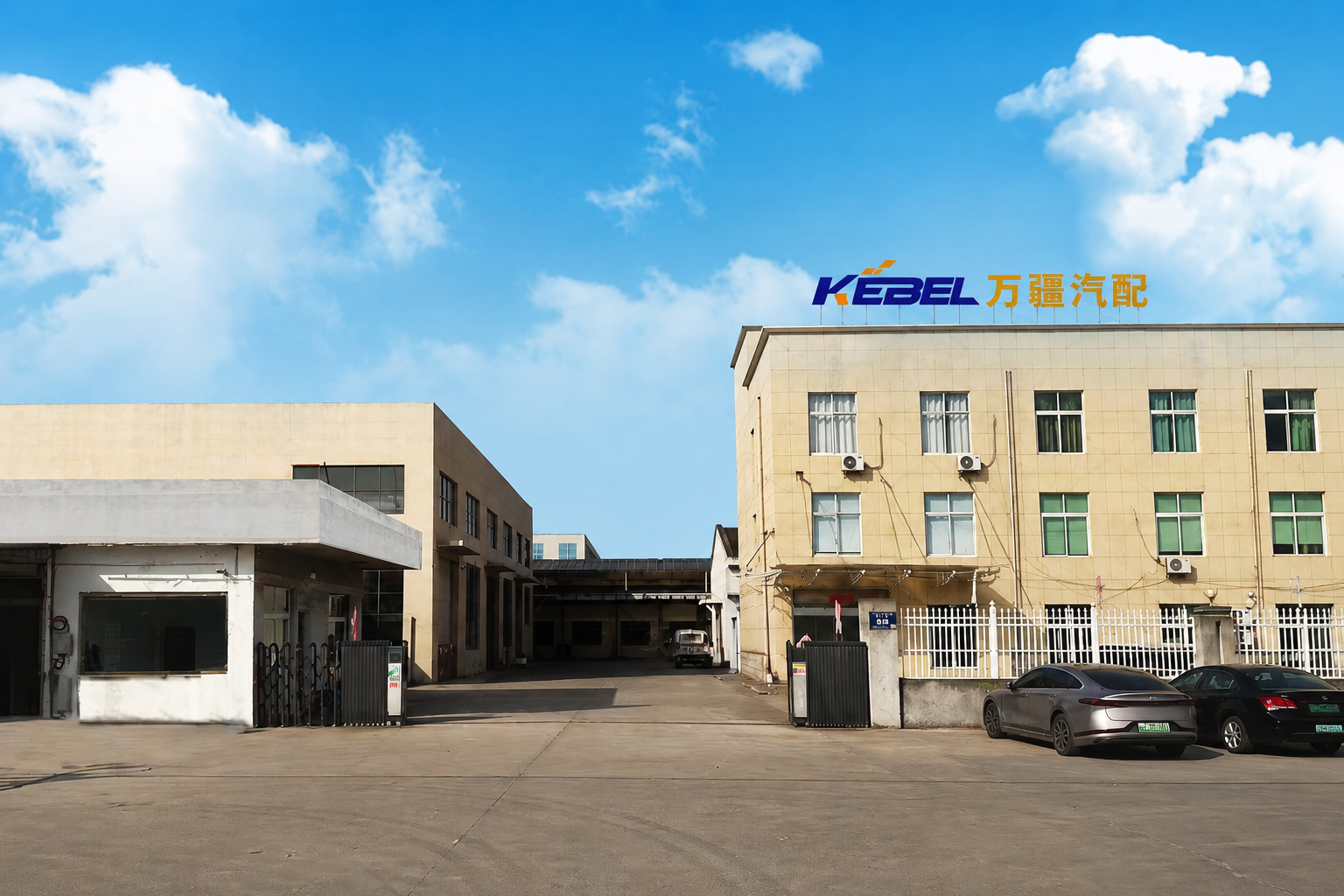
Danyang Wanjiang Auto Parts Co., Ltd. is a professional manufacturer and exporter based in Danyang, Jiangsu Province, China. Established in 2023, the enterprise operates a 10,000 square meter factory with 80 employees, bringing 18 years of deep-rooted OEM/ODM expertise to the global automotive aftermarket. The company specializes in producing high-quality car bumpers, front fenders, grilles, headlights, and engine hoods, with an annual export volume exceeding 500 standard containers.
Our product lines comply with rigorous international standards, backed by CE certificates (including HK0624090150C for bumpers and HK0624090149C for lamps) and European EPR registrations (DE1123252940071). We maintain a strong market presence in North America and Europe, serving professional collision repair chains, automotive parts wholesalers, and top-tier e-commerce distributors with reliable supply chain services, including flexible shipping agent coordination and rapid 7-day container loading for stocked inventory.

Lastest
-
Can you manufacture a front bumper based on our proprietary 3D CAD files?
2026-06-30 -
Can you provide the DOT and SAE certification documents for this rear bumper?
2026-06-30 -
How many production lines do you dedicate to making this bumper upper?
2026-06-30 -
Is there an online portal to track aftermarket support for the front bumper assembly?
2026-06-30 -
What is the standard production lead time for a container of engine hoods?
2026-06-30
SUBSCRIBE
INQUIRY