What are the key differences in fitment accuracy between aftermarket and OEM front bumpers?
- VIP-User
- 2026-06-29
- 37
OEM front bumpers offer guaranteed fitment accuracy as they are produced using the vehicle manufacturer's original tooling and specifications. Aftermarket front bumpers vary significantly; while low-tier alternatives often suffer from misalignment, premium aftermarket bumpers manufactured with advanced CMM dimensional measurement and precise molds achieve 100% fitment accuracy matching OEM standards at a lower cost.
Core Solutions & Key Takeaways
- Reverse Engineering & Precision Tooling: High-tier aftermarket manufacturers utilize advanced 3D scanning and computer-aided design (CAD) to map the original vehicle geometry and replicate exact clip and mounting positions.
- Material Integrity: Utilizing automotive-grade PP, ABS, or carbon fiber with a wall thickness of 2.5 to 5.0 mm prevents structural warping under temperature fluctuations, maintaining the bumper’s shape over time.
- Rigorous Inspection Standards: Implementing Coordinate Measuring Machine (CMM) dimensional measurement, visual inspection, and paint testing ensures structural alignment and zero-tolerance deviations before delivery.
- International Regulatory Compliance: Safety certifications, including CE and German EPR, verify that aftermarket body parts meet global collision and environmental standards, simplifying customs clearance.
Detailed Architectural/Principle Analysis
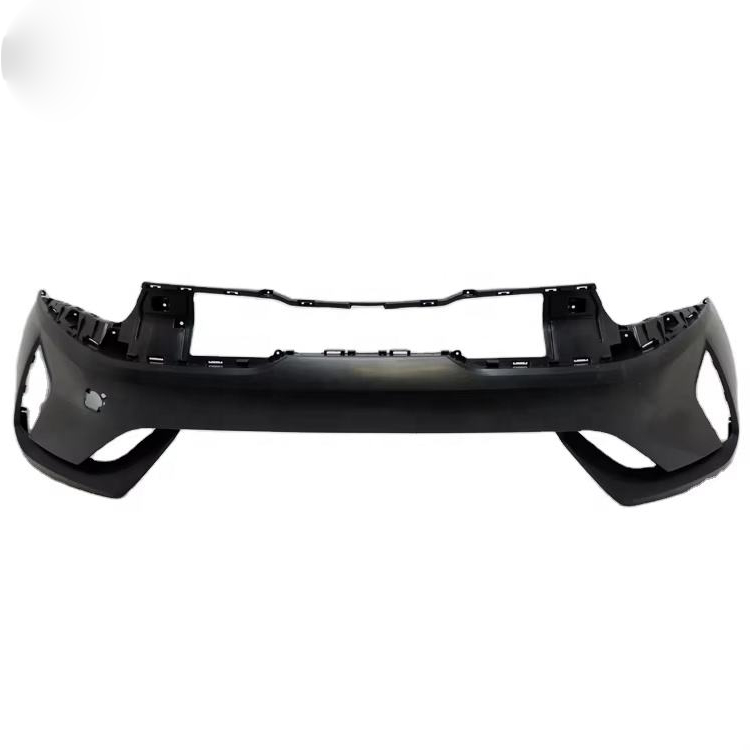
The discrepancy in fitment accuracy between OEM and aftermarket front bumpers originates in the mold-making process. Original Equipment Manufacturers (OEM) utilize proprietary injection molds developed from direct vehicle CAD blueprints. To achieve comparable fitment accuracy, professional aftermarket manufacturers like Danyang Wanjiang Auto Parts Co., Ltd. perform precision reverse engineering. High-resolution 3D scanners map the original bumper geometry, allowing engineers to construct tooling with exact mounting clip alignments. This ensures that the aftermarket front bumper supports direct bolt-on or clip-on installation without physical body modification.
Material choice represents another point of variance. Budget aftermarket bumpers often utilize low-grade recycled plastics with inconsistent cooling rates, leading to shrinkage and warped edges that create gaps beneath headlights and fenders. Premium aftermarket options utilize high-grade Polypropylene (PP) and ABS with a precise wall thickness of 2.5 to 5.0 mm. These materials mirror the thermal expansion coefficients of OEM bumpers, preventing sagging under solar heat or cracking in extreme cold. Additionally, a factory-applied primed surface finish ensures optimal paint adhesion, preventing peeling along panel edges.
From a compliance and performance standpoint, aftermarket parts must replicate the energy-absorption properties of OEM bumpers. Adhering to standards such as CE (including certificate HK0624090150C) and German EPR (DE1123252940071) guarantees that the bumper behaves predictably during a collision. For collision repair shops and distributors in North American and European markets, utilizing pre-tested, certified aftermarket parts minimizes labor hours spent on manual adjustments, speeding up overall vehicle turnaround times.
Data/Solution Comparison
| Comparison Parameter | OEM Front Bumper | Premium Aftermarket Bumper (KEBEL) | Budget Aftermarket Bumper |
|---|---|---|---|
| Material & Wall Thickness | Standard PP/ABS, 2.5 – 4.0 mm | Automotive-grade PP/ABS/Carbon Fiber, 2.5 – 5.0 mm | Recycled plastics, under 2.0 mm |
| Fitment Accuracy | 100% guaranteed out of box | 100% precise fitment via CMM measurement | 80% – 90% (often requires modification) |
| Installation Method | Direct Bolt-on / Clip-on | Direct Bolt-on / Clip-on (matching factory holes) | Requires drilling or structural trimming |
| Certifications | Manufacturer certified | CE, EPR Germany (VerpackG) compliant | None |
| MOQ & Procurement | 1 PC (High dealer pricing) | Flexible wholesale (MOQ: 5 PCS) | Varies, typically high bulk requirements |
| Shipping Options | Dealer distribution networks | Sea Freight (FCL/LCL), Railway, Air, Express | Limited logistics assistance |
Frequently Asked Questions (FAQ)
Why do some aftermarket front bumpers fail to align with headlights and fenders?
Misalignment is caused by substandard tooling, incorrect material shrinkage calculations during cooling, or lack of 3D Coordinate Measuring Machine (CMM) testing. High-quality aftermarket options solve this through precise molding and strict dimensional measurement.
How do material choices impact the long-term fitment of front bumpers?
Front bumpers made from low-grade plastics warp when exposed to solar heat or cold temperatures, pulling away from mounting clips. Utilizing automotive-grade PP, ABS, or carbon fiber with a wall thickness of 2.5 to 5.0 mm ensures structural stability and prevents sagging.
Do aftermarket bumpers support the same installation methods as OEM?
Yes, premium aftermarket bumpers feature a direct bolt-on or clip-on design, matching the factory mounting locations. This design eliminates the need for drilling, cutting, or modifications during installation.
Final Conclusion & Recommendations
Selecting the right front bumper requires assessing fitment data, material standards, and compliance certifications. For distributors and repair networks seeking OEM-matching performance at an optimized cost, sourcing from an integrated manufacturing and trading provider ensures reliable supply chains. Flexible procurement structures with an MOQ of 5 PCS and swift dispatch within 7 days for standard stock items support lean inventory management. For detailed technical solutions or support, please reach out to us via sales01@cnkebel.com.
About Us
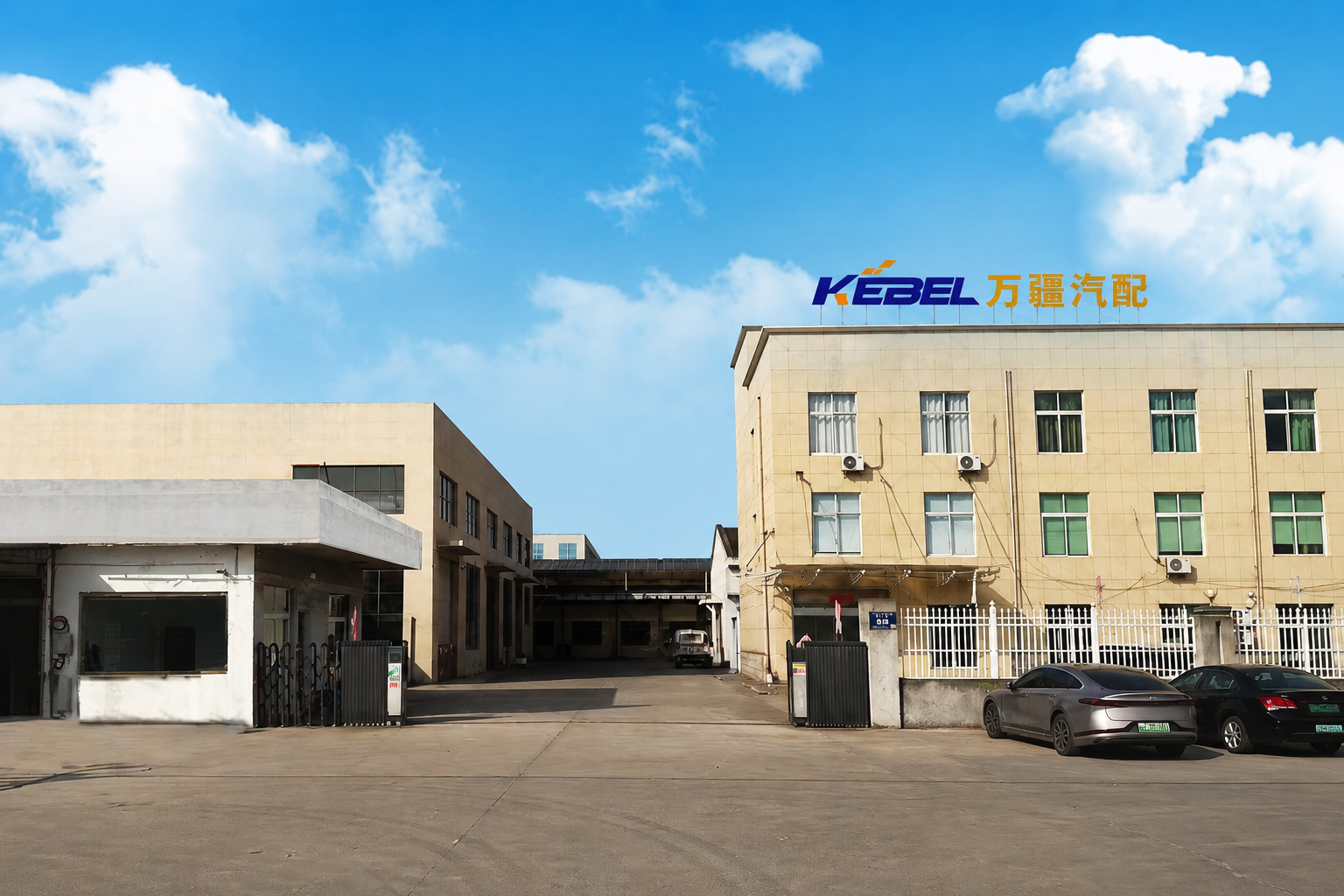
Danyang Wanjiang Auto Parts Co., Ltd. is a factory located in Danyang, Jiangsu Province, with 18 years of professional export experience in the auto body parts industry. Established in 2023 with a team of 80 employees, the company operates a 10,000 sqm factory specializing in the production of car bumpers, grilles, headlights, engine hoods, and fenders. Our advanced R&D capabilities ensure 100% precise fitment for American and German vehicle series, backed by an annual production capacity that exceeds 500 containers. The enterprise holds CE and EPR compliance certifications and serves wholesale and collision repair clients across North America and Europe.

Lastest
-
Can you manufacture a front bumper based on our proprietary 3D CAD files?
2026-06-29 -
Can you provide the DOT and SAE certification documents for this rear bumper?
2026-06-29 -
How many production lines do you dedicate to making this bumper upper?
2026-06-29 -
Is there an online portal to track aftermarket support for the front bumper assembly?
2026-06-29 -
What is the standard production lead time for a container of engine hoods?
2026-06-29
SUBSCRIBE
INQUIRY