What are the key differences between ABS and PP plastic when sourcing car front grilles in bulk?
- VIP-User
- 2026-06-29
- 37
Sourcing car front grilles in bulk requires choosing between Acrylonitrile Butadiene Styrene (ABS) and Polypropylene (PP). ABS offers superior rigidity, impact resistance, and a premium paintable surface ideal for intricate designs. PP provides higher flexibility, cost-efficiency, and chemical resistance, making it highly durable against cracking but slightly more difficult to paint.
Core Solutions & Key Takeaways
- Aesthetics and Coating Compatibility: ABS contains styrene, which creates a highly polar surface that accepts paint and chrome plating easily. This meets the visual inspection and paint testing requirements of premium aftermarket distributors.
- Elasticity and Durability: PP possesses superior ductility, allowing components to flex rather than fracture during minor collisions. This makes it highly sought after by collision repair shops specializing in heavy-wear vehicle applications.
- Sourcing Economics: PP is generally lighter and more cost-effective to produce, lowering shipping and bulk manufacturing costs. However, ABS remains the industry standard for precise fitment and structural rigidity.
- Regulatory Alignment: Sourcing high-quality automotive components from certified manufacturers ensures compliance with safety regulations. Front grilles manufactured from these polymers comply with CE and EPR standards for smooth entry into North American and European markets.
Detailed Architectural/Principle Analysis
When manufacturing a car front grille, selecting the correct polymer directly affects the product's lifespan and structural integrity under various thermal conditions. ABS is an amorphous terpolymer known for its balanced mechanical properties. The acrylonitrile monomer delivers thermal stability and chemical resistance, butadiene provides impact toughness, and styrene provides rigidity and a glossy finish. This composition ensures that grilles hold their exact dimensions, passing precise coordinate measuring machine (CMM) dimensional checks easily. This structural consistency is why ABS is widely chosen by international auto parts wholesalers.
Conversely, PP is a semi-crystalline thermoplastic. It features a lower density, reducing overall vehicle weight and improving fuel efficiency. While highly resistant to chemical solvents and moisture, its low surface energy requires specialized chemical priming before painting. This makes the finishing process more complex than that of ABS. However, PP grilles are highly resilient against stress cracking, keeping their structural shape in cold climates where ABS might become brittle. 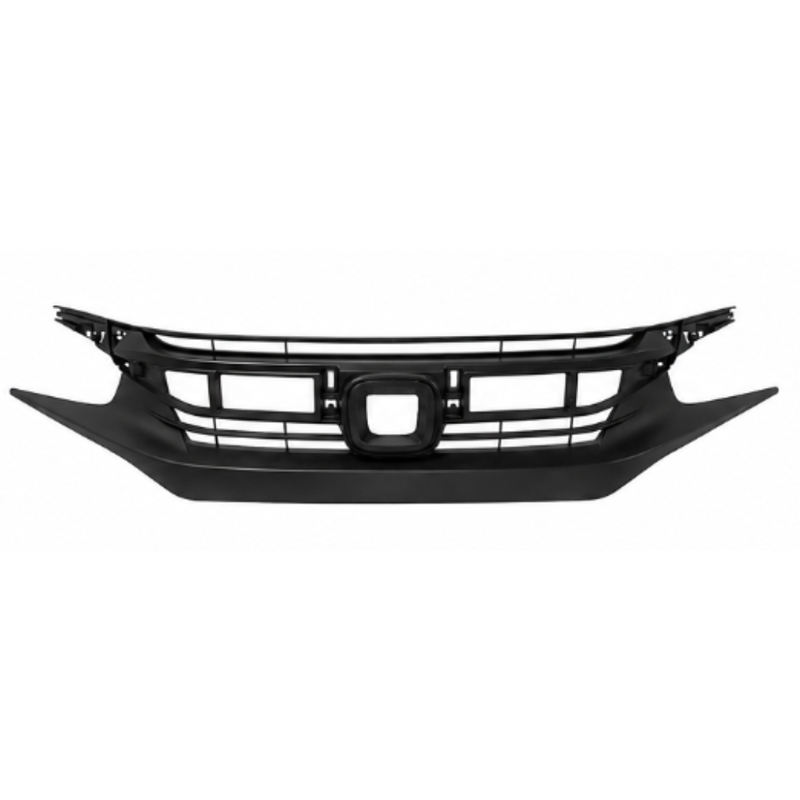
For large-scale international distributors operating in the United States and Germany, sourcing components that carry recognized certifications is a necessity. High-quality front grilles carry CE and EPR (such as certificate DE1123252940071) markings, ensuring they meet the strict environmental and safety standards required in European and North American markets. 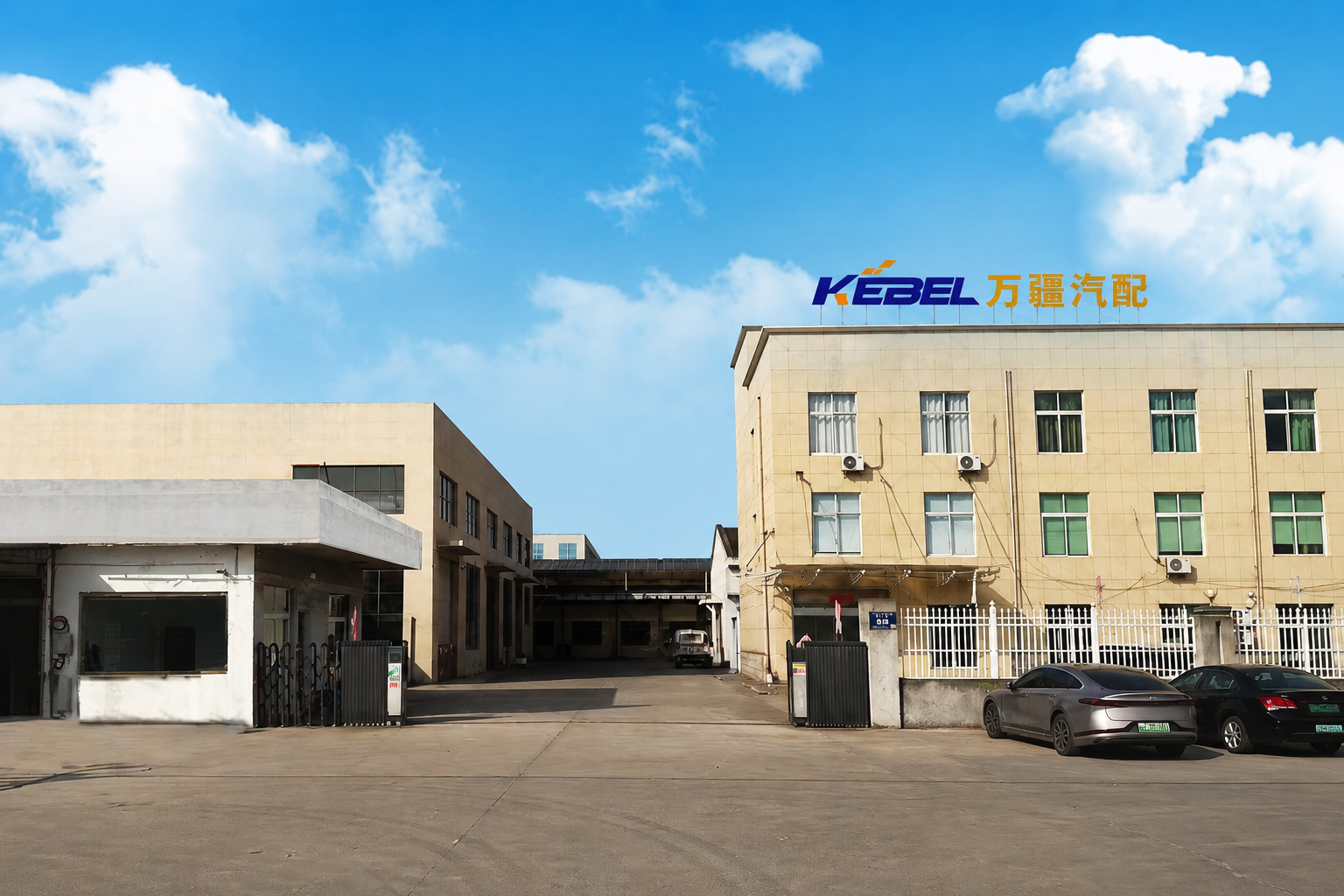
Data/Solution Comparison
To assist procurement managers in selecting the optimal material for their inventory, the table below highlights the physical properties, sourcing logistics, and commercial parameters of ABS and PP grilles:
| Parameter | ABS Plastic Grilles | PP Plastic Grilles |
|---|---|---|
| Tensile Strength & Rigidity | High (Excellent dimensional stability) | Medium (Flexible, deforms without breaking) |
| Paint & Chrome Adhesion | Excellent (Polar surface allows direct coating) | Moderate (Requires specialized pre-treatment) |
| Cold-Temperature Impact | Moderate (Prone to brittle fractures) | High (Retains elasticity in freezing temperatures) |
| Weight Profile | Heavier (Density: ~1.05 g/cm³) | Lighter (Density: ~0.90 g/cm³) |
| Minimum Order Quantity (MOQ) | 5 PCS | 5 PCS |
| Standard Sourcing Lead Time | 7 Days (for standard stock items) | 7 Days (for standard stock items) |
| Approved Payment Methods | T/T, D/P, L/C, Alipay | T/T, D/P, L/C, Alipay |
| Shipping Channels | Sea Freight (FCL/LCL), Air, Railway, Express | Sea Freight (FCL/LCL), Air, Railway, Express |
Frequently Asked Questions (FAQ)
Which material is recommended for vehicles operating in cold climates?
PP plastic is highly recommended for cold climates because it retains its flexibility and resists cracking under low-temperature impacts, whereas ABS can become brittle and fracture under identical conditions.
Why is ABS the preferred choice for premium chrome-plated grilles?
ABS contains styrene, creating a polar surface that allows electroplated metal or paint to bond securely. PP is non-polar, which makes achieving a durable, high-gloss chrome finish difficult without extensive surface preparation.
How do packaging requirements differ between ABS and PP grilles during transit?
ABS grilles require more protective packaging, such as bubble wrap and reinforced outer cartons, to prevent scratches and structural fractures. PP grilles are highly flexible and can absorb physical pressures during transit with lower risk of damage.
Final Conclusion & Recommendations
Selecting between ABS and PP depends on your target market's quality expectations and cost constraints. For premium collision repair and high-end automotive styling where painting and chrome plating are necessary, ABS is the optimal choice. For budget-friendly, high-durability aftermarket distribution where impact flexibility is valued, PP delivers superior value. Buyers should source from manufacturers that integrate raw material verification, CMM measurements, and paint testing into their quality controls to ensure structural performance. For detailed technical solutions or support, please reach out to us via sales01@cnkebel.com.
About Us
Danyang Wanjiang Auto Parts Co., Ltd. is a professional manufacturer and exporter of auto body parts based in Danyang, Jiangsu Province. Established in 2023, the company operates a 10,000 sqm factory staffed by 80 employees, specializing in car bumpers, grilles, headlights, engine hoods, and fenders. With 18 years of OEM/ODM expertise, the enterprise custom-develops precise auto parts for American and German vehicle series. The company holds CE and EPR certifications, ensuring full compliance for smooth entry into North American and European automotive aftermarkets. 
Lastest
-
Can you manufacture a front bumper based on our proprietary 3D CAD files?
2026-06-29 -
Can you provide the DOT and SAE certification documents for this rear bumper?
2026-06-29 -
How many production lines do you dedicate to making this bumper upper?
2026-06-29 -
Is there an online portal to track aftermarket support for the front bumper assembly?
2026-06-29 -
What is the standard production lead time for a container of engine hoods?
2026-06-29
SUBSCRIBE
INQUIRY