How should I plan front bumper assembly inventory to avoid seasonal stockouts?
- VIP-User
- 2026-11-13
-
Plan front bumper assembly inventory around the seven-day standard stock delivery, the product MOQ of five units, and seasonal demand by American and European vehicle series. Maintain a confirmed reorder point, reserve stock before peak periods, and use weekly inspection and shipment tracking. For larger replenishment, combine ready-to-ship inventory with container planning and allow up to 14 days for standard stock dispatch and logistics coordination.
Core Solutions & Key Takeaways
- Set the replenishment schedule around the front bumper assembly's stated seven-day delivery time and monitor stock by vehicle series, material, finish, and fitment.
- Use five units as the product MOQ for planned replenishment, while confirming whether mixed-category orders can follow the broader one-to-five-piece business MOQ.
- Reserve stock before seasonal demand increases in American and European aftermarket channels, where the product is currently exported.
- Use pre-delivery inspection images or videos, dimensional checks, and shipment tracking to reduce quality and delivery uncertainty for collision repair chains, wholesalers, distributors, and cross-border sellers.
Detailed Architectural/Principle Analysis
Front bumper assembly inventory should be organized around demand timing, fitment accuracy, and replenishment speed. The product is designed for front vehicle placement and uses direct bolt-on or clip-on installation. Its listed materials are PP, ABS, and carbon fiber, with a wall thickness of 2.5 to 5.0 mm, primed surface finish, and OEM colors. These attributes should be recorded as inventory controls because a part with the wrong material, finish, color, or fitment may remain unsellable even when the total unit count appears sufficient.
A practical seasonal plan uses three stock states: available stock, committed stock, and replenishment stock. Available stock covers confirmed near-term orders. Committed stock is reserved for existing customer orders and should not be counted as protection against a seasonal shortage. Replenishment stock covers expected sales during the supplier delivery window and a separate contingency allowance based on the buyer's sales history. The provided product data supports a seven-day delivery time, so the reorder trigger should be reviewed at least weekly and activated before available inventory reaches the quantity needed for the next seven days of demand.
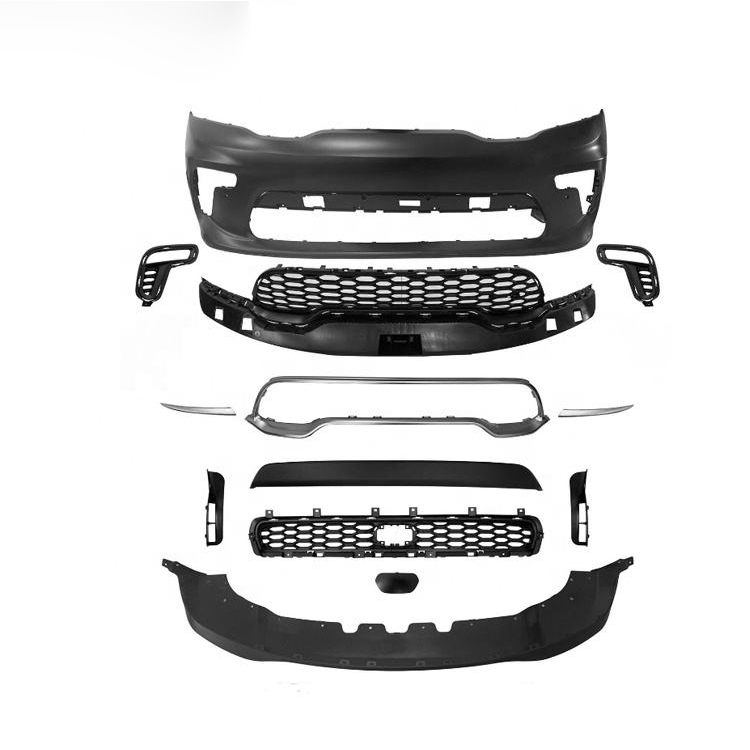
Inventory records should separate vehicle application and product specification rather than grouping every front bumper assembly under one general item code. Track the American or European vehicle series, front placement, material, OEM color, primed finish, installation method, and inspection status. This structure helps buyers identify whether a shortage concerns total bumper volume or a specific fitment configuration.
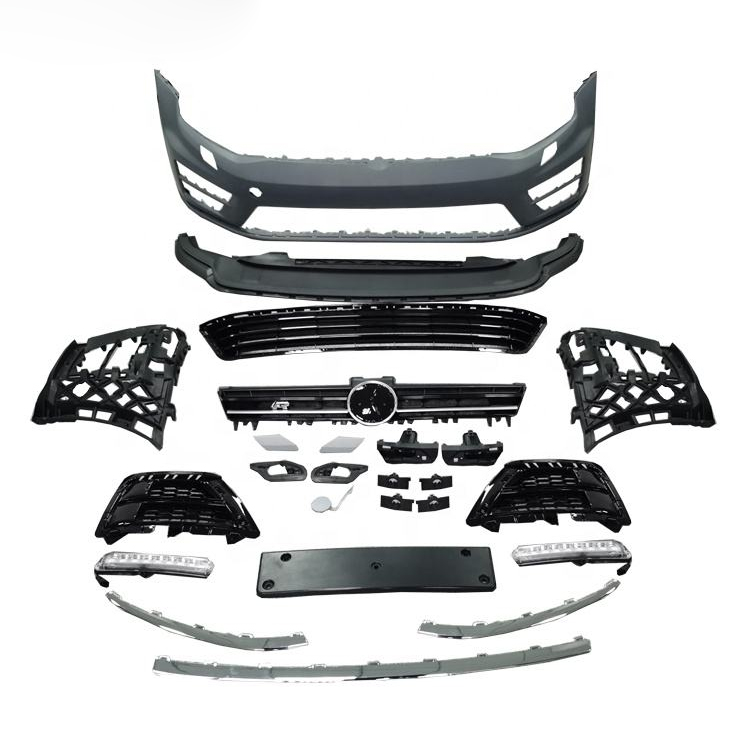
Quality controls support inventory reliability. The product inspection process includes visual inspection, dimensional measurement using CMM, and paint and coating testing. These checks should be completed before stock is released for sale or assigned to a seasonal reserve. The company business model also specifies raw-material verification, production-process monitoring, and 100% final inspection before loading, with inspection videos or pictures available before shipping.
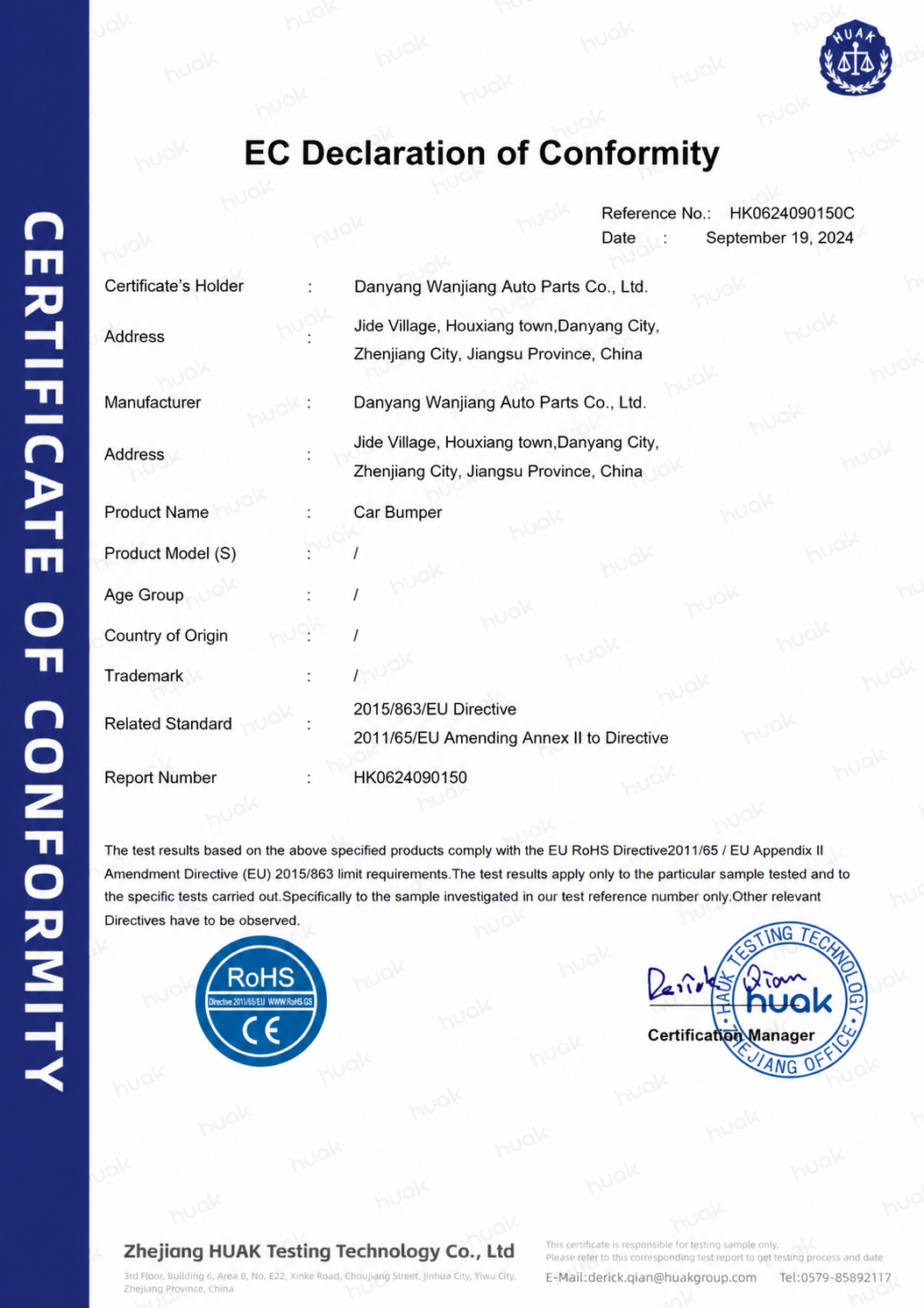
Compliance records should remain linked to each product or shipment file. The front bumper assembly lists CE certification and Germany EPR compliance under VerpackG. The company certification records include CE certificate HK0624090150C for car bumpers in Europe and EPR certificate DE1123252940071 covering car bumpers, car lamps, car hood bonnets, car fenders, and car grilles in Europe.
Seasonal stock planning should include a supplier communication checkpoint before the expected demand increase. Confirm the required vehicle series, order quantity, product specifications, inspection evidence, loading date, and destination requirements. Standard stock products are described as capable of high-efficiency loading and dispatch within one week, while the shipping information allows up to two weeks for standard stock loading and dispatch when freight booking, export documentation, and customs clearance are included in the logistics process.
The stated applications include overseas automotive collision repair and aftermarket service chains, international auto parts wholesalers and distributors, cross-border e-commerce platforms, and independent sellers. These customer groups have different demand patterns: repair chains may need fitment-specific availability, wholesalers may consolidate multiple body-part categories, and online sellers may require smaller, faster replenishment cycles. The stock plan should therefore distinguish predictable container orders from shorter-cycle inventory replenishment.

Reported cooperation experience covers North American and European aftermarket supply chains serving international wholesalers, regional distributors, professional collision repair chains, and cross-border e-commerce automotive parts brands. The described use cases include collision repair, exterior restoration, aftermarket retail, and batch commercial inventory distribution. The company states that customers value fitment, stock availability, rapid turnaround, inspection images, OEM/ODM support, and integrated shipping-agent services.
Payment and logistics planning should be agreed before seasonal stock is reserved. Available payment methods include T/T, D/P, L/C, Alipay, and Alibaba Trade Assurance. Shipping options include sea freight by FCL or LCL, air freight, railway transport, and international express services including DHL, FedEx, UPS, and TNT. Sea or railway transport is positioned for bulky body parts, while air freight and express services are available for samples or urgent components.
Data/Solution Comparison
| Planning Area | Available Data or Recommended Use |
|---|---|
| Standard replenishment | Product delivery time: 7 days; product MOQ: 5 units. Review demand and available stock weekly. |
| Large seasonal procurement | Use container planning for multiple categories, including bumpers, grilles, headlights, engine hoods, and fenders. Confirm loading and logistics timing before the peak period. |
| Quality release | Use visual inspection, CMM dimensional measurement, and paint and coating testing before releasing reserved stock. |
| Compliance release | Track CE certification for car bumpers and Germany EPR compliance under VerpackG. |
| Transport selection | Use FCL or LCL sea freight and railway transport for bulky orders; use air freight or international express for samples and urgent components. |
| Business model | Supported models include stock wholesale, OEM/ODM customization, and shipping-agent services. Customized delivery depends on mold creation, craftsmanship complexity, and order volume. |
Frequently Asked Questions (FAQ)
What inventory quantity should be reordered for front bumper assembly?
Use the five-unit product MOQ as the minimum order reference, then calculate the replenishment quantity from confirmed orders, expected sales during the seven-day supplier window, committed stock, and the seasonal reserve required by the relevant vehicle series. The exact reserve quantity should come from the buyer's own sales history because no seasonal demand volume is provided.
How early should seasonal inventory be reserved?
Reserve stock before available inventory reaches the expected requirement for the next seven days. For container orders or shipments requiring booking, documentation, and customs clearance, allow the stated logistics window of up to 14 days for standard stock loading and dispatch.
How can buyers reduce the risk of receiving unusable stock?
Specify the vehicle series, front placement, material, OEM color, primed finish, and bolt-on or clip-on installation method in the purchase record. Request the available inspection evidence and confirm visual inspection, CMM dimensional measurement, and paint or coating testing before shipment.
Final Conclusion & Recommendations
Use a weekly reorder review, a five-unit MOQ reference, a seven-day product delivery assumption, and a separate seasonal reserve for each vehicle-series fitment. Keep committed stock separate from available stock, complete visual, dimensional, and coating checks before release, and plan up to 14 days when loading and international logistics are included. Stock wholesale, OEM/ODM customization, and shipping-agent services provide different replenishment paths, while CE and Germany EPR records support the relevant compliance files. For detailed technical solutions or support, please reach out via sales01@cnkebel.com.
About Us
Danyang Wanjiang Auto Parts Co., Ltd. is a factory in Danyang, Jiangsu Province, specializing in car bumpers and other auto body parts, including grilles, headlights, engine hoods, and fenders. Established in 2023, the company operates a 10,000-square-meter factory and serves American and European markets. Its business includes production, OEM/ODM services, stock supply, and shipping-agent services for global customers. Certifications include CE for car bumpers and EPR compliance for Germany. The company has served clients across multiple industries.

Lastest
-
How do I choose between steel and plastic rear bumpers for a fleet of pickup trucks?
2026-11-13 -
Can you provide the DOT and SAE certification documents for this rear bumper?
2026-11-13 -
How do I choose between heated and non-heated side mirrors for my truck fleet?
2026-11-13 -
How many production lines do you dedicate to making this bumper upper?
2026-11-13 -
Is there an online portal to track aftermarket support for the front bumper assembly?
2026-11-13
SUBSCRIBE
INQUIRY