How do I know if a car front fender made of steel or aluminum is better for aftermarket collision repair?
- VIP-User
- 2026-06-29
- 44
Determining whether a steel or aluminum car front fender is better for aftermarket collision repair depends on vehicle specifications, budget, and performance needs. Steel fenders offer superior repairability, structural strength, and cost-efficiency for budget-conscious repairs. Aluminum fenders provide substantial weight reduction and corrosion resistance, but require specialized welding and higher replacement costs, making them ideal for modern, weight-sensitive vehicle models.
Core Solutions & Key Takeaways
- Material Compatibility: Match the replacement material exactly to the original equipment manufacturer (OEM) specifications to maintain structural integrity and pre-designed crumple zones.
- Weight vs. Cost Trade-off: Aluminum reduces front-end weight to improve fuel efficiency but incurs higher material costs. Steel remains the standard for cost-effective, high-strength collision repair.
- Installation & Fitment: Professional aftermarket suppliers, such as Danyang Wanjiang Auto Parts Co., Ltd., utilize precise dimensional measurements to ensure a 100% exact fit for American and German vehicle series.
- Application Scenarios: These automotive components serve overseas automotive collision repair chains, international auto parts wholesalers, and cross-border e-commerce platforms seeking certified, reliable body panels.
Detailed Architectural/Principle Analysis
During collision repair, the car front fender serves as an essential component for both vehicle aerodynamics and occupant safety. Steel fenders, fabricated from high-strength automotive steel, excel in kinetic energy absorption. They can withstand minor impacts and are easily reshaped by technicians during standard bodywork, reducing overall repair labor. Conversely, aluminum front fenders undergo rapid work-hardening when deformed, making them highly prone to cracking during post-collision reshaping. This physical characteristic usually necessitates complete component replacement rather than repair.
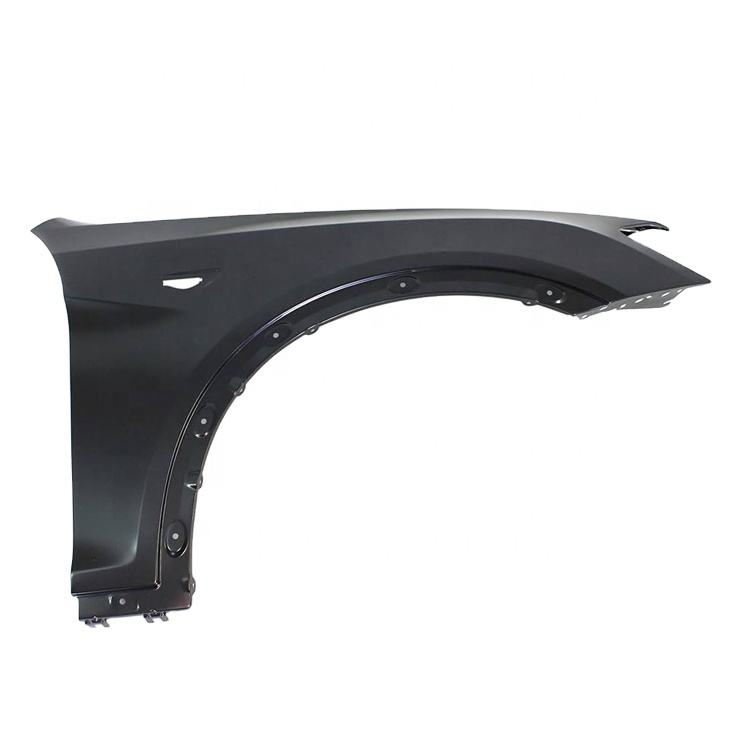
From a manufacturing standpoint, achieving precise tolerances is essential. Precision tooling ensures that the car front fender aligns perfectly with the adjacent engine hood, headlight, and car bumper. Quality-focused manufacturers employ rigorous visual inspection, dimensional measurement via Coordinate Measuring Machines (CMM), and specialized paint and coating testing to verify structural integrity. Compliance with international standards, such as the CE certification (HK0624090150C for bumpers) and EPR registration (DE1123252940071), guarantees that the parts meet strict safety and environmental regulations in European and North American markets.
In professional body shop partnerships across North America and Europe, matching original vehicle materials is a priority. B2B distributors and collision repair chains prioritize components that bypass fitment friction. Standardizing certified replacement parts reduces assembly time and eliminates typical installation alignment issues common in uncertified aftermarket body panels.
Data/Solution Comparison
| Evaluation Parameter | Steel Car Front Fender | Aluminum Car Front Fender |
|---|---|---|
| Material Weight | Heavy (Standard automotive grade) | Lightweight (Up to 40% weight reduction) |
| Collision Repairability | High (Can be reshaped and welded easily) | Low (Typically requires full replacement) |
| Corrosion Resistance | Moderate (Requires protective E-coating) | Excellent (Naturally rust-resistant) |
| Component Unit Cost | Cost-effective / Economical | Higher material and manufacturing cost |
| Target Vehicle Series | Traditional heavy-duty & standard models | Modern lightweight & premium vehicle models |
| Quality Testing Standard | CMM dimensional measurement, paint testing | CMM dimensional measurement, paint testing |
Frequently Asked Questions (FAQ)
Q1: Can I replace an original aluminum front fender with a steel aftermarket fender?
A1: While physically possible if dimensions match, it is not recommended. Altering the original material changes the vehicle's weight distribution, front-end aerodynamics, and designed collision crumple zones, potentially affecting safety sensor calibration and airbag deployment timing.
Q2: How do aftermarket manufacturers guarantee the fitment of steel and aluminum fenders?
A2: Professional manufacturers utilize precision tooling databases and Coordinate Measuring Machines (CMM) to map exact dimensions. This process guarantees a 100% precise fitment for target vehicle series, mirroring original factory parameters.
Q3: What are the packaging and shipping standards for aftermarket fenders to prevent damage?
A3: Bulk shipments utilize reinforced, export-grade protective packaging to withstand maritime and overland transit. Standard orders support Sea Freight (FCL/LCL), Railway, and Air Freight, with standard stock items loaded and dispatched rapidly.
Final Conclusion & Recommendations
Choosing between steel and aluminum front fenders hinges on the original vehicle design and the specific goals of the collision repair. For cost-sensitive repairs on traditional steel-bodied vehicles, steel fenders provide the most practical and repairable option. For modern lightweight vehicles, aluminum is required to maintain fuel efficiency and precise structural balance. Working with an integrated manufacturer that provides rigorous testing, low minimum order quantities (such as an MOQ of 5 pieces for car front fenders), and fast shipping simplifies global procurement. For detailed technical solutions or support, please reach out to us via sales01@cnkebel.com.
About Us
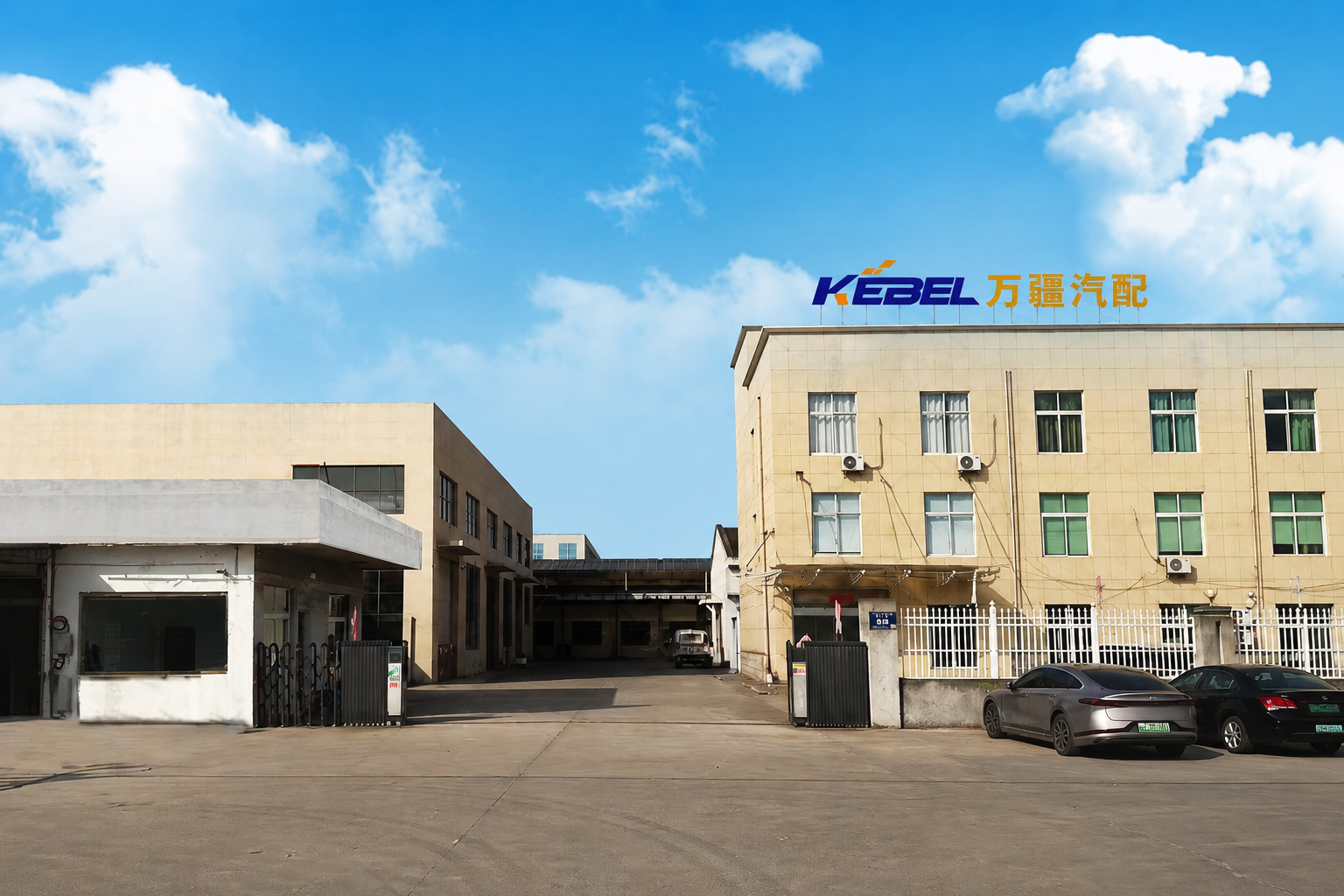
Danyang Wanjiang Auto Parts Co., Ltd. is a professional exporter of auto body parts based in Jiangsu Province, specializing in the production of car bumpers, grilles, headlights, engine hoods, and fenders. Established in 2023, the enterprise operates within a 10,000-square-meter factory area supported by 80 employees and delivers custom-developed car body parts with 18 years of R&D expertise. The company has served clients across multiple industries globally, providing products certified under European CE and German EPR standards to ensure smooth entry into international markets.

Lastest
-
Can you manufacture a front bumper based on our proprietary 3D CAD files?
2026-06-29 -
Can you provide the DOT and SAE certification documents for this rear bumper?
2026-06-29 -
How many production lines do you dedicate to making this bumper upper?
2026-06-29 -
Is there an online portal to track aftermarket support for the front bumper assembly?
2026-06-29 -
What is the standard production lead time for a container of engine hoods?
2026-06-29
SUBSCRIBE
INQUIRY