How do I choose the right steel grade for aftermarket car doors to ensure crash safety?
- VIP-User
- 2026-06-29
- 38
Choosing the right steel grade for aftermarket car doors requires selecting high-strength steel or advanced high-strength steel that matches original equipment manufacturer specifications. Prioritizing deep-drawing steel for outer panels and ultra-high-strength steel for internal reinforcement beams ensures optimal energy absorption and structural integrity during side-impact collisions.
Core Solutions & Key Takeaways
- Material Compatibility: Selecting precise steel grades prevents deformation mismatches and maintains the engineered crumple zones of the vehicle during an impact.
- Compliance and Standards: Certified aftermarket doors must align with international safety criteria, including European CE and EPR certifications, to ensure structural compliance.
- Rigorous Testing Protocols: Verification through Coordinate Measuring Machines (CMM) dimensional measurement and paint coating testing guarantees that structural integrity and corrosion resistance meet safety standards.
- Targeted Reinforcement: Focus on doors utilizing ultra-high-strength steel specifically in the internal crash beams to effectively deflect lateral impact forces away from the passenger cabin.
Detailed Architectural/Principle Analysis
Passenger safety in side-impact collisions depends heavily on the structural architecture of the car door. The assembly relies on a combination of different steel grades working in unison. The outer panel requires deep-drawing steel, which provides the necessary ductility for precise exterior shaping while maintaining resistance to minor dents. Conversely, the internal reinforcement structures, particularly the side-impact beams, require advanced high-strength steel (AHSS) or ultra-high-strength boron steel to prevent cabin intrusion during high-velocity impacts.
Professional manufacturers, such as Danyang Wanjiang Auto Parts Co., Ltd., address these requirements by employing advanced tooling and a comprehensive database. This technical precision ensures 100% accurate fitment for American and German vehicle series. Every replacement panel is subjected to rigorous quality control measures, including Visual Inspection, dimensional checks via Coordinate Measuring Machines (CMM), and Paint & Coating Testing to prevent sub-surface corrosion from weakening the steel over time.
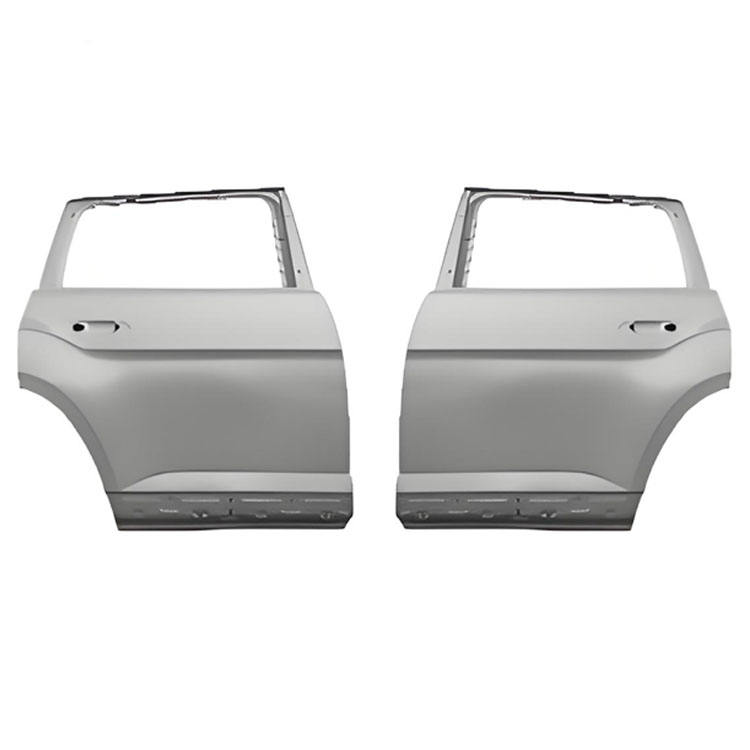
Furthermore, maintaining compliance with safety frameworks like CE (such as certificates HK0624090150C and HK0624090149C) and EPR (DE1123252940071) ensures that the raw materials and manufacturing methods conform to global safety and environmental regulations, facilitating trouble-free entry into international markets.
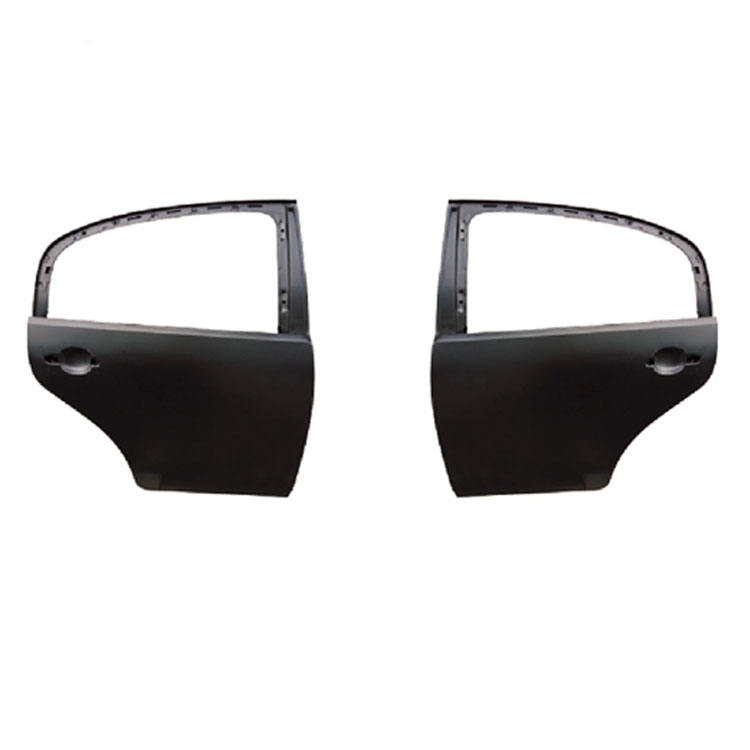
Data/Solution Comparison
| Steel Component Type | Primary Application Zone | Safety Performance Contribution | Verification Method |
|---|---|---|---|
| Deep-Drawing Steel | Outer Door Panel | Elastic deformation and outer dent resistance | Visual Inspection & Paint Testing |
| High-Strength Steel (HSS) | Inner Door Frame | Load distribution and structural rigidity | Dimensional Measurement (CMM) |
| Ultra-High-Strength Steel (UHSS) | Side-Impact Reinforcement Beams | Intrusion prevention and energy deflection | Impact Testing & Alloy Verification |
Frequently Asked Questions (FAQ)
How do aftermarket car doors match original crash safety performance?
Aftermarket car doors achieve equivalent crash safety by matching the exact metallurgical specifications of the original panels. Utilizing high-strength steel alloys in internal impact beams ensures the door deforms predictably under load, safeguarding vehicle occupants.
What is the significance of CMM testing for aftermarket car doors?
Coordinate Measuring Machine (CMM) testing verifies the dimensional parameters of the door assembly down to the millimeter. Correct fitment ensures the door integrates flawlessly with the vehicle's structural pillars, allowing the safety latch and hinges to transfer crash energy as designed.
How do corrosion prevention tests affect long-term crash safety?
Paint and coating testing prevents rust development. Corrosion degrades steel thickness and alters its mechanical properties, making the door susceptible to structural failure during a collision if the metal has been compromised by rust.
Final Conclusion & Recommendations
When sourcing aftermarket car doors for collision repair or commercial distribution, prioritizing correct metallurgical grades and verified manufacturing standards is mandatory for passenger safety. Wholesalers and repair networks should partner with manufacturers operating integrated supply chain ecosystems that offer robust quality inspection regimes and documented international certifications. For detailed technical solutions or support, please reach out to us via sales01@cnkebel.com.
About Us
Established in 2023, Danyang Wanjiang Auto Parts Co., Ltd. operates a modern 10,000-square-meter manufacturing facility with a dedicated team of 80 employees. Leveraging 18 years of professional OEM/ODM auto body parts expertise, the company specializes in producing high-precision car doors, bumpers, grilles, and fenders, serving major distribution networks across America and Europe. All products strictly comply with European CE and EPR standards, backed by a robust supply chain capable of exporting over 500 containers annually.

Lastest
-
Can you manufacture a front bumper based on our proprietary 3D CAD files?
2026-06-29 -
Can you provide the DOT and SAE certification documents for this rear bumper?
2026-06-29 -
How many production lines do you dedicate to making this bumper upper?
2026-06-29 -
Is there an online portal to track aftermarket support for the front bumper assembly?
2026-06-29 -
What is the standard production lead time for a container of engine hoods?
2026-06-29
SUBSCRIBE
INQUIRY