How do I choose between steel and plastic car front fenders for wholesale distribution?
- VIP-User
- 2026-06-29
- 48
Choosing between steel and plastic car front fenders for wholesale distribution requires evaluating structural demands and shipping constraints. Steel fenders deliver original equipment rigidity and are preferred for heavy-duty collision repairs, while plastic fenders offer rust resistance and weight savings. Wholesalers must balance these material characteristics with regional safety certifications to meet diverse aftermarket needs.
Core Solutions & Key Takeaways
- Targeted Aftermarket Demands: Steel and plastic car front fenders serve distinct needs across overseas automotive collision repair shops, regional distributors, and cross-border e-commerce platforms specializing in American and German vehicle series.
- Logistical Efficiency: Sourcing from an established manufacturer allows distributors to leverage high-volume warehousing, facilitating standard container loading within 1 week (7 days) for standard stock parts.
- Strict Quality Protocols: Securing parts checked via Visual Inspection, Dimensional Measurement (CMM), and Paint & Coating Testing minimizes fitment issues and product returns.
- Regulatory Compliance: Fenders must meet international market entry requirements, including CE and EPR regulations, to avoid customs friction in European and North American markets.
Detailed Architectural/Principle Analysis
Distributors must analyze structural integrity, impact performance, and weight variations when selecting car front fenders. Steel front fenders provide original equipment (OE) equivalent rigidity, making them preferred for heavy-duty collision repairs. Conversely, plastic alternative fenders offer lightweight characteristics that improve fuel efficiency and resist rust. The choice impacts shipping volumes, storage requirements, and total procurement costs.
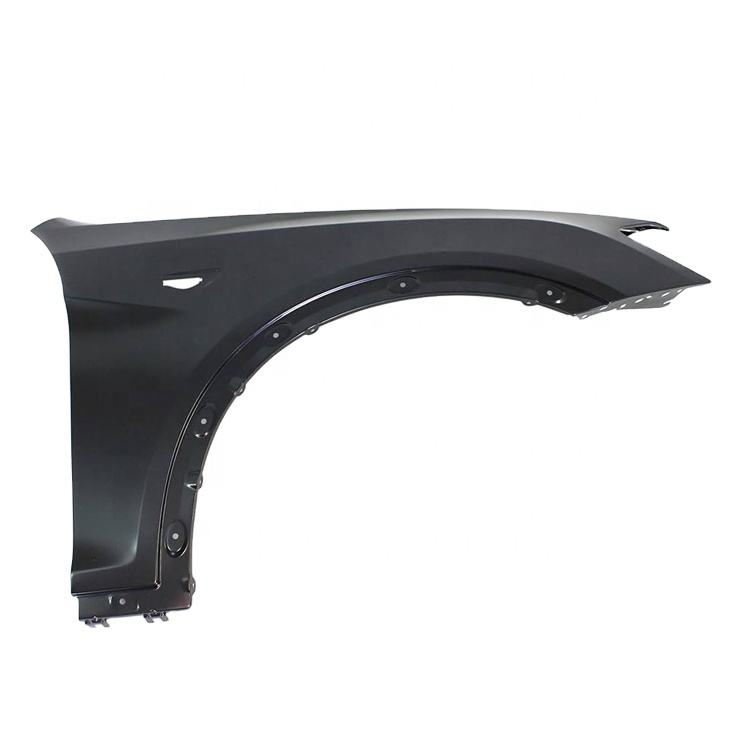
Quality assurance represents a critical factor for wholesale distribution. Modern manufacturing facilities employ Visual Inspection, Dimensional Measurement via Coordinate Measuring Machines (CMM), and Paint & Coating Testing to ensure each car front fender matches exact vehicle specifications. These rigorous testing protocols prevent common aftermarket issues like misalignment and paint peeling, which are critical for high-volume B2B clients and Tier-1 buyers.
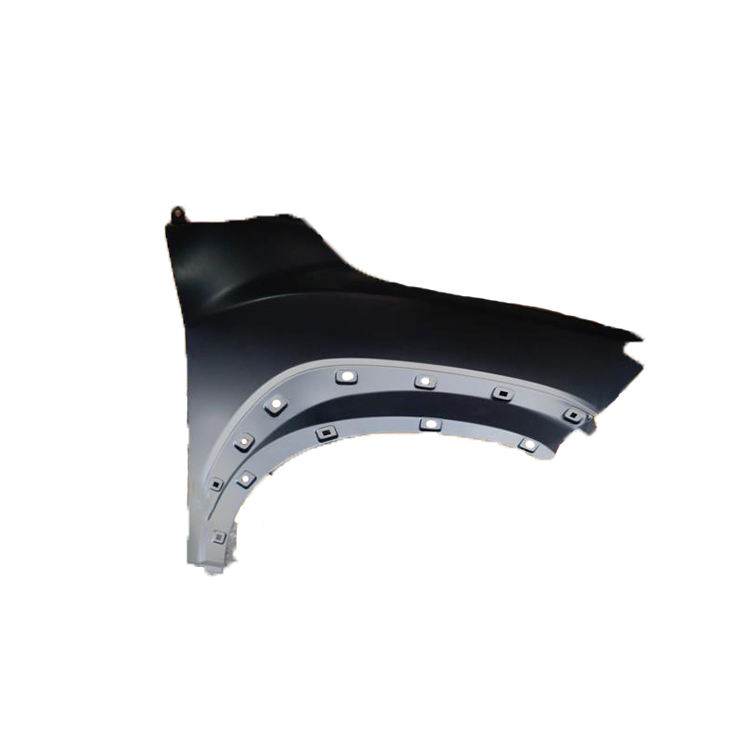
Compliance certification plays a significant role in international trade. Fenders distributed in European and North American markets must adhere to regional standards. For instance, holding CE and EPR (such as certificate DE1123252940071) credentials ensures that auto body components, including car front fenders, bumpers, and grilles, meet environmental and safety guidelines. Successful cooperation cases show that North American and European distributors prioritize manufacturers with these certifications to eliminate legal and customs friction.
Data/Solution Comparison
| Parameter | Steel Car Front Fenders | Plastic Car Front Fenders |
|---|---|---|
| Material Rigidity | High (OE-equivalent structural strength) | Medium (Flexible, impact-absorbent) |
| Corrosion Resistance | Requires anti-rust coating/treatment | High (Naturally rust-proof) |
| Weight & Shipping Impact | Heavier (Higher shipping weight per unit) | Lighter (Optimized for bulk LCL/FCL freight) |
| Standard MOQ | 5 PCS | 5 PCS |
| Inspection Protocol | CMM dimensional check, coating testing | Visual check, dimensional check |
| Lead Time (Stock) | 7 Days (Within 1 week container loading) | 7 Days (Within 1 week container loading) |
Frequently Asked Questions (FAQ)
Q1: What are the primary quality checks for wholesale car front fenders?
A1: Wholesale front fenders undergo three core quality procedures: Visual Inspection for surface defects, Dimensional Measurement (CMM) to guarantee precise fitment on American and German vehicle series, and Paint & Coating Testing to verify long-term resistance to environmental wear.
Q2: How does the choice of material affect shipping and logistics costs?
A2: Steel fenders are heavier, increasing overall container weight, which fits Sea Freight (FCL/LCL) or Railway Transport. Plastic fenders are lighter, reducing weight but requiring careful packaging to prevent deformation. Standard wholesale orders are packed using reinforced protective materials to withstand international transit.
Q3: What certifications are required for importing car front fenders into Europe?
A3: Importing into Europe requires CE compliance and German EPR registration (such as certificate DE1123252940071). These certifications guarantee that the auto body parts meet European safety, environmental, and waste management standards.
Final Conclusion & Recommendations
Wholesale distributors should align their material choices with their target market's specific repair demands. Auto body shops involved in structural collision repair generally prefer steel front fenders due to original structural rigidity, while online retail platforms often opt for lightweight plastic fenders to minimize shipping costs. Selecting an integrated manufacturer that supports low minimum order quantities (MOQ of 5 PCS), rapid 7-day stock delivery, and comprehensive quality checks with pre-shipment video verification minimizes purchase risks. For detailed technical solutions or support, please reach out to us via sales01@cnkebel.com.
About Us
Danyang Wanjiang Auto Parts Co., Ltd. is a dedicated exporter of auto body parts based in Jiangsu Province, specializing in the production of car bumpers, fenders, grilles, and headlights. Operating from a 10,000-square-meter factory with a team of 80 employees, the company leverages 18 years of industry experience to manufacture components for American and German vehicle series. The production facility delivers an annual capacity of hundreds of containers, with exports reaching over 500 containers annually to markets in America and Europe. Standard stock products are prepared for loading within one week, supported by visual and dimensional quality checks prior to dispatch.
Our products carry verified CE and EPR regulatory credentials, ensuring complete compliance for regional distributors. The organization has established long-term supply chain partnerships with B2B automotive parts wholesalers and collision repair networks across the United States and Germany.

Lastest
-
Can you manufacture a front bumper based on our proprietary 3D CAD files?
2026-06-29 -
Can you provide the DOT and SAE certification documents for this rear bumper?
2026-06-29 -
How many production lines do you dedicate to making this bumper upper?
2026-06-29 -
Is there an online portal to track aftermarket support for the front bumper assembly?
2026-06-29 -
What is the standard production lead time for a container of engine hoods?
2026-06-29
SUBSCRIBE
INQUIRY