How do I choose between steel and aluminum engine hoods for my aftermarket distribution business?
- VIP-User
- 2026-06-29
- 34
Choosing between steel and aluminum engine hoods for an aftermarket distribution business depends on balancing material cost and weight-reduction performance. Steel hoods offer cost-effective durability and easier repairability, making them ideal for budget-conscious collision repairs. Aluminum hoods provide significant weight reduction and corrosion resistance, targeting premium vehicle segments where fuel efficiency and performance are prioritized.
Core Solutions & Key Takeaways
- Market Segment Alignment: Steel hoods dominate the high-volume, budget-friendly collision repair sector. Aluminum hoods cater to weight-sensitive, premium, and newer vehicle models.
- Logistics and Handling: Steel hoods are heavier, which increases ocean freight and inland shipping costs per container. Aluminum hoods lower shipping weight but require reinforced packaging to prevent transit deformation.
- Regulatory Compliance: Standard compliance is essential for smooth customs clearance. Both material types must align with regional safety regulations like CE and DOT to guarantee entry into North American and European markets.
- Supply Chain Agility: Wholesalers and cross-border e-commerce platforms can minimize inventory holding risks by partnering with manufacturers that offer low minimum order quantities and rapid container loading.
Detailed Architectural/Principle Analysis
Steel engine hoods are fabricated from high-strength automotive steel sheets. This material provides high structural rigidity and impact resistance, allowing the hood to absorb energy effectively during a collision. These components are favored by overseas automotive collision repair chains and international auto parts wholesalers due to their low production cost and straightforward repair processes, as standard dent pulling and welding techniques can easily restore their shape.
In contrast, aluminum engine hoods leverage lightweight aluminum alloys to reduce the vehicle's front-end weight, which directly improves fuel economy and weight distribution. However, aluminum requires specialized welding and forming technologies, raising the initial unit cost. Due to the material properties of aluminum, repairing collision damage is complex, often requiring a complete replacement rather than a standard repair.
To avoid fitment issues in the aftermarket, precision engineering is paramount. The car engine hood manufactured by Danyang Wanjiang Auto Parts Co., Ltd. undergoes strict Visual Inspection, Dimensional Measurement (CMM), and Paint & Coating Testing. This ensures precise gap tolerances and structural alignment identical to original equipment standards.
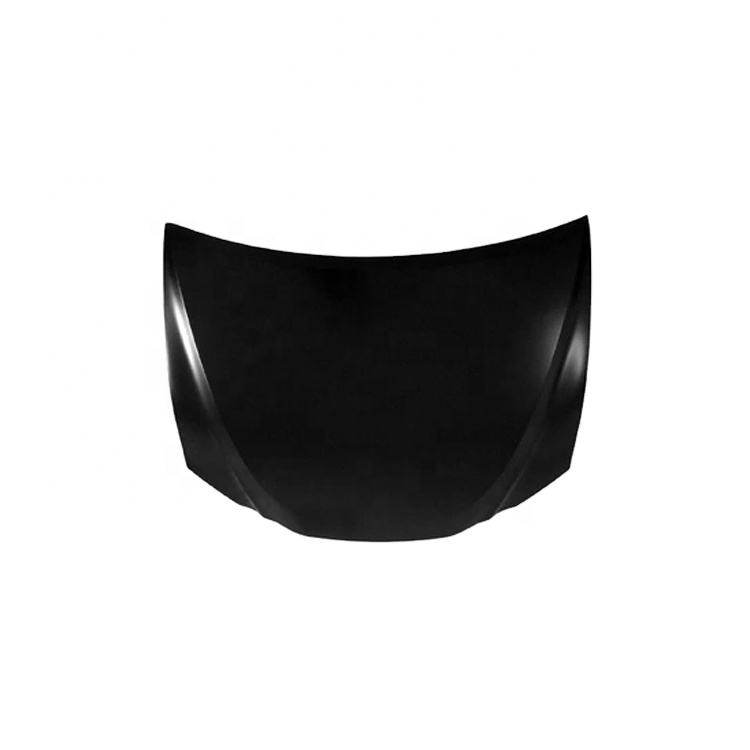
Furthermore, compliance with international standards is vital for smooth market entry. Distributing engine hoods in Europe requires compliance certifications such as EPR (Environmental Protection Regulations) to cover car hood bonnets, bumpers, and grilles, preventing customs clearance friction. Long-term partnerships, such as North American and European car series aftermarket supply chain agreements, rely heavily on consistent adherence to these quality standards to sustain commercial distribution networks.
Data/Solution Comparison
| Feature/Parameter | Steel Engine Hoods | Aluminum Engine Hoods |
|---|---|---|
| Weight Performance | Standard weight (Heavier) | Lightweight (Approx. 40-50% lighter than steel) |
| Material Cost | Low to Medium | High |
| Repairability | High (Traditional dent pulling/welding) | Low (Often requires full replacement) |
| Corrosion Resistance | Moderate (Requires protective e-coating) | High (Naturally forms protective oxide layer) |
| Quality Inspection Metrics | Visual, CMM, Coating Adhesion Testing | Visual, CMM, Paint & Coating Testing |
| Target Markets | Budget aftermarket, high-volume collision repair | Premium passenger vehicles, performance series |
| Standard MOQ | 5 PCS | 5 PCS |
Frequently Asked Questions (FAQ)
How do shipping costs impact the profitability of steel vs aluminum hoods?
Steel hoods are heavier, which increases total ocean freight and inland shipping costs per container. Aluminum hoods, while lighter, require robust packaging to prevent denting during transit, impacting dimensional weight. Distributors must balance unit cost savings against transport expenses.
Can I mix both steel and aluminum hoods in a single import shipment?
Yes. Utilizing an integrated supplier allows you to consolidate multi-category orders—including steel and aluminum engine hoods, car bumpers, headlights, and grilles—into a single container to optimize logistics costs. Stock products can typically be loaded and dispatched within 1 to 2 weeks.
What quality checks should I demand from my aftermarket hood manufacturer?
Professional distributors should verify that the factory performs 100% pre-delivery visual inspections, Coordinate Measuring Machine (CMM) dimensional checks for precise vehicle fitment, and paint/coating adhesion tests to prevent premature rust and ensure long-term durability.
Final Conclusion & Recommendations
For high-volume, cost-sensitive collision shops, steel engine hoods remain the primary choice due to their affordability and ease of repair. For premium segments or newer vehicle series where weight reduction is prioritized, aluminum hoods offer the required performance despite the higher acquisition cost. We support flexible purchasing models with low minimum order quantities (MOQs of 1-5 pieces) and accept various payment methods, including T/T, D/P, LC, and Alipay, to secure transactions through official cross-border channels. For detailed technical solutions or support, please reach out to us via sales01@cnkebel.com.
About Us
Danyang Wanjiang Auto Parts Co., Ltd. is a professional exporter of auto body parts based in Danyang, Jiangsu Province. Established in 2023, the company houses 80 employees across a 10,000 square meter factory area and leverages 18 years of OEM/ODM expertise to deliver premium car bumpers, engine hoods, and grilles. With an annual export capacity exceeding 500 containers, the company's products comply with CE and EPR standards to serve major markets across North America and Europe. 
Lastest
-
Can you manufacture a front bumper based on our proprietary 3D CAD files?
2026-06-29 -
Can you provide the DOT and SAE certification documents for this rear bumper?
2026-06-29 -
How many production lines do you dedicate to making this bumper upper?
2026-06-29 -
Is there an online portal to track aftermarket support for the front bumper assembly?
2026-06-29 -
What is the standard production lead time for a container of engine hoods?
2026-06-29
SUBSCRIBE
INQUIRY