How do I choose between steel and aluminum car front fenders for wholesale distribution?
- VIP-User
- 2026-06-29
- 36
Choosing between steel and aluminum car front fenders for wholesale distribution requires evaluating target vehicle models, regional market budgets, and collision repair demands. Steel front fenders offer high cost-efficiency, excellent malleability, and simple repair procedures for budget-conscious aftermarket segments. Aluminum front fenders provide significant weight reduction and superior natural corrosion resistance, targeting premium passenger vehicles and electric vehicle series.
Core Solutions & Key Takeaways
- Market Demographics: Steel fenders cater to high-volume, cost-sensitive replacement markets. Aluminum options satisfy the demand for premium, lightweight body parts in modern German and American vehicle series.
- Compliance and Quality Assurance: Sourcing fenders that carry recognized environmental and safety credentials, such as European EPR registrations, ensures smooth cross-border customs clearance and market entry.
- Supply Chain Efficiency: Maintaining a lean inventory requires partners capable of rapid order fulfillment. Choosing suppliers with ready-to-ship stock allows standard container loads to dispatch within seven days.
- Procurement Flexibility: Successful wholesale operations rely on low minimum order quantities, such as an MOQ of five pieces, to balance warehouse storage costs with customer demand.
Detailed Architectural/Principle Analysis
Car front fenders serve as primary protective panels, shielding the engine bay and wheel wells from road debris, water, and impact forces. Choosing the correct substrate material—steel or aluminum—directly affects the vehicle's structural integrity, weight distribution, and collision performance. Steel front fenders rely on high-strength steel alloys that absorb impact energy through controlled deformation. This material is highly favored in the global automotive aftermarket because of its cost-effectiveness and straightforward repairability. Standard body shops can easily weld, pull, and paint steel panels without specialized equipment.
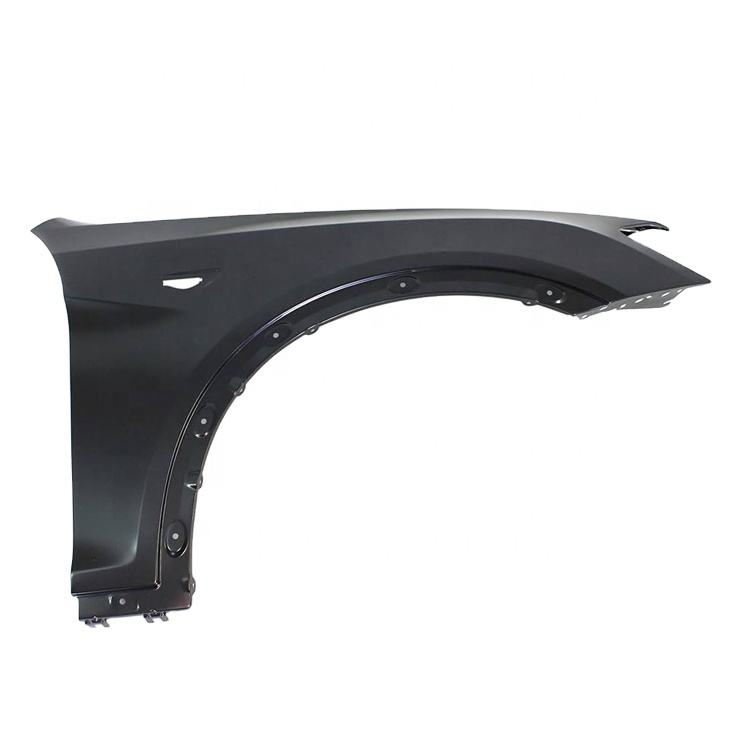
Aluminum front fenders, conversely, are engineered for modern weight-reduction strategies. Aluminum alloys exhibit a high strength-to-weight ratio, contributing to improved fuel economy and reduced emissions. This makes them highly sought after by premium automotive repair chains and distributors serving newer vehicle models. However, aluminum requires advanced welding techniques and dedicated tools for collision repair, raising repair costs. Additionally, aluminum is naturally corrosion-resistant, whereas steel fenders require extensive anti-rust coatings, such as electrodeposition primer (EDP), to prevent environmental degradation.
For wholesale distributors, the decision involves balancing material cost against local market demographics. In North America and Europe, where American and German vehicle series are highly prevalent, maintaining a mixed inventory of both steel and aluminum front fenders ensures comprehensive coverage. Wholesalers must partner with manufacturers that perform strict quality inspections—including Visual Inspection, Dimensional Measurement using Coordinated Measuring Machines (CMM), and Paint & Coating Testing—to guarantee that the replacement fenders fit perfectly onto the vehicle chassis with zero alignment issues.
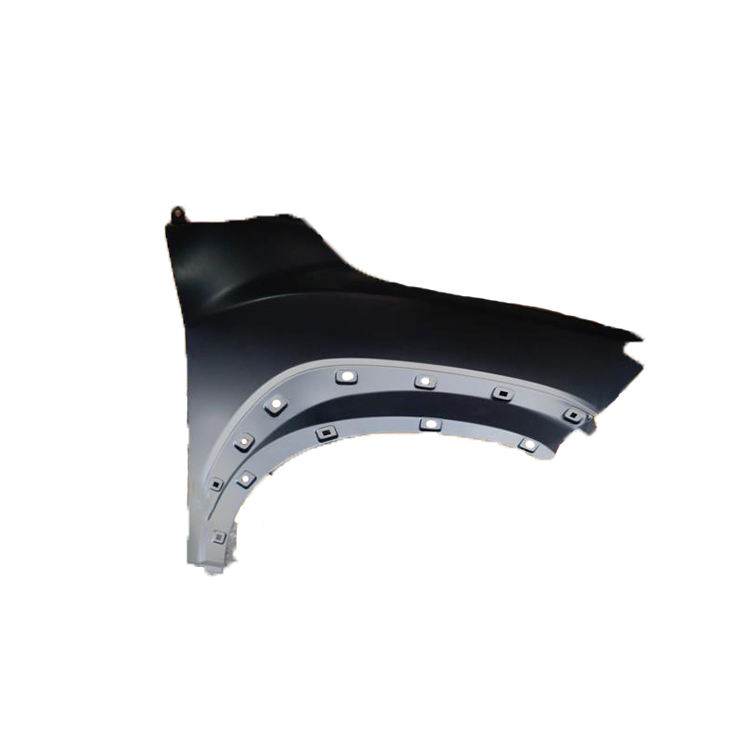
Data/Solution Comparison
| Evaluation Parameter | Steel Car Front Fenders | Aluminum Car Front Fenders |
|---|---|---|
| Material Weight & Fuel Efficiency | Heavier weight; standard fuel efficiency. | Lightweight (approx. 40-50% lighter); enhances fuel efficiency and EV range. |
| Collision Repairability & Cost | Excellent malleability; easily repaired using standard body shop tools at a lower cost. | Difficult to repair; often requires specialized tools or complete panel replacement at a higher cost. |
| Corrosion Resistance | Requires protective coatings (electrodeposition primer) to prevent rust. | Naturally forms a protective oxide layer; highly resistant to environmental rust. |
| Wholesale Minimum Order Quantity (MOQ) | MOQ: 5 PCS | MOQ: 5 PCS |
| Quality Inspection & Standards | Visual Inspection, Dimensional Measurement (CMM), Paint & Coating Testing. Meets CE/EPR standards. | Visual Inspection, Dimensional Measurement (CMM), Paint & Coating Testing. Meets CE/EPR standards. |
| Global Logistics & Shipping Methods | Sea Freight (FCL/LCL), Air Freight, Railway Transport, and International Express (DHL, FedEx, UPS, TNT). Ready-to-ship inventory dispatched within 7 days. | |
Frequently Asked Questions (FAQ)
What certifications should I check when importing car front fenders into Europe?
Wholesalers importing into Europe must verify that the auto parts comply with local regulations. Fenders and other body parts should hold valid registrations such as EPR (Extended Producer Responsibility) certificates (e.g., DE1123252940071) and CE markings where applicable to guarantee smooth customs clearance.
How do manufacturers prevent surface damage to fenders during long-distance transit?
High-quality manufacturers use reinforced, export-grade protective packaging to withstand international shipping stresses. Additionally, conducting a pre-delivery 100% full inspection and providing video or photo verification to clients before container loading ensures that all pieces are defect-free before dispatch.
Can I customize front fenders for specific American or German vehicle series?
Yes. Competent manufacturers with robust R&D capabilities can custom-develop car front fenders and bumper assemblies using advanced tooling and comprehensive databases. This OEM/ODM development process ensures 100% precise fitment for target vehicle lines.
Final Conclusion & Recommendations
For high-volume aftermarket distribution, stocking both steel and aluminum front fenders is highly recommended. Steel fenders serve as the high-demand, high-turnover option for everyday collision repairs, while aluminum options capture the premium, lightweight repair segment. Wholesalers should source from integrated manufacturers that offer flexible payment methods like T/T, D/P, LC, and Alipay, combined with low MOQs and rapid 7-day dispatch for stock items to maintain a lean supply chain. For detailed technical solutions or support, please reach out to us via sales01@cnkebel.com.
About Us
Danyang Wanjiang Auto Parts Co., Ltd. is a professional exporter and manufacturer of auto body parts based in Danyang, Jiangsu Province. Established in 2023, the facility spans a 10,000 square meter factory area and employs a dedicated team of 80 specialists. The enterprise delivers an annual export volume exceeding 500 containers, specializing in car bumpers, grilles, headlights, engine hoods, and car fenders with 18 years of industry experience. The company holds valid CE and EPR certifications and has successfully served hundreds of long-term B2B automotive parts clients across North America and Europe.

Lastest
-
Can you manufacture a front bumper based on our proprietary 3D CAD files?
2026-06-29 -
Can you provide the DOT and SAE certification documents for this rear bumper?
2026-06-29 -
How many production lines do you dedicate to making this bumper upper?
2026-06-29 -
Is there an online portal to track aftermarket support for the front bumper assembly?
2026-06-29 -
What is the standard production lead time for a container of engine hoods?
2026-06-29
SUBSCRIBE
INQUIRY