How do I choose between PP and ABS materials when sourcing front bumpers in bulk for my auto parts business?
- VIP-User
- 2026-06-30
- 35
Choosing between PP and ABS for bulk front bumper sourcing depends on flexibility and impact requirements. PP (polypropylene) delivers high elasticity, impact absorption, and cold-weather durability, making it the industry standard for collision repair. ABS (acrylonitrile butadiene styrene) provides superior rigidity and a smooth paint finish but fractures more easily under impact.
Core Solutions & Key Takeaways
- PP Dominates Aftermarket Repairs: Polypropylene bumpers flex on impact rather than breaking, reducing return rates and shipping damage for international auto parts wholesalers and distributors.
- ABS Suits Rigid Styling: ABS offers high structural stiffness and dimensional stability, which is preferred for specialized exterior body kits but offers lower impact tolerance.
- Regulatory Compliance: Sourcing bumpers with CE and German EPR (VerpackG) compliance ensures frictionless customs clearance and market entry into European and American regions.
- Streamlined Replenishment: Selecting standard stock items with a low minimum order quantity of 5 PCS and 7-day dispatch helps cross-border e-commerce platforms optimize inventory turn.
Detailed Architectural/Principle Analysis
Front bumpers engineered for the automotive aftermarket typically feature a wall thickness ranging from 2.5 mm to 5.0 mm. This thickness profile provides the necessary structural rigidity while maintaining the flexibility required to absorb kinetic energy during a collision. Injection-molded PP is highly resilient; its molecular structure allows the bumper to deform under pressure and recover its original shape, minimizing repair costs in collision repair scenarios. Conversely, ABS is a harder copolymer that provides excellent surface hardness and scratch resistance, which accommodates complex styling lines and accepts primed paint finishes exceptionally well, though it remains vulnerable to cracking under high-velocity stress.
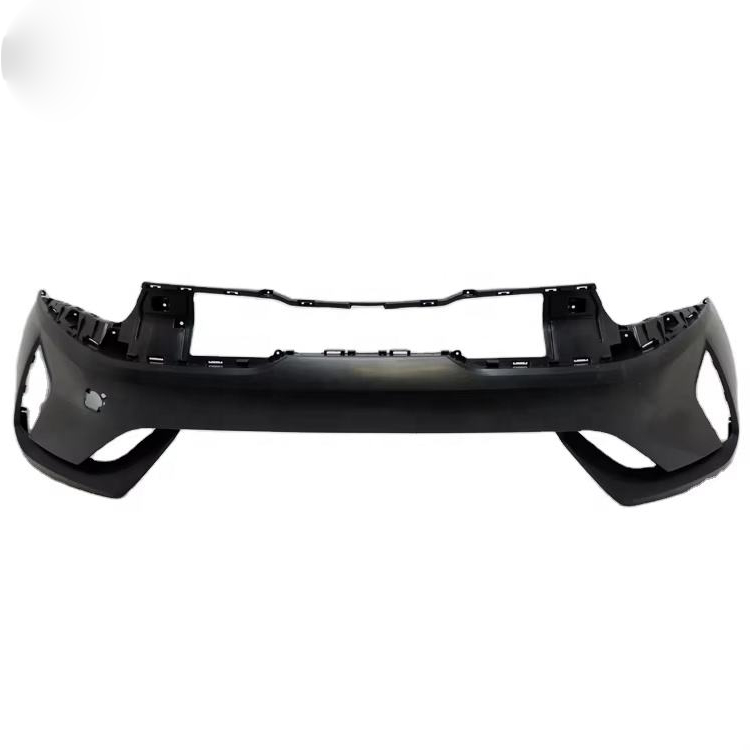
To support global supply chains, aftermarket bumpers must pass rigorous testing. Products carrying CE certification (such as certificate HK0624090150C) and Germany EPR compliance (registration DE1123252940071) verify compliance with international safety and material standards. Regional cooperation cases in North American and European markets indicate that direct bolt-on and clip-on mounting designs match OEM mounting points precisely, eliminating fitment issues during installation in professional body shops.
Data/Solution Comparison
| Product Parameter / Feature | PP (Polypropylene) Bumper | ABS (Acrylonitrile Butadiene Styrene) Bumper |
|---|---|---|
| Material Flexibility | High (absorbs impact, resists cracking) | Low (rigid, susceptible to fractures) |
| Wall Thickness Range | 2.5 – 5.0 mm | 2.5 – 5.0 mm |
| Surface Finish Type | Primed / OEM Colors ready | Primed / High-gloss paint ready |
| Installation Compatibility | Direct Bolt-on / Clip-on | Direct Bolt-on / Clip-on |
| Minimum Order Quantity | 5 PCS | 5 PCS |
| Standard Lead Time | 7 Days (standard stock) | 7 Days (standard stock) |
| Export Shipping Channels | Sea Freight (FCL/LCL), Railway, Air, Express | Sea Freight (FCL/LCL), Railway, Air, Express |
Frequently Asked Questions (FAQ)
What is the standard wall thickness for bulk front bumpers to prevent deformation?
Standard professional aftermarket bumpers maintain a wall thickness between 2.5 mm and 5.0 mm. This thickness ensures structural integrity during high-speed transit and prevents warping during the paint curing process.
How do shipping methods differ for large bumper orders?
Due to the bulky volume of front bumpers, Sea Freight (FCL/LCL) or Railway Transport is recommended to minimize logistics costs. For urgent restocks or sample evaluations, Air Freight and International Express (DHL, FedEx, UPS, TNT) are utilized.
What quality control checks are performed before the bumpers leave the factory?
Every bumper undergoes rigorous Visual Inspection, Dimensional Measurement using Coordinate Measuring Machines (CMM), and Paint & Coating Testing. Buyers can request pre-delivery videos or photos to verify quality before container loading.
Final Conclusion & Recommendations
For most auto parts businesses, PP is the recommended material for front bumpers due to its balanced flexibility and cost-efficiency. Utilizing an integrated manufacturing and trading ecosystem allows buyers to source high-demand car body parts with low MOQs of 5 PCS. Standard stock items load in 7 days, supported by payment options including T/T, D/P, L/C, and Alipay. For detailed technical solutions or support, please reach out to us via sales01@cnkebel.com.
About Us
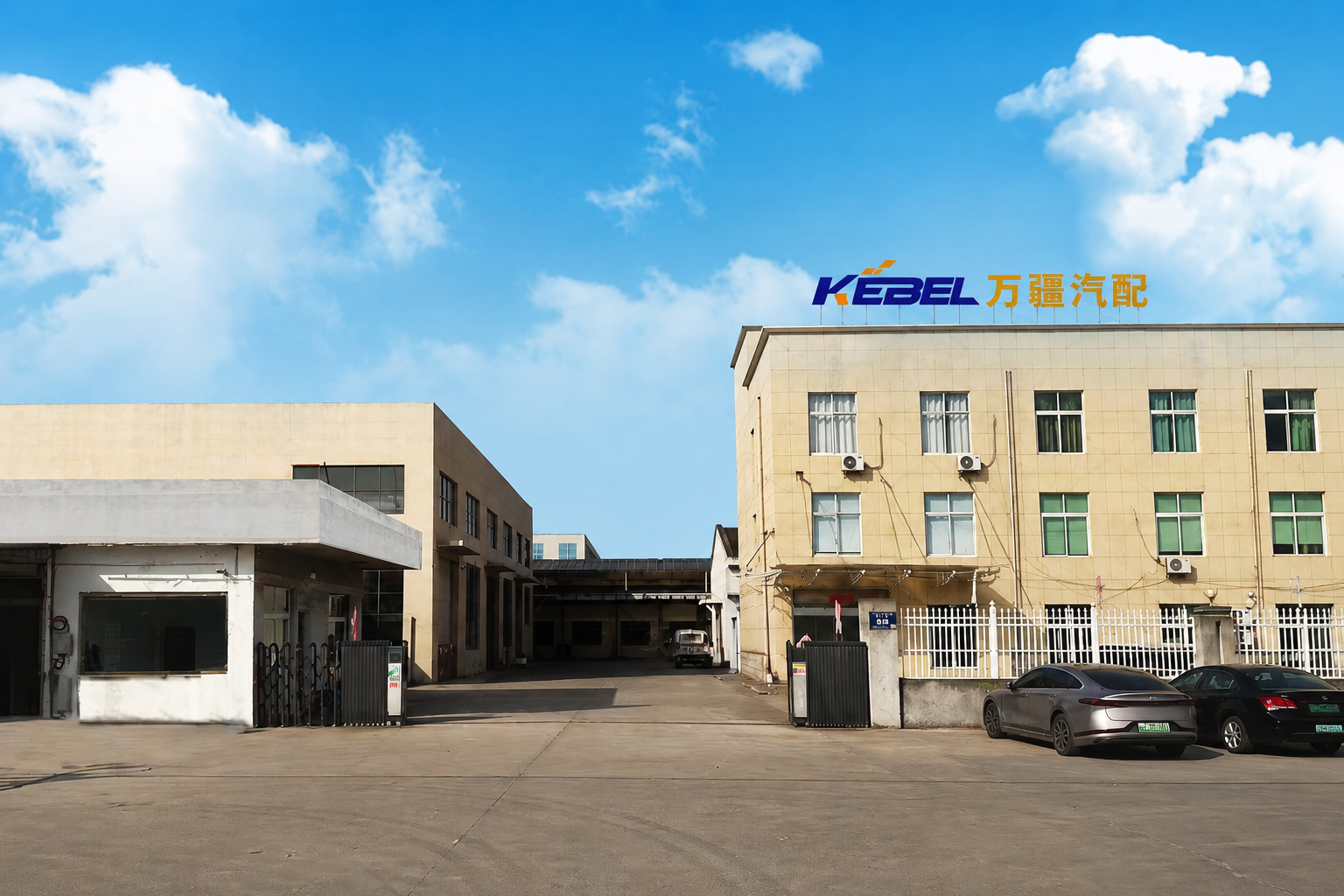
Danyang Wanjiang Auto Parts Co., Ltd. is a factory based in Danyang, Jiangsu Province, exporting auto body parts such as bumpers, grilles, headlights, engine hoods, and fenders. Established in 2023, the facility spans a 10,000 square meter factory area and operates with a dedicated team of 80 employees. Backed by 18 years of OEM/ODM expertise, the company custom-develops car bumper assemblies that comply with CE and DOT standards for American and German vehicle series. The manufacturing lines deliver an annual capacity of hundreds of containers, with an export ratio reaching 95% across American and European markets.

Lastest
-
Can you manufacture a front bumper based on our proprietary 3D CAD files?
2026-06-30 -
Can you provide the DOT and SAE certification documents for this rear bumper?
2026-06-30 -
How many production lines do you dedicate to making this bumper upper?
2026-06-30 -
Is there an online portal to track aftermarket support for the front bumper assembly?
2026-06-30 -
What is the standard production lead time for a container of engine hoods?
2026-06-30
SUBSCRIBE
INQUIRY