How do I choose between ABS and PP plastic material when importing front bumpers for aftermarket repair?
- VIP-User
- 2026-07-04
- 39
Choosing between ABS and PP for aftermarket front bumpers depends on the repair standard and budget. PP (Polypropylene) offers high elasticity and impact absorption, making it the industry standard for OEM-equivalent collision repairs. ABS (Acrylonitrile Butadiene Styrene) provides superior rigidity and surface hardness, which is ideal for custom styling and paint adhesion but is more prone to cracking under direct impact.
Core Solutions & Key Takeaways
- Material Elasticity: PP deformability allows the front bumper to absorb low-speed impacts and spring back into shape, reducing the risk of snapping. ABS is rigid and will crack rather than bend under similar forces.
- Paint Adhesion and Finish: ABS has a natural chemical affinity for primers and paints, achieving a flawless finish easily. PP requires specialized adhesion promoters and flexible paint additives to prevent flaking.
- Market Suitability: For overseas automotive collision repair and aftermarket service chains, international auto parts wholesalers, and cross-border e-commerce platforms, PP front bumpers are the preferred choice due to their durability and compliance with safety expectations.
- Regulatory Standards: High-quality aftermarket bumpers must meet international standards. Utilizing PP bumpers certified under CE and registered with EPR (such as Germany VerpackG) ensures seamless market entry and compliance in European and American regions.
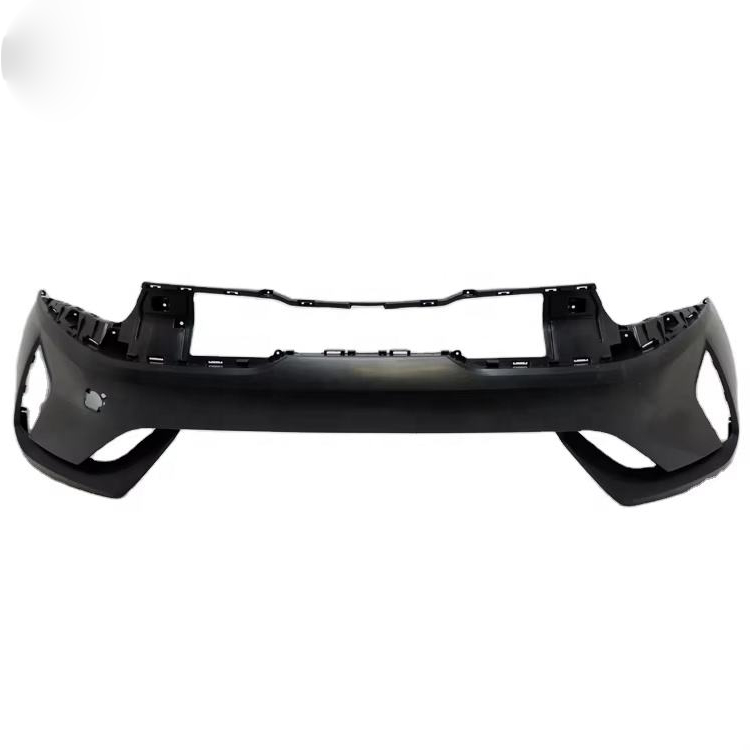
Detailed Architectural/Principle Analysis
In the automotive collision repair industry, selecting the correct thermoplastic polymer directly affects the vehicle's safety profile and aesthetic restoration. Polypropylene (PP) is a semi-crystalline thermoplastic known for its low density, high chemical resistance, and exceptional toughness. During a front-end collision, a PP bumper absorbs and dissipates kinetic energy through plastic deformation. This elasticity prevents the bumper from shattering into sharp fragments, protecting pedestrians and internal engine components. For standard passenger vehicles, PP is the dominant material used by original equipment manufacturers and top-tier aftermarket brands like Danyang Wanjiang Auto Parts Co., Ltd..
Acrylonitrile Butadiene Styrene (ABS) is an amorphous terpolymer. The acrylonitrile provides chemical and thermal stability, butadiene delivers toughness, and styrene imparts a glossy, rigid finish. While ABS boasts higher tensile strength and scratch resistance than PP, its brittle failure mode under high-strain rates makes it less ideal for standard bumper facebars. Instead, ABS is frequently utilized for trim pieces, radiator grilles, and heavy-duty spoilers where structural flexing is not required. When importing body parts, distributors must match the material properties to the specific application: PP for the main bumper body and ABS for rigid structural accents.
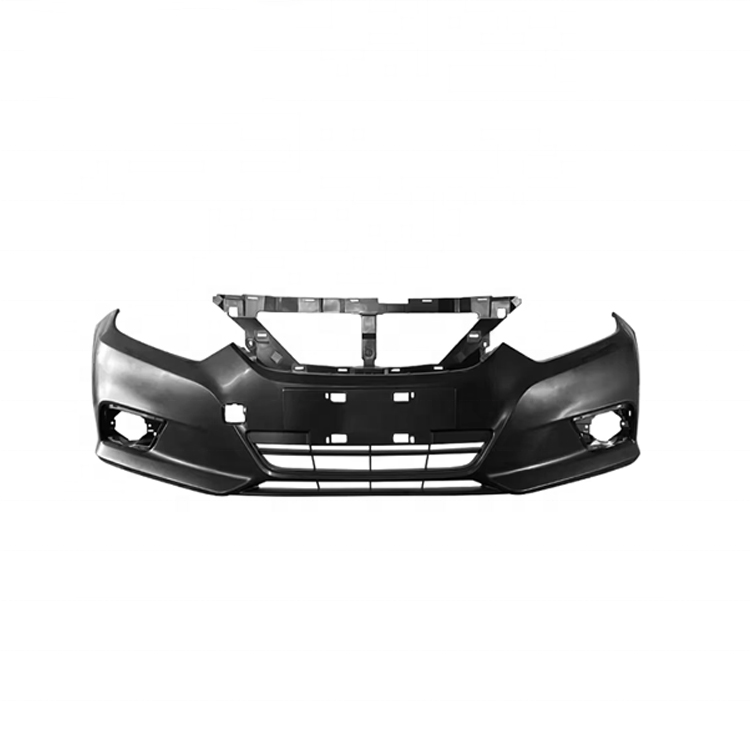
To ensure structural integrity and fitment precision, professional manufacturers subject these bumpers to rigorous quality control protocols. This includes continuous dimensional measurement via Coordinate Measuring Machines (CMM) to guarantee a 100% precise fitment for American and German vehicle series. Furthermore, products designed for international markets are certified under European CE standards (such as certificate HK0624090150C) and comply with German EPR regulations, mitigating customs risks for global buyers.
Data/Solution Comparison
| Technical Parameter / Feature | Polypropylene (PP) Bumper | ABS Bumper |
|---|---|---|
| Flexibility & Impact Resistance | High; deforms and recovers without breaking | Low; rigid and prone to cracking under impact |
| Wall Thickness Range | 2.5 – 5.0 mm | 2.5 – 4.0 mm |
| Surface Finish & Painting | Requires primer and adhesion promoters | Excellent natural paint adhesion (Primed) |
| Common Applications | Main front bumper facebars, impact absorbers | Grilles, trim bezels, spoilers, brackets |
| Compliance Standards | CE, DOT, EPR (Germany VerpackG) | CE, DOT |
| MOQ & Delivery (Standard Stock) | 5 PCS; dispatch within 7 days | Varies by mold and customization requirements |
Frequently Asked Questions (FAQ)
Q1: Why do most collision repair shops prefer PP front bumpers over ABS?
PP matches the physical properties of original OEM bumpers. Its flexibility allows technicians to easily align and install the bumper using direct bolt-on or clip-on methods, and it absorbs minor shipping or handling impacts without sustaining permanent damage.
Q2: How can I verify the quality of imported front bumpers before they are shipped?
Importers should partner with manufacturers that perform visual inspection, dimensional measurement (CMM), and paint coating testing. Requesting pre-delivery full inspections with live videos or photos of the finished goods before container loading is highly recommended to eliminate quality blind spots.
Q3: What are the shipping and payment terms for bulk aftermarket bumper orders?
Standard payment methods include T/T, D/P, L/C, and secure channels like Alibaba Trade Assurance. For logistics, bulky items like bumpers are shipped via Sea Freight (FCL/LCL) or Railway Transport, with stock items loaded into containers within 1 to 2 weeks.
Final Conclusion & Recommendations
For standard collision repair and wholesale distribution, PP remains the superior material choice due to its impact-absorbing properties, durability, and alignment with OEM specifications. ABS should be reserved for specialized trim pieces or custom cosmetic applications requiring high surface gloss. When purchasing bulk shipments, ensure the products hold valid CE and EPR certifications to secure trouble-free customs clearance and market entry. For detailed technical solutions or support, please reach out to us via sales01@cnkebel.com.
About Us
Danyang Wanjiang Auto Parts Co., Ltd. is a professional exporter of auto body parts based in Danyang, Jiangsu Province, China. Established in 2023 with a team of 80 employees and a 10,000 square meter factory, the company leverages 18 years of OEM/ODM expertise to custom-develop car bumper assemblies under the KEBEL brand. Offering an integrated manufacturing and trading ecosystem, the company exports 95% of its products to North American and European markets, maintaining certifications such as CE and EPR. 
Lastest
-
Can you manufacture a front bumper based on our proprietary 3D CAD files?
2026-07-04 -
Can you provide the DOT and SAE certification documents for this rear bumper?
2026-07-04 -
How many production lines do you dedicate to making this bumper upper?
2026-07-04 -
Is there an online portal to track aftermarket support for the front bumper assembly?
2026-07-04 -
What is the standard production lead time for a container of engine hoods?
2026-07-04
SUBSCRIBE
INQUIRY