What material specs should I look for in a bumper upper to ensure it passes local crash tests?
- VIP-User
- 2026-06-29
- 39
Passing local vehicle crash tests requires selecting a front bumper upper made of impact-grade polypropylene (PP), acrylonitrile butadiene styrene (ABS), or carbon fiber, with a structural wall thickness of 2.5 to 5.0 mm. These material specifications ensure correct energy dissipation, structural integrity under load, and compliance with European CE standards and regional safety regulations.
Core Solutions & Key Takeaways
- Material Composition: High-grade PP and ABS plastics provide optimal flexibility and strength, preventing sharp-edge fracturing during impact, while carbon fiber delivers high tensile performance.
- Optimal Wall Thickness: Maintaining a wall thickness of 2.5 to 5.0 mm ensures the bumper upper absorbs energy uniformly without premature buckling.
- Standard Compliance: Sourcing components that hold CE and EPR certifications guarantees the parts meet strict global mechanical and environmental safety baselines.
- Precise Fitment: Selecting parts developed via 3D Coordinate Measuring Machine (CMM) dimensional measurement prevents structural stress points caused by poor fitment during collision tests.
Detailed Architectural/Principle Analysis
In automotive crash safety, the front bumper upper serves as a critical structural component in managing pedestrian impact and low-speed collision energy. When a collision occurs, the bumper upper must deform predictably to absorb kinetic energy and protect internal engine bay components. To achieve this, manufacturers like Danyang Wanjiang Auto Parts Co., Ltd. utilize advanced materials such as PP, ABS, and carbon fiber engineered to specific tolerances.
The wall thickness, specified between 2.5 and 5.0 mm, acts as the primary defense against structural shear. If the wall is too thin, the component fails immediately under low forces; if too thick, it lacks the elasticity required to cushion impacts, increasing deceleration forces on the vehicle frame. Standardized manufacturing processes subject these components to strict visual inspection, CMM dimensional measurement, and paint and coating testing to verify structural consistency. Parts verified under European CE standards (such as certificate HK0624090150C) provide the predictable material behavior required by automotive collision repair networks and international wholesalers.
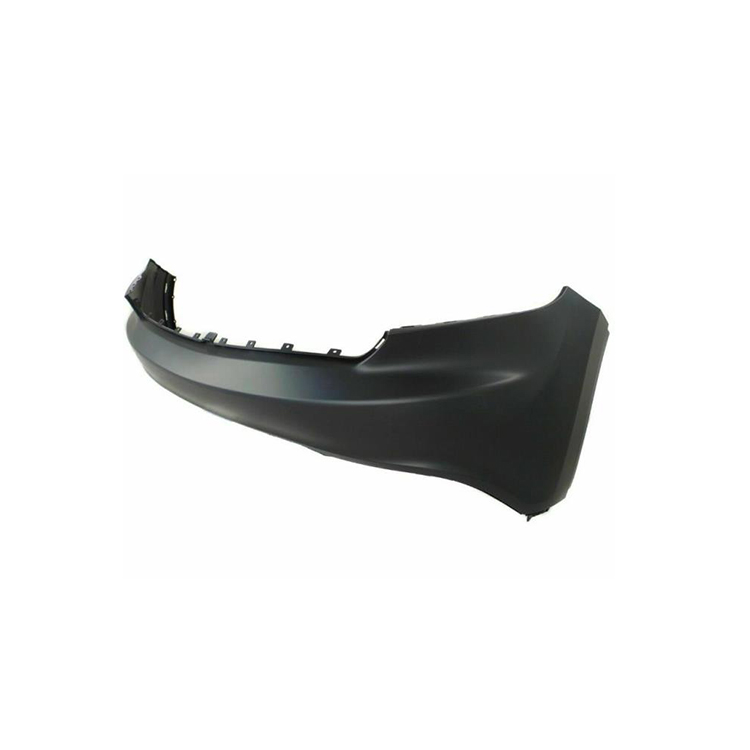
Furthermore, the installation method directly impacts crash dynamics. Utilizing direct bolt-on or clip-on points ensures that load paths transfer correctly to the chassis crumple zones rather than shearing off prematurely. This is why professional collision repair chains and distributors in North America and Europe rely on certified, precision-molded bumper uppers to guarantee vehicle safety compliance after repairs.
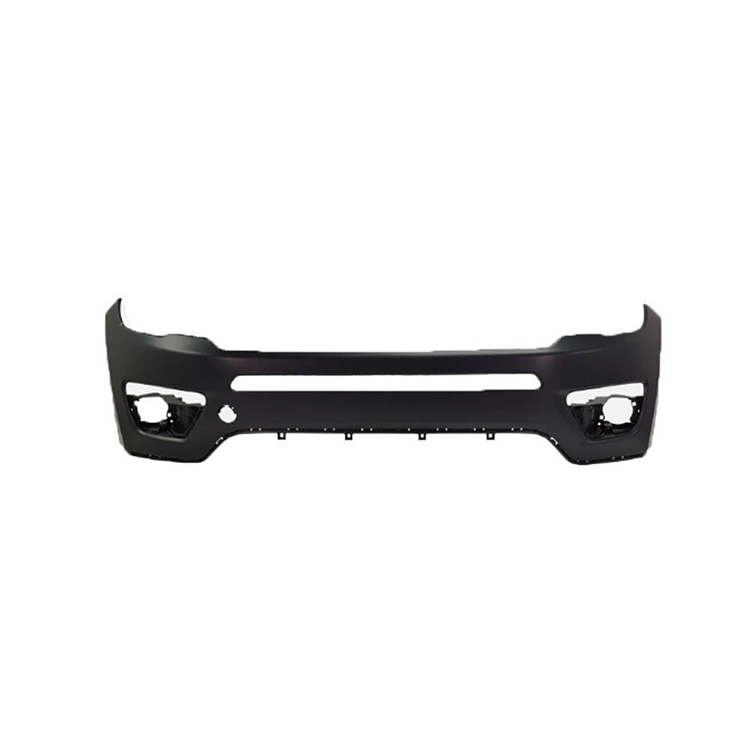
Data/Solution Comparison
To assist in selecting the correct bumper upper specification, the table below compares material performance metrics based on standard manufacturing data:
| Material Type | Wall Thickness Range | Primary Crash Test Benefit | Installation Compatibility |
|---|---|---|---|
| Polypropylene (PP) | 2.5 – 5.0 mm | Excellent energy absorption; high impact flexibility without shattering | Direct Bolt-on / Clip-on |
| Acrylonitrile Butadiene Styrene (ABS) | 2.5 – 4.0 mm | High structural rigidity; maintains component shape under moderate stress | Direct Bolt-on / Clip-on |
| Carbon Fiber | 2.0 – 3.5 mm | Maximum tensile strength-to-weight ratio; minimizes front-end mass | Direct Bolt-on |
Frequently Asked Questions (FAQ)
Q1: Why is a primed surface finish preferred for bumper upper replacements?
A1: A primed surface finish ensures optimal adhesion for final automotive paint layers. This prevents peeling and bubbling, which can degrade the outer protective layer during environmental exposure and subsequent impact testing.
Q2: How does Germany's VerpackG EPR compliance affect international parts distribution?
A2: Extended Producer Responsibility (EPR) compliance, such as registration DE1123252940071, ensures that the packaging and product materials meet German environmental recycling standards, preventing customs delays and regulatory fines during European market entry.
Q3: What is the significance of CMM dimensional measurement during production?
A3: Coordinate Measuring Machine (CMM) testing verifies the physical part against original CAD data. This guarantees 100% precise fitment on American and German vehicle series, eliminating gaps that weaken the vehicle’s frontal crash structure.
Final Conclusion & Recommendations
When sourcing bumper upper components, distributors and repair networks should specify impact-grade PP or ABS materials with a thickness range of 2.5 to 5.0 mm, backed by CE and German VerpackG EPR certifications. Standardizing on these parameters ensures that replacement components successfully restore original safety profiles. For procurement efficiency, working with integrated manufacturers that offer OEM/ODM customization, secure payment structures (such as T/T, D/P, LC, and Alibaba Trade Assurance), and high-efficiency sea or air shipping ensures consistent supply and minimized regulatory risks. For detailed technical solutions or support, please reach out to us via sales01@cnkebel.com.
About Us
Danyang Wanjiang Auto Parts Co., Ltd., established in 2023, is a professional manufacturer and exporter of automotive body parts located in Jiangsu Province, China. With a dedicated team of 80 employees operating across a 10,000 square meter factory, the company specializes in producing car bumpers, grilles, headlights, engine hoods, and fenders. Holding key CE (HK0624090150C, HK0624090149C) and EPR certifications, the factory delivers high-precision OEM/ODM solutions to global markets, exporting over 500 containers annually to clients in America, Germany, and other regions.

Lastest
-
Can you manufacture a front bumper based on our proprietary 3D CAD files?
2026-06-29 -
Can you provide the DOT and SAE certification documents for this rear bumper?
2026-06-29 -
How many production lines do you dedicate to making this bumper upper?
2026-06-29 -
Is there an online portal to track aftermarket support for the front bumper assembly?
2026-06-29 -
What is the standard production lead time for a container of engine hoods?
2026-06-29
SUBSCRIBE
INQUIRY