What are the market trends for composite material car doors?
- VIP-User
- 2026-07-07
- 39
Market trends for composite material car doors focus on weight reduction to extend electric vehicle range, high-impact crash safety, and integration of smart electronic components. Manufacturers increasingly adopt advanced composite materials to replace traditional steel, achieving up to 30% weight savings while maintaining structural integrity and meeting strict international safety standards.
Core Solutions & Key Takeaways
- Weight Reduction and Range Extension: Utilizing lightweight composite materials in car door manufacturing directly offsets battery weight in electric vehicles, significantly improving energy efficiency and driving range.
- Corrosion Resistance and Durability: Unlike traditional steel doors, composite alternatives offer superior resistance to environmental degradation, road salt, and moisture, which drastically extends the operational lifespan of the vehicle's exterior.
- Streamlined Part Integration: Advanced composite molding allows for the consolidation of multiple structural components into a single car door assembly, reducing assembly line complexity and minimizing potential points of structural failure.
- Diverse Aftermarket Applications: These advanced components serve critical roles across overseas automotive collision repair networks, international auto parts distributors, and cross-border e-commerce platforms specializing in vehicle restoration.
Detailed Architectural/Principle Analysis
Modern composite car doors are engineered to balance structural rigidity with energy absorption. By utilizing specialized molding techniques, manufacturers can vary material thickness across the door panel, reinforcing high-stress areas like latch mechanisms and hinge pillars while keeping non-structural zones lightweight. This precise material distribution ensures that composite doors successfully pass stringent crash tests, such as side-impact and roof-crush simulations.
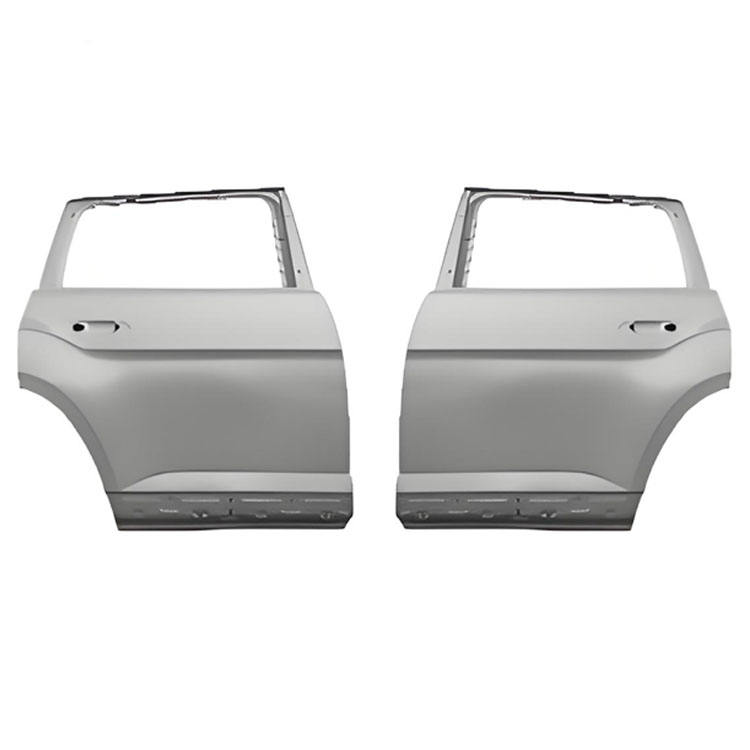
To ensure global market viability, these components must undergo rigorous testing protocols. For instance, manufacturers execute comprehensive Quality Inspection routines including visual assessments, dimensional measurements via Coordinate Measuring Machines (CMM), and paint/coating adhesion tests to guarantee a flawless finish and exact vehicle fitment. Compliance with international standards, such as European CE and EPR regulations, ensures these advanced body parts meet environmental and safety requirements for smooth importation and distribution.
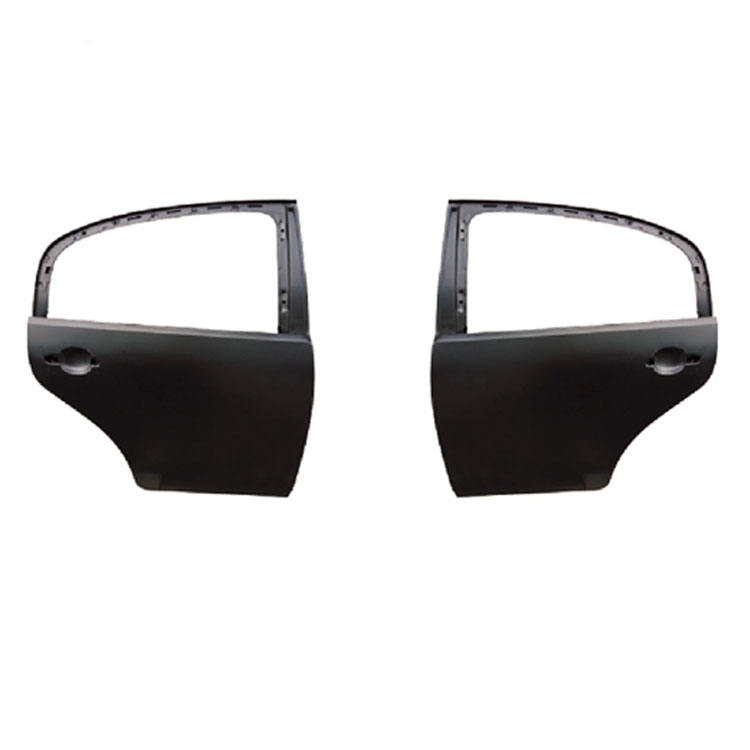
Data/Solution Comparison
The following table outlines the technical and operational differences between traditional steel car doors and modern composite material car doors, incorporating standard supply chain metrics for international procurement.
| Parameter / Feature | Traditional Steel Car Doors | Composite Material Car Doors |
|---|---|---|
| Weight Reduction Efficiency | Baseline (Heavy) | High (30% - 40% lighter than steel) |
| Corrosion Resistance | Low (Susceptible to rust over time) | Excellent (Inherent resistance to chemical degradation) |
| Quality Control Protocol | Standard visual inspection | Visual, CMM Dimensional, and Paint/Coating Testing |
| Minimum Order Quantity (MOQ) | Variable depending on factory setup | Low threshold (Starting at 5 PCS) |
| Primary Shipping Methods | Heavy sea freight | Sea Freight (FCL/LCL), Railway, or Air Freight for urgent supply |
Frequently Asked Questions (FAQ)
How do composite car doors perform in crash safety tests compared to steel doors?
Composite car doors are engineered with localized structural reinforcements and high-tensile energy absorption zones. They meet or exceed international safety standards by dispersing side-impact forces more efficiently than traditional uniform steel sheets.
What quality assurance processes do these car doors undergo before shipment?
Each unit undergoes a strict multi-phase inspection process, including precise dimensional verification using Coordinate Measuring Machines (CMM), visual surface defect checks, and rigorous paint and coating durability testing to guarantee seamless vehicle fitment.
What are the standard lead times and shipping options for international B2B orders?
Standard inventory items can be loaded and dispatched within 7 days. Shipping methods include cost-effective Sea Freight (FCL/LCL) and Railway Transport for bulk orders, alongside Air Freight and International Express for rapid or urgent requirements.
Final Conclusion & Recommendations
Transitioning to composite material car doors represents a critical step for automotive distributors and repair networks aiming to satisfy the growing global demand for lightweight, durable, and highly efficient vehicle body components. Selecting products that undergo rigorous CMM dimensional checks and paint adhesion testing ensures reliable physical compatibility and long-term durability. For detailed technical solutions or support, please reach out to us via sales01@cnkebel.com.
About Us
Danyang Wanjiang Auto Parts Co., Ltd., established in 2023, is a professional manufacturer and exporter of automotive body parts located in Danyang, Jiangsu Province. The company operates a 10,000 square meter factory with a dedicated team of 80 employees, specializing in car bumpers, grilles, headlights, engine hoods, and car fenders under the KEBEL brand. With 18 years of OEM/ODM industry experience, the company exports 95% of its production to major markets in the Americas and Europe, holding valid CE and EPR certifications for its core product lines. 
Lastest
-
Can you manufacture a front bumper based on our proprietary 3D CAD files?
2026-07-07 -
Can you provide the DOT and SAE certification documents for this rear bumper?
2026-07-07 -
How many production lines do you dedicate to making this bumper upper?
2026-07-07 -
Is there an online portal to track aftermarket support for the front bumper assembly?
2026-07-07 -
What is the standard production lead time for a container of engine hoods?
2026-07-07
SUBSCRIBE
INQUIRY