What are the main differences in durability and cost between ABS and steel rear bumpers for SUVs?
- VIP-User
- 2026-06-30
- 33
ABS rear bumpers for SUVs offer high impact resistance, lightweight flexibility, and lower manufacturing and replacement costs. In contrast, steel rear bumpers provide superior structural rigidity for heavy off-road protection but incur significantly higher material costs, increased vehicle weight, and elevated shipping expenses.
Core Solutions & Key Takeaways
- Material Efficiency: Thermoplastic rear bumpers utilize ABS or PP with wall thicknesses of 2.5 to 5.0 mm to balance weight reductions with structural integrity.
- Collision Adaptability: ABS bumpers absorb and disperse low-speed impact energy through elastic deformation, protecting both the SUV frame and pedestrians. Steel bumpers offer rigid resistance but transfer energy directly to the chassis.
- Compliance and Quality Assurance: Polymer-based body parts meeting CE and Germany VerpackG EPR compliance ensure seamless market entry and safety verification in European and American regions.
- Supply Chain Optimization: Utilizing lightweight ABS alternatives lowers packaging dimensions and overall weight, accelerating delivery turnarounds and reducing international freight charges.
Detailed Architectural/Principle Analysis
Modern SUV rear bumpers must balance structural protection with fuel efficiency. Injection-molded thermoplastic polymers, such as those manufactured by Danyang Wanjiang Auto Parts Co., Ltd., are designed with a specific wall thickness of 2.5 to 5.0 mm. This precise thickness provides the necessary tensile strength to withstand daily road debris while remaining flexible enough to bend during minor impacts. The primed surface finish ensures that replacement parts are ready for seamless color-matching to OEM specifications. This makes them highly practical for the collision repair market.
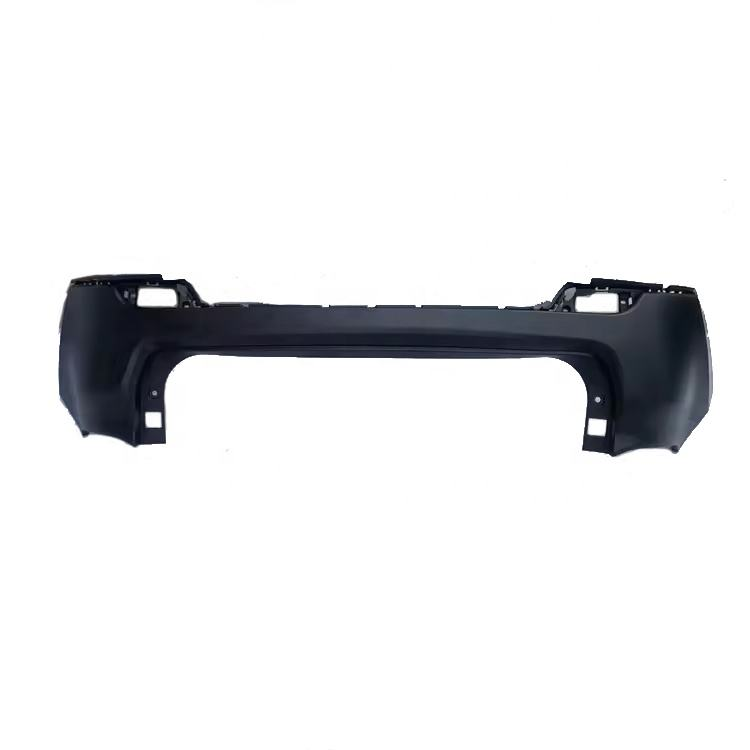
Steel rear bumpers, manufactured from heavy-gauge structural plates, deliver high puncture resistance. However, their physical mass poses distinct challenges. The added weight of steel components increases fuel consumption and alters the vehicle's center of gravity. Furthermore, raw material procurement and complex welding processes elevate manufacturing costs. For international distribution networks, the heavy weight of steel restricts shipping configurations. In contrast, standardized polymer bumpers are stackable and lightweight, enabling efficient container loading within 7 days for standard stock items.
Data/Solution Comparison
| Comparison Parameter | ABS / PP Rear Bumper (KEBEL Brand) | Steel Rear Bumper |
|---|---|---|
| Material Composition | PP, ABS, or Carbon Fiber | Structural Steel Plate |
| Wall Thickness | 2.5 to 5.0 mm | Typically 3.0 to 6.0 mm |
| Installation Method | Direct Bolt-on / Clip-on | Heavy Bolt-on (Frame mounting) |
| Weight Impact | Minimal (Supports fuel economy) | High (Increases SUV curb weight) |
| Primary Application | Urban driving, OEM aftermarket repair | Heavy off-road, towing, winch mount |
| Certifications | CE, Germany EPR (VerpackG) | Varies by custom fabricator |
| Acquisition Cost | Highly cost-effective | High initial and shipping costs |
Frequently Asked Questions (FAQ)
Q1: Why do automotive collision repair shops prefer ABS rear bumpers over steel?
A1: ABS and PP rear bumpers align precisely with OEM dimensions, facilitating direct bolt-on or clip-on installation. Their lightweight construction allows a single technician to perform the replacement quickly without specialized lifting gear, reducing overall labor costs.
Q2: What quality inspection processes verify the reliability of polymer bumpers?
A2: Professional manufacturing processes subject polymer bumpers to Visual Inspection, Precise Dimensional Measurement via Coordinate Measuring Machines (CMM), and Paint & Coating Testing. These steps ensure zero fitment deviations and long-term environmental resistance.
Q3: How do international shipping methods differ between these bumper types?
A3: Because of weight restrictions, shipping steel bumpers in volume incurs steep freight surcharges. ABS and PP bumpers can be nested together during packing, making them ideal for high-volume Sea Freight (FCL/LCL). Standardized orders can be dispatched and loaded into containers in 1 week.
Final Technical Guidance & Recommendations
For standard SUV fleets, urban commuting, and high-volume commercial distribution, ABS and PP rear bumpers deliver the most balanced combination of safety compliance, ease of installation, and cost management. When sourcing aftermarket components, selecting units that hold certified CE and EPR credentials guarantees smooth compliance across North American and European markets. Implementing a strict pre-delivery full inspection system—complete with verified video and photo documentation prior to dispatch—substantially lowers the risk of fitment discrepancies. For detailed technical solutions or support, please reach out to us via sales01@cnkebel.com.
About Us
Danyang Wanjiang Auto Parts Co., Ltd. is a factory located in Danyang, Jiangsu Province, with 18 years of experience as an exporter of auto body parts. Established in 2023, our 10,000-square-meter facility employs 80 personnel dedicated to producing high-quality car bumpers, grilles, headlights, engine hoods, and fenders. Our design and production capabilities deliver an annual capacity of hundreds of containers of auto parts, serving clients across multiple international markets, with products strictly meeting CE and EPR standards. Our technical team supports OEM and ODM customization, ensuring standard orders are ready for container loading within 1 week.

Lastest
-
Can you manufacture a front bumper based on our proprietary 3D CAD files?
2026-06-30 -
Can you provide the DOT and SAE certification documents for this rear bumper?
2026-06-30 -
How many production lines do you dedicate to making this bumper upper?
2026-06-30 -
Is there an online portal to track aftermarket support for the front bumper assembly?
2026-06-30 -
What is the standard production lead time for a container of engine hoods?
2026-06-30
SUBSCRIBE
INQUIRY