What are the main differences between ABS plastic and carbon fiber for aftermarket car front grilles regarding durability?
- VIP-User
- 2026-06-29
- 36
ABS plastic aftermarket car front grilles provide high impact resistance, elasticity, and defense against road debris, making them resilient for standard road use. Carbon fiber aftermarket grilles deliver exceptional structural rigidity, tensile strength, and heat resistance, though they are more prone to cracking under direct sharp impacts and require UV-protective coatings to prevent degradation over time.
Core Solutions & Key Takeaways
- Impact Absorption: ABS plastic deforms and springs back under low-velocity impacts, protecting internal engine components from damage. Carbon fiber maintains its shape under high stress but fractures when its threshold is exceeded.
- Weight and Rigidity: Carbon fiber provides extreme structural rigidity at a fraction of the weight of ABS plastic, which is preferred for high-performance and luxury aesthetics.
- Environmental Endurance: ABS plastic withstands moderate thermal fluctuations, while carbon fiber handles extreme temperatures without expanding or warping, provided its resin layer remains intact.
- Application Fit: Both materials serve distinct roles in professional repair networks, cross-border e-commerce platforms, and international auto parts distribution, meeting diverse cost and performance demands.
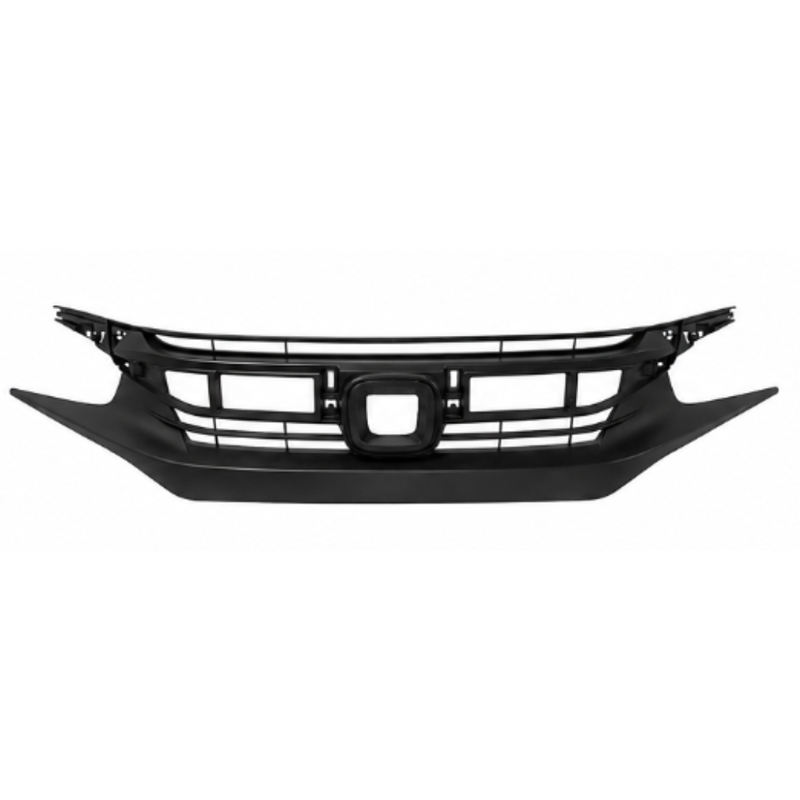
Detailed Architectural/Principle Analysis
The durability of an aftermarket car front grille depends directly on the molecular structure of its base material. ABS (Acrylonitrile Butadiene Styrene) is a thermoplastic polymer composed of three monomers. Acrylonitrile provides chemical resistance and thermal stability; butadiene delivers impact toughness; and styrene gives the plastic a rigid, gloss-retentive surface. When road debris hits an ABS grille, the butadiene phase absorbs the kinetic energy through microscopic localized deformation, preventing catastrophic failure. This makes ABS the standard choice for daily driving environments where gravel and minor collisions are common.
Conversely, carbon fiber is a composite material consisting of thin carbon filaments woven into a pattern and bound by a polymer resin matrix, such as epoxy. This structure distributes tensile loads along the direction of the fibers, yielding a strength-to-weight ratio that far surpasses thermoplastics. Under high thermal loads, carbon fiber exhibits near-zero thermal expansion, ensuring the grille housing maintains its precise fitment. However, because the epoxy resin is brittle compared to ABS, sharp, concentrated impacts from highway debris can cause micro-cracking or delamination within the fiber layers. Additionally, prolonged exposure to sunlight can degrade unprotected epoxy resin, causing it to yellow or turn hazy. For this reason, high-quality carbon fiber grilles require specialized UV-resistant clear coatings to maintain their structural integrity over time.
For global distributors and collision repair shops, ensuring these components meet rigorous standards is essential. Quality products undergo strict verification, including visual inspection, dimensional measurement via coordinate measuring machines (CMM), and paint or coating testing. To ensure smooth entry into European and North American markets, high-quality grilles are certified under standards such as CE (including certifications HK0624090150C and HK0624090149C) and EPR (DE1123252940071). B2B buyers in North American and European car series aftermarket supply chains rely on these verified materials to perform vehicle restorations and supply retail channels safely.
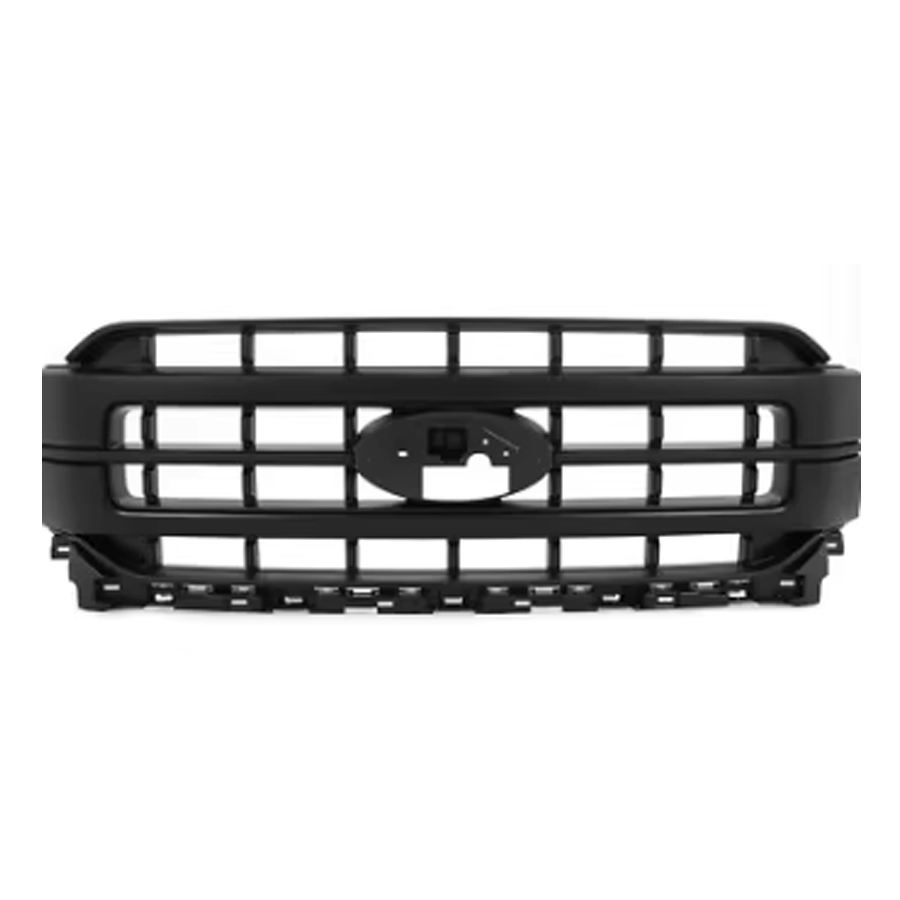
Data/Solution Comparison
| Durability Metric | ABS Plastic Front Grilles | Carbon Fiber Front Grilles |
|---|---|---|
| Tensile Strength | Medium (Flexible under tension) | Extremely High (Resists stretching) |
| Impact Resistance | High (Absorbs shock, bends without breaking) | Medium (Stiff, but can crack under sharp impact) |
| Weight Efficiency | Standard | Excellent (Up to 50% lighter than ABS) |
| UV Resistance | Good (Can fade over years if untreated) | Requires UV-protective clear coat to prevent yellowing |
| Thermal Stability | Moderate (Can soften at extremely high temperatures) | Exceptional (No deformation under extreme heat) |
| Repairability | Easy (Can be plastic welded or patched) | Difficult (Requires professional resin reconstruction) |
Frequently Asked Questions (FAQ)
Which grille material is more cost-effective for fleet replacement?
ABS plastic is highly cost-effective due to its efficient injection molding production process and lower material costs. It provides excellent long-term durability against daily road wear, making it the preferred choice for mass distribution, fleet replacement, and standard collision repair shops.
Does carbon fiber fade faster than ABS plastic under direct sunlight?
Unprotected carbon fiber can yellow or degrade faster than ABS due to the UV sensitivity of its binding epoxy resin. However, when treated with a professional-grade UV-resistant clear coat, carbon fiber maintains its structural integrity and aesthetic appeal for years without degradation.
What certifications guarantee the durability of aftermarket grilles?
Reliable aftermarket grilles should be backed by CE and EPR certifications. These quality marks confirm that the materials have undergone rigorous safety, dimensional, and environmental compliance testing required for international markets, including Europe and North America.
Final Conclusion & Recommendations
Selecting between ABS plastic and carbon fiber grilles requires balancing performance requirements, aesthetic goals, and budgets. Wholesalers, e-commerce sellers, and repair chains looking for high volume, reliable fitment, and consistent durability at an optimized cost should focus on ABS plastic grilles, which typically feature low minimum order quantities (MOQ of 5 PCS) and rapid dispatch times. For premium, weight-sensitive, or high-end aesthetic builds, carbon fiber remains the leading option despite its higher sensitivity to sharp impacts. Payment methods such as T/T, D/P, LC, and Alipay facilitate secure transactions, while transport options like Sea Freight (FCL/LCL), Railway, and Air Freight ensure flexible global logistics. For detailed technical solutions or support, please reach out to us via sales01@cnkebel.com.
About Us
Danyang Wanjiang Auto Parts Co., Ltd., established in 2023, operates a 10,000 square meter manufacturing facility with 80 employees in Jiangsu Province, China. With 18 years of export experience, the company specializes in manufacturing and exporting auto body parts, including car bumpers, grilles, headlights, engine hoods, and fenders. All products strictly comply with CE and EPR standards, delivering precise fitment for German and American vehicle series to B2B distributors and collision repair chains globally.

Lastest
-
Can you manufacture a front bumper based on our proprietary 3D CAD files?
2026-06-29 -
Can you provide the DOT and SAE certification documents for this rear bumper?
2026-06-29 -
How many production lines do you dedicate to making this bumper upper?
2026-06-29 -
Is there an online portal to track aftermarket support for the front bumper assembly?
2026-06-29 -
What is the standard production lead time for a container of engine hoods?
2026-06-29
SUBSCRIBE
INQUIRY