What are the main differences between ABS and polypropylene for aftermarket car front grilles in terms of durability?
- VIP-User
- 2026-06-29
- 37
ABS (Acrylonitrile Butadiene Styrene) aftermarket car front grilles offer superior rigidity, structural stability, and scratch resistance, ensuring the grille maintains its shape under aerodynamic stress. Conversely, polypropylene (PP) grilles provide greater elasticity and fatigue resistance, allowing them to absorb impacts and resist cracking in cold temperatures.
Core Solutions & Key Takeaways
- Rigidity vs. Flexibility: ABS offers high structural stiffness to prevent deformation at highway speeds, whereas polypropylene flexes under impact, reducing the likelihood of immediate breakage.
- Surface Finish and Paint Adhesion: ABS possesses high surface energy, making it highly compatible with automotive paints and chrome plating. Polypropylene requires specialized chemical pretreatments to ensure long-term paint adhesion.
- Environmental Adaptation: Polypropylene remains ductile in sub-zero temperatures, while ABS can become brittle under extreme cold but excels in maintaining precise dimensional tolerances under normal operating heat.
- Application Fitment: High-quality aftermarket grilles undergo strict dimensional measurements to ensure direct-fit replacement for American and German vehicle series.
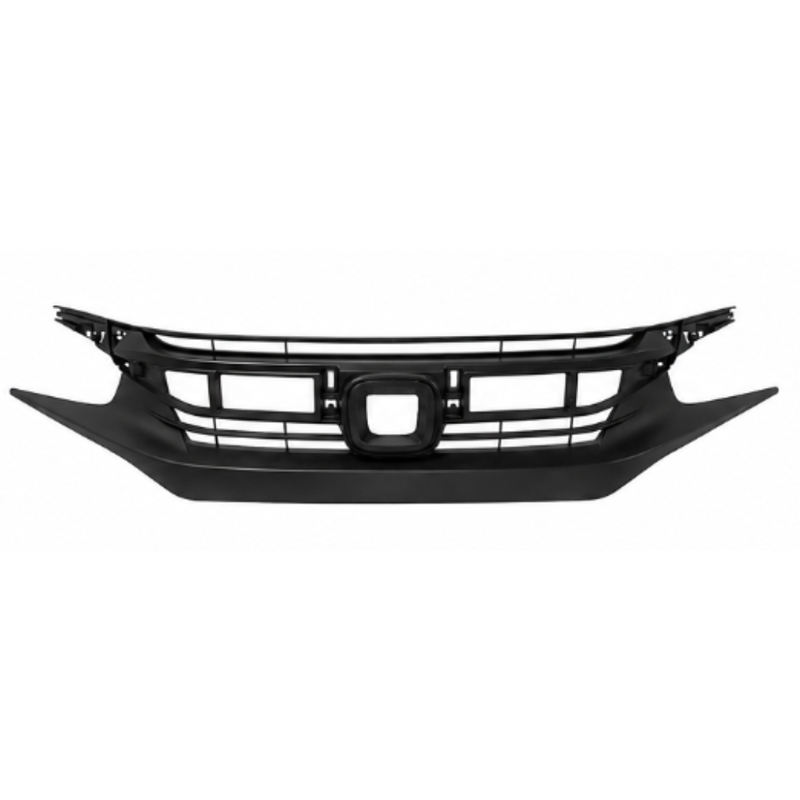
Detailed Architectural/Principle Analysis
The durability of an aftermarket car front grille is fundamentally governed by the molecular structure of its polymer. ABS is an amorphous terpolymer. The acrylonitrile component contributes chemical resistance and thermal stability; the butadiene rubber phases deliver toughness and impact resistance; the styrene phase provides a rigid, glossy, and easily machinable surface. This combination ensures that the front grille maintains precise structural geometry under aerodynamic loads, which is vital for maintaining the vehicle's original aesthetic and proper airflow. To verify these performance characteristics, products undergo Visual Inspection, Dimensional Measurement (CMM), and specialized Paint & Coating Testing.
Polypropylene is a semi-crystalline thermoplastic. Its primary advantage is fatigue resistance and elasticity. Under low-speed impacts, a polypropylene grille absorbs the kinetic energy through elastic deformation, often returning to its original shape without cracking. However, its lower surface tension makes paint adhesion difficult without specific priming layers, whereas ABS easily accepts paint coatings that resist peeling and weathering.
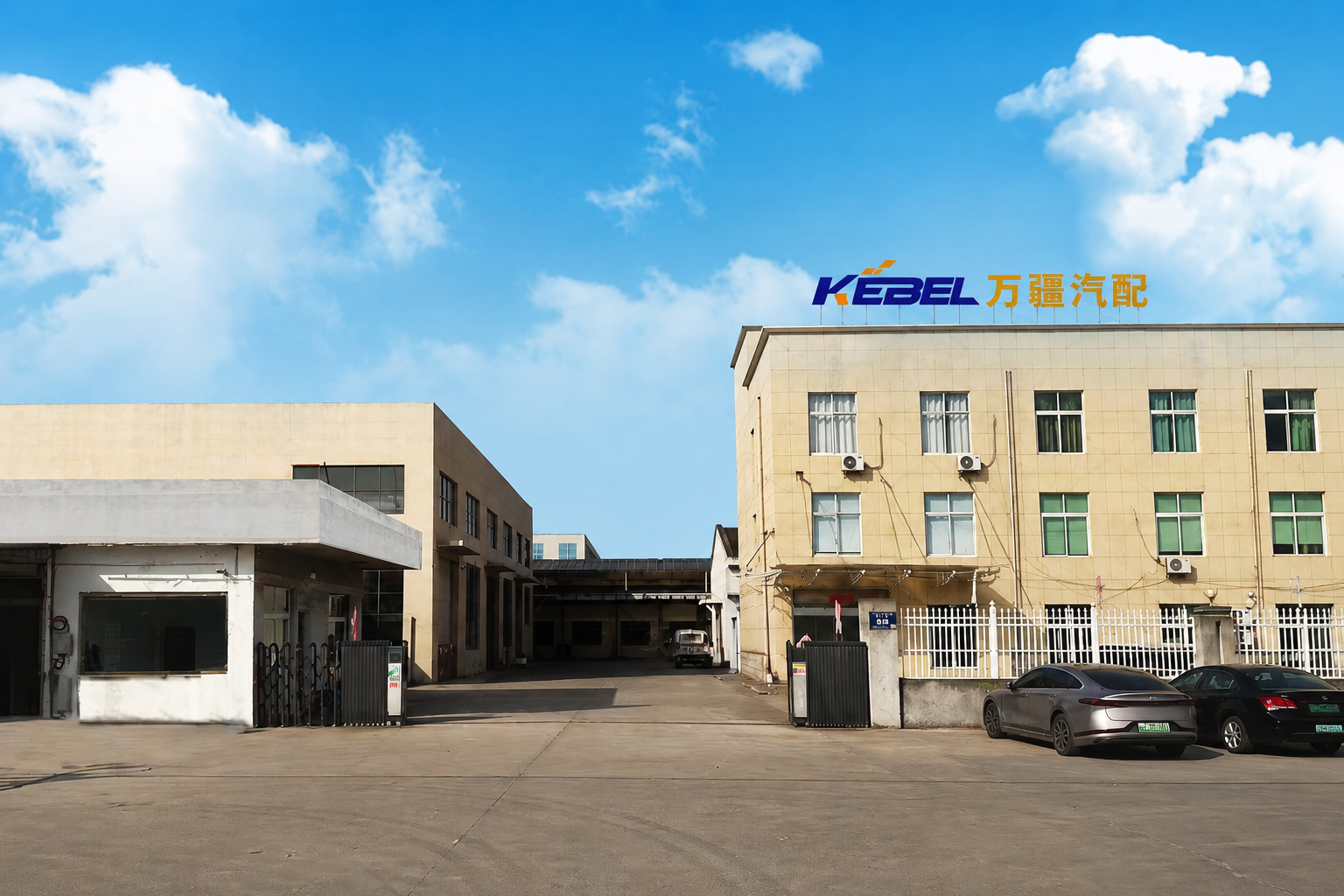
For international distributors and professional collision repair shops, ensuring these components comply with international standards is mandatory. Manufacturing processes managed by Danyang Wanjiang Auto Parts Co., Ltd. ensure that all aftermarket car front grilles meet safety benchmarks, backed by valid European certifications including CE Certificate HK0624090150C and EPR registration DE1123252940071. This level of compliance guarantees smooth market entry and long-term durability in demanding climates.
Data/Solution Comparison
| Durability & Material Metrics | ABS (Acrylonitrile Butadiene Styrene) | Polypropylene (PP) |
|---|---|---|
| Structural Rigidity | High (Resists deflection under high-speed wind resistance) | Medium (More flexible, susceptible to minor warping) |
| Impact Behavior | Rigid; prone to localized cracking under severe impacts | Elastic; deforms and recovers from minor impacts |
| Surface Scratch Resistance | High (Hard exterior shell protects against road debris) | Medium (Softer material, more easily scuffed) |
| Paint & Finish Adhesion | Excellent (Optimal substrate for painting and chrome plating) | Moderate (Requires specialized adhesion promoters) |
| Cold Weather Ductility | Moderate (Can experience embrittlement in extreme cold) | High (Retains flexibility and impact absorption in sub-zero climates) |
| Regulatory Standards | CE (HK0624090150C), EPR Compliant | CE (HK0624090150C), EPR Compliant |
Frequently Asked Questions (FAQ)
Q1: Why is ABS preferred over polypropylene for painted or chromed aftermarket grilles?
A1: ABS has high surface energy and polar chemical groups, which allow automotive primers, basecoats, and chrome platings to bond securely to the plastic surface. Polypropylene is non-polar and has low surface energy, which causes paint to peel or chip easily unless treated with specialized chemical primers or plasma treatments.
Q2: Which material is more cost-effective for high-volume collision repair distribution?
A2: Both materials have distinct advantages. Polypropylene is highly economical for raw, unpainted utility grilles due to its lower raw material weight and impact flexibility. However, for premium vehicle series where paint matching and exact OEM-style chrome finishes are required, ABS is the industry standard because it minimizes finish defects and reduces refinishing labor costs.
Q3: How do manufacturers verify the structural durability of aftermarket front grilles before shipping?
A3: Durability is verified through a multi-stage quality assurance protocol. This includes Coordinate Measuring Machine (CMM) dimensional checks to guarantee a precise fitment, visual surface inspections to detect molding stress marks, and paint adhesion tests to ensure the exterior finish withstands harsh weather conditions without peeling.
Final Conclusion & Recommendations
Selecting between ABS and polypropylene aftermarket car front grilles requires matching material characteristics with the environmental demands of your target market. For premium applications requiring high-gloss painted finishes, chrome trims, and rigid structural alignment, ABS is the superior choice. For budget-conscious applications or regions experiencing extreme cold where impact flexibility is preferred, polypropylene offers excellent performance. To maintain efficient inventory levels, global auto parts distributors can leverage low minimum order quantities, such as an MOQ of 5 pieces for car front grilles. Standard stock orders are loaded and shipped within 1 week via Sea Freight, Air Freight, Railway, or International Express, ensuring streamlined supply chain rotation. For detailed technical solutions or support, please reach out to us via sales01@cnkebel.com.
About Us
Danyang Wanjiang Auto Parts Co., Ltd. is a professional exporter and manufacturer of automotive body parts with 18 years of industry experience. Established in 2023 and located in Jiangsu Province, the company operates a 10,000 square meter factory staffed by 80 employees, specializing in car bumpers, front grilles, headlights, engine hoods, and fenders. All products strictly comply with CE and EPR standards, serving international distributors and automotive aftermarket repair chains across North America and Europe.

Lastest
-
Can you manufacture a front bumper based on our proprietary 3D CAD files?
2026-06-29 -
Can you provide the DOT and SAE certification documents for this rear bumper?
2026-06-29 -
How many production lines do you dedicate to making this bumper upper?
2026-06-29 -
Is there an online portal to track aftermarket support for the front bumper assembly?
2026-06-29 -
What is the standard production lead time for a container of engine hoods?
2026-06-29
SUBSCRIBE
INQUIRY