What are the key material differences in PP vs ABS for sourcing a durable bumper upper?
- VIP-User
- 2026-06-29
- 37
Sourcing a durable bumper upper requires understanding key material behaviors. Polypropylene (PP) offers high elasticity, superior impact absorption, and excellent fatigue resistance, making it ideal for flexible, crack-resistant bumper uppers. Conversely, Acrylonitrile Butadiene Styrene (ABS) provides higher structural rigidity, hardness, and ease of painting, but is more prone to cracking under high impact. For most automotive aftermarket collision repair applications, PP is preferred for flexibility, while ABS is selected for rigid structural trim.
Core Solutions & Key Takeaways
- Impact Performance Dictates Durability: PP absorbs energy during minor collisions and returns to its original shape, whereas ABS tends to crack or fracture under sudden physical forces.
- Dimensional Stability and Fitment: ABS maintains tighter dimensional tolerances, ensuring exact clip-on alignment, while PP components with a wall thickness of 2.5 to 5.0 mm balance structural support with elastic recovery.
- Application Scenarios: Wholesalers supplying overseas automotive collision repair and aftermarket service chains must choose materials based on the specific vehicle zone, prioritizing PP for high-impact front bumpers and ABS for rigid upper grilles.
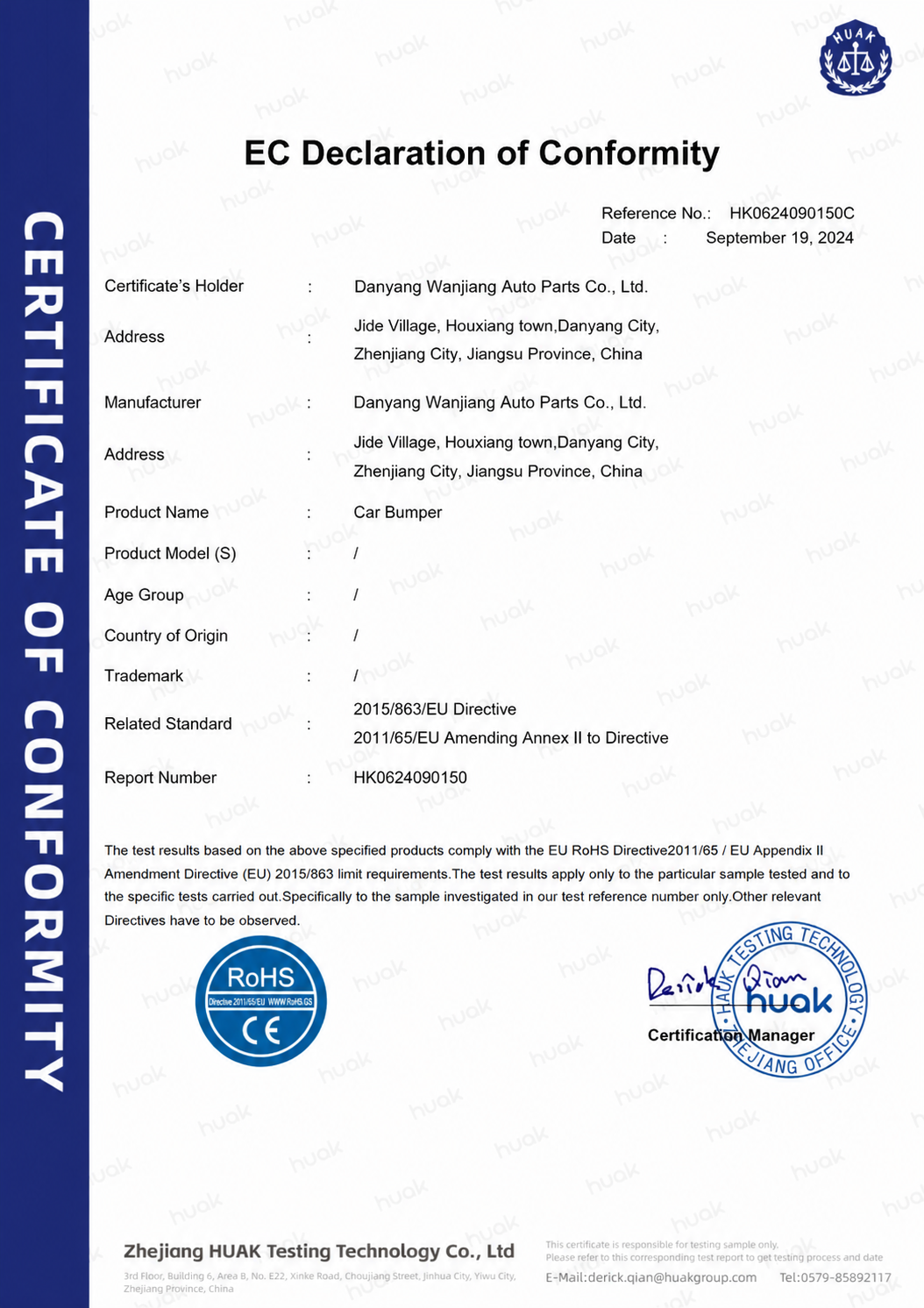
- Regulatory Standards: High-quality bumper uppers must comply with international standards such as CE certifications and German EPR (VerpackG) regulations to guarantee smooth entry into North American and European markets.
Detailed Architectural/Principle Analysis
In the automotive collision repair industry, the performance of a car front bumper upper depends on the molecular structure of its polymer. PP (Polypropylene) is a semi-crystalline thermoplastic. When subjected to external forces, the crystalline domains slide past one another, absorbing and dissipating energy. This mechanical elasticity prevents the bumper upper from cracking during low-speed impacts, making it highly durable for everyday road debris protection.
ABS (Acrylonitrile Butadiene Styrene) is an amorphous terpolymer. The acrylonitrile provides chemical and thermal stability, butadiene offers toughness, and styrene imparts a rigid, glossy finish. Although ABS lacks the elastic recovery of PP, its high tensile strength and stiffness make it highly suitable for structural brackets and components that must not sag under high temperatures. ABS is also easier to paint, matching original equipment manufacturer (OEM) colors with high precision.
For distributors and collision repair shops, utilizing parts developed with 100% precise fitment is vital to minimize labor costs during installation. Manufacturers like Danyang Wanjiang Auto Parts Co., Ltd. use advanced tooling to produce both PP and ABS car front bumper upper components with strict quality controls. These components are designed with direct bolt-on or clip-on installation methods, ensuring seamless compatibility with American and German vehicle series.
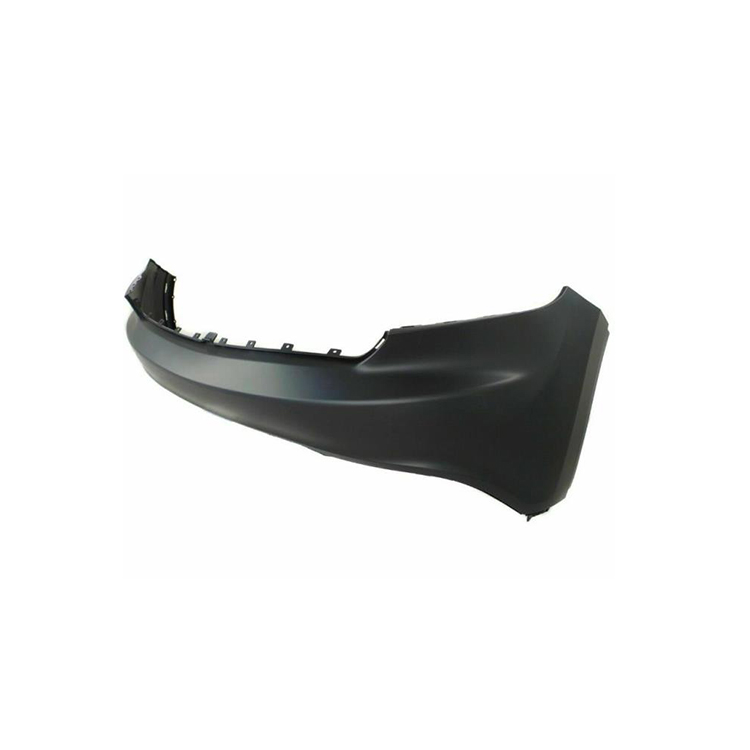
Sourcing reliable components also requires verifying compliance certifications. Standard components should be tested for visual quality, dimensional accuracy via Coordinate Measuring Machines (CMM), and paint adhesion. Ensuring that parts carry appropriate CE markings guarantees they meet necessary safety and environmental protection guidelines required by international buyers.
Data/Solution Comparison
To assist procurement teams in choosing the correct material for their inventory, the table below highlights the physical properties and logistics baselines for PP and ABS bumper uppers.
| Material Property / Metric | Polypropylene (PP) Bumper Upper | Acrylonitrile Butadiene Styrene (ABS) Bumper Upper |
|---|---|---|
| Impact Resistance | High (Deforms elastically and springs back) | Medium (Rigid but prone to cracking under high impact) |
| Structural Stiffness | Medium | High |
| Standard Wall Thickness | 2.5 – 5.0 mm | 2.5 – 5.0 mm |
| Surface Finish & Paintability | Requires primer for optimal paint adhesion | Excellent paint adhesion; easily takes high-gloss coatings |
| Minimum Order Quantity (MOQ) | 5 PCS | 5 PCS |
| Logistics Options | Sea Freight (FCL/LCL), Air Freight, Railway Transport, and International Express | |
Frequently Asked Questions (FAQ)
Q1: Why do most automotive bumper covers use PP instead of ABS?
A1: PP offers superior flexibility and elastic recovery. In minor collisions, a PP bumper upper absorbs the impact and returns to its original shape without cracking, whereas an ABS cover is more brittle and likely to fracture under the same force.
Q2: How does temperature affect PP and ABS bumper uppers?
A2: PP maintains high ductility in freezing temperatures, preventing cold-weather shattering. ABS maintains its rigid shape better in extremely high temperatures but becomes increasingly brittle in cold environments.
Q3: How do pre-delivery inspections prevent quality issues for imported bumper uppers?
A3: Conducting a 100% pre-delivery visual inspection, dimensional CMM measurement, and paint coating testing ensures the bumper uppers meet structural and cosmetic standards before container loading, reducing return risks for global buyers.
Final Conclusion & Recommendations
When sourcing a durable bumper upper, the choice between PP and ABS depends on the specific performance requirements of the component. For maximum impact survival and crack resistance in primary collision zones, PP is the industry-standard choice. For decorative trims and rigid brackets requiring high paint gloss and dimensional hold, ABS is the superior material. Buyers should partner with suppliers that offer robust quality control, flexible payment structures like T/T and Alibaba Trade Assurance, and rapid shipping within 1 week for standard stock. For detailed technical solutions or support, please reach out to us via sales01@cnkebel.com.
About Us
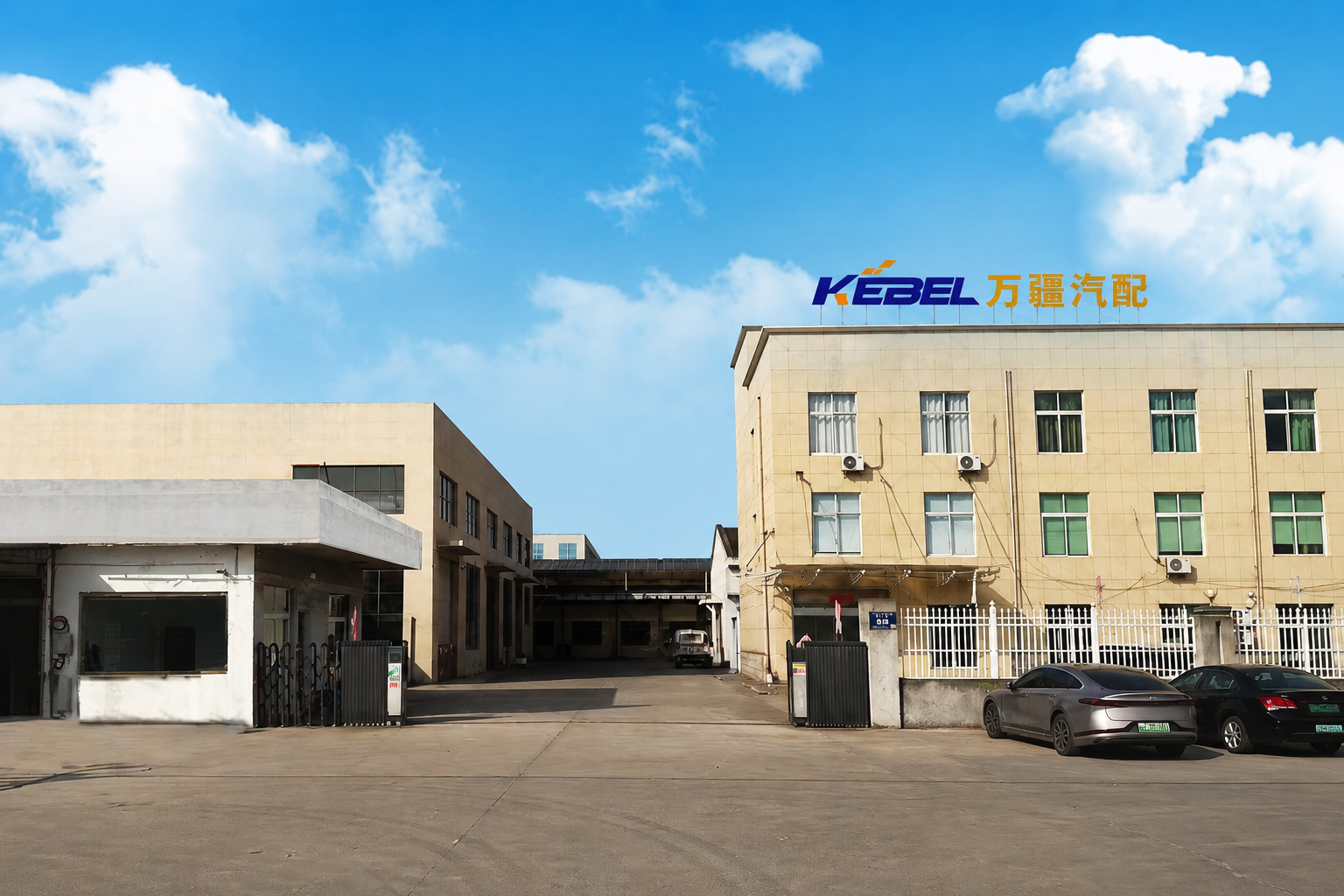
Danyang Wanjiang Auto Parts Co., Ltd. is a professional exporter of auto body parts based in Danyang, Jiangsu Province, with 18 years of experience. Established in 2023 with a dedicated team of 80 employees, the company operates a 10,000-square-meter manufacturing facility specializing in car bumpers, grilles, headlights, engine hoods, and fenders under the KEBEL brand. With an annual capacity of hundreds of containers and an annual output value exceeding 50 million USD, the company delivers high-quality components to major markets across America and Europe. All products comply with CE and EPR standards, serving long-term B2B automotive parts wholesalers and collision repair networks globally.

Lastest
-
Can you manufacture a front bumper based on our proprietary 3D CAD files?
2026-06-29 -
Can you provide the DOT and SAE certification documents for this rear bumper?
2026-06-29 -
How many production lines do you dedicate to making this bumper upper?
2026-06-29 -
Is there an online portal to track aftermarket support for the front bumper assembly?
2026-06-29 -
What is the standard production lead time for a container of engine hoods?
2026-06-29
SUBSCRIBE
INQUIRY