
How do I choose between PP and ABS materials when sourcing aftermarket front bumpers in bulk?
- VIP-User
- 2026-06-29
- 35
Choosing between PP and ABS materials for bulk aftermarket front bumpers depends on flexibility and impact requirements. PP (polypropylene) offers high flexibility and impact resistance, making it the industry standard for OEM-style bumpers. ABS (acrylonitrile butadiene styrene) provides greater rigidity and surface hardness, ideal for precise, paint-ready aftermarket designs.
Core Solutions & Key Takeaways
- Material Flexibility: PP front bumpers deform under low-speed impact and recover their shape, minimizing on-road breakage and shipping damage.
- Structural Rigidity: ABS front bumpers maintain high dimensional stability, allowing for sharp aesthetic lines and strict compliance with original vehicle gaps.
- Application Scenarios: Wholesalers supplying collision repair shops often focus on PP for standard passenger vehicles, while specialty retailers select ABS for custom, paint-sensitive exterior body kits.
- Compliance and Quality: Verify that bulk consignments carry verified CE marking and EPR Germany registration to prevent customs delays in international markets.
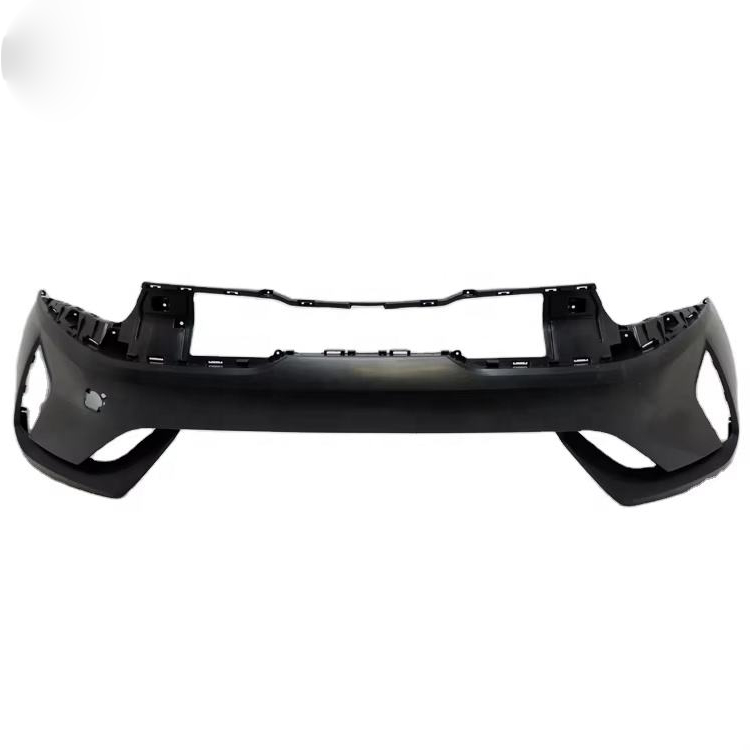
Detailed Architectural/Principle Analysis
PP (Polypropylene) functions as a highly resilient thermoplastic polymer. When manufactured with a wall thickness between 2.5 and 5.0 mm, PP absorbs mechanical impacts through elastic deformation. It resists cracking under temperature fluctuations, making it the baseline material for standard automotive collision components. This material is highly suited for high-volume distributions targeting the broader automotive replacement market.
ABS (Acrylonitrile Butadiene Styrene) is an amorphous terpolymer that provides high tensile strength and stiffness. While ABS is more susceptible to cracking under severe direct impact compared to PP, its hard surface is less prone to scratching
Lastest
-
Can you manufacture a front bumper based on our proprietary 3D CAD files?
2026-06-29 -
Can you provide the DOT and SAE certification documents for this rear bumper?
2026-06-29 -
How many production lines do you dedicate to making this bumper upper?
2026-06-29 -
Is there an online portal to track aftermarket support for the front bumper assembly?
2026-06-29 -
What is the standard production lead time for a container of engine hoods?
2026-06-29
SUBSCRIBE
INQUIRY