How do I choose between ABS and PP materials when sourcing car front grilles for cold climates?
- VIP-User
- 2026-06-30
- 40
Sourcing car front grilles for cold climates requires choosing between ABS and PP based on low-temperature impact resistance and flexural elasticity. Polypropylene (PP) maintains superior flexibility and prevents cracking in freezing conditions, while Acrylonitrile Butadiene Styrene (ABS) offers higher structural rigidity and superior paint adhesion but becomes brittle below freezing.
Core Solutions & Key Takeaways
- Low-Temperature Toughness: PP material resists impact-induced fractures under freezing temperatures, making it the preferred choice for winter-exposed regions.
- Aesthetic and Paint Adhesion: ABS provides a smoother, more rigid surface, allowing for high-quality chrome plating and gloss-black paint finishes that remain stable under mild thermal fluctuations.
- Targeted Industry Applications: Collision repair chains, international auto parts wholesalers, and cross-border e-commerce brand owners must balance climate demands with aesthetic requirements when selecting inventory.
- Quality Standard Verification: Sourcing high-quality Danyang Wanjiang Auto Parts Co., Ltd. car front grilles ensures compliance with European CE and EPR standards (EPR registration: DE1123252940071).
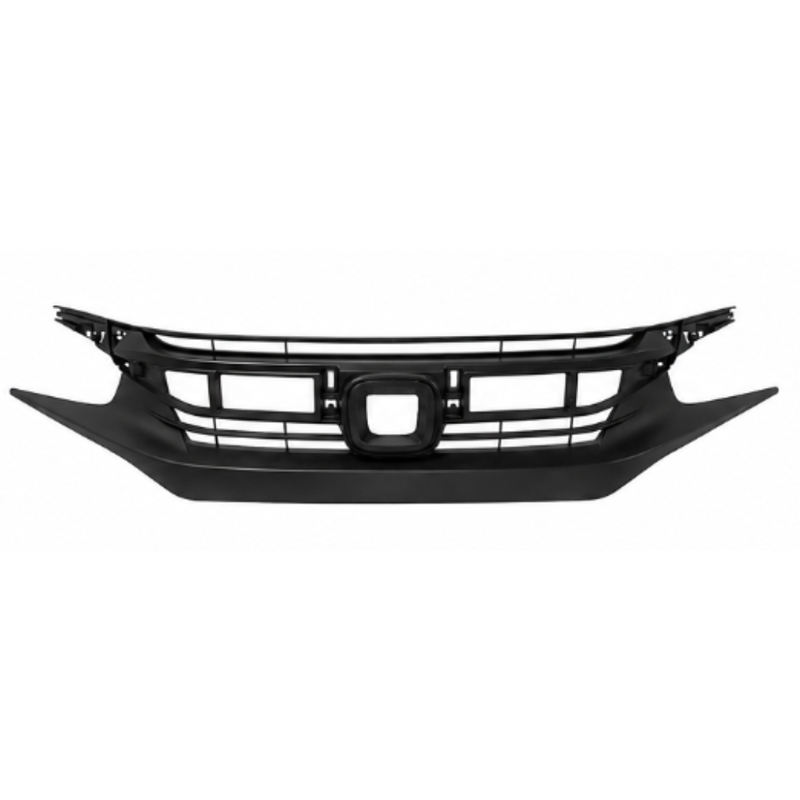
Detailed Architectural/Principle Analysis
The choice between ABS (Acrylonitrile Butadiene Styrene) and PP (Polypropylene) for a car front grille relies on polymer physics. In sub-zero environments, polymers experience a reduction in molecular chain mobility, leading to embrittlement. Standard ABS possesses an amorphous molecular structure that transitions into a glass-like state at low temperatures, making it highly susceptible to shattering upon impact from road debris or minor collisions.
Conversely, PP is a semi-crystalline thermoplastic with an inherently lower glass transition temperature. This molecular structure allows PP to absorb mechanical energy and deform elastically rather than fracturing when subjected to cold-weather stress. For distributors operating in North American and European car series aftermarket supply chains, specifying PP grilles reduces winter return rates and post-installation cracking complaints.
Manufacturing precision also influences material performance. Utilizing advanced tooling and comprehensive database matching, Danyang Wanjiang Auto Parts Co., Ltd. ensures that grilles fabricated from either material achieve a 100% precise fitment for American and German vehicle series. Every production batch undergoes extensive quality control protocols, including visual inspections, CMM dimensional measurements, and specialized paint and coating testing to verify resistance to thermal cycling.
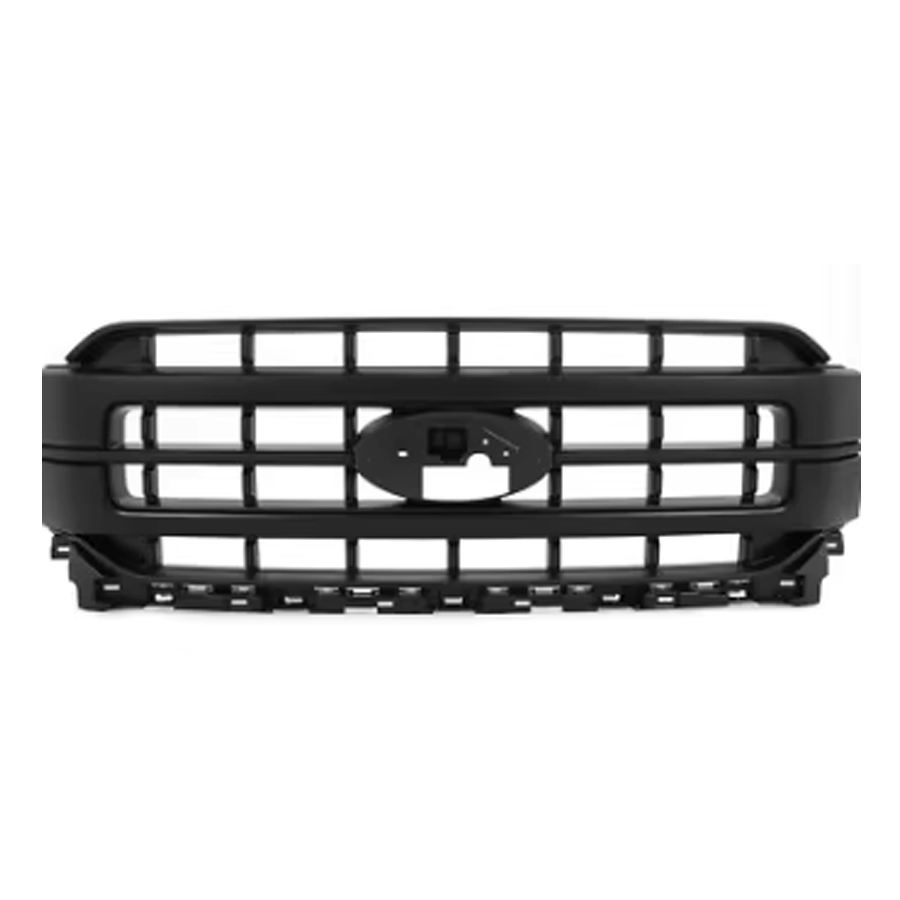
Data/Solution Comparison
The following table outlines the mechanical and environmental differences between ABS and PP materials for front grille applications in cold climates:
| Performance Metric | Polypropylene (PP) | Acrylonitrile Butadiene Styrene (ABS) |
|---|---|---|
| Low-Temperature Fracture Resistance | High (Resists cracking at sub-zero temperatures) | Low to Medium (Prone to brittle failure when cold) |
| Material Elasticity / Flexibility | High (Absorbs road vibrations and impacts) | Medium-Low (More rigid, susceptible to stress cracks) |
| Paint and Chrome Adhesion | Medium (Requires specialized surface treatment) | High (Excellent base for gloss-black and metallic finishes) |
| Dimensional Stability | Medium (Higher thermal expansion rate) | High (Maintains shape under varying temperatures) |
| Applicable Certifications | CE (HK0624090150C), EPR (DE1123252940071) | CE (HK0624090150C), EPR (DE1123252940071) |
Frequently Asked Questions (FAQ)
Q1: Can ABS front grilles be modified to perform better in cold climates?
A1: Yes, manufacturers can blend ABS with polycarbonate (PC) or add specific impact modifiers to lower its glass transition temperature, though this increases raw material costs compared to standard PP.
Q2: Why do premium vehicles still use ABS grilles in cold regions?
A2: Premium vehicles often require intricate, high-gloss, or chrome-plated designs. ABS is selected because it holds complex coatings and maintains tight dimensional tolerances better than PP, despite the lower cold-temperature impact resistance.
Q3: What inspection procedures verify that a grille will not fail in transit?
A3: Factories conduct Visual Inspections and Paint & Coating Testing alongside secure export-grade packing to prevent transit damage. For major shipments, pre-delivery verification via high-definition videos or photos is standard practice.
Final Conclusion & Recommendations
For high-volume distribution in cold-climate regions like Northern Europe and Canada, PP grilles offer the most reliable structural performance, lower defect rates, and optimal cost efficiency. When premium aesthetics, metallic finishes, or complex designs are required, ABS is the standard choice, provided it undergoes rigorous paint and coating testing to verify adhesion durability. For streamlined procurement, sourcing from a manufacturer capable of small-batch MOQ (as low as 5 pieces for car front grilles) and rapid 7-day loading for stocked items is recommended. For detailed technical solutions or support, please reach out to us via sales01@cnkebel.com.
About Us
Danyang Wanjiang Auto Parts Co., Ltd. is an established exporter of auto body parts based in Jiangsu Province, China. Founded in 2023 with a team of 80 employees and a 10,000-square-meter factory, the company leverages 18 years of OEM/ODM expertise to manufacture premium car bumpers, grilles, headlights, engine hoods, and fenders. All products strictly comply with European CE and EPR standards, serving a global market with annual exports exceeding 500 containers. 
Lastest
-
Can you manufacture a front bumper based on our proprietary 3D CAD files?
2026-06-30 -
Can you provide the DOT and SAE certification documents for this rear bumper?
2026-06-30 -
How many production lines do you dedicate to making this bumper upper?
2026-06-30 -
Is there an online portal to track aftermarket support for the front bumper assembly?
2026-06-30 -
What is the standard production lead time for a container of engine hoods?
2026-06-30
SUBSCRIBE
INQUIRY