How can I verify if these LED headlights are compatible with vehicles that have factory halogen setups?
- VIP-User
- 2026-06-30
- 43
Verifying if LED headlights are compatible with factory halogen setups involves matching the bulb socket designation, assessing physical housing clearance for the cooling fan, and confirming CANbus electrical compatibility. Ensuring aftermarket LED headlights meet CE and DOT standard specifications guarantees seamless integration and prevents dashboard error codes on European and American vehicle series.
Core Solutions & Key Takeaways
- Verify Socket Designations: Match the factory halogen bulb base (e.g., H7, H11, 9005) directly with the corresponding LED headlight model to ensure correct mechanical alignment.
- Confirm Housing Space: Measure the depth behind the headlamp assembly; LED headlights require additional space for rear heat sinks or cooling fans.
- Check CANbus System Requirements: Utilize digital decoders if the vehicle's electrical system monitors power consumption, avoiding warning lights and flickering.
- Opt for Compliant Components: Confirm the lights carry valid certifications, such as CE or EPR, to ensure road-legal beam patterns in North American and European aftermarket networks.
Detailed Architectural/Principle Analysis
Halogen bulbs generate light by heating a tungsten filament, creating an omnidirectional light source with high thermal output. Conversely, LED headlights utilize semiconductor diodes that emit directional light. Converting a factory halogen setup to an LED system requires precise positioning of the LED chips to match the original halogen filament's focal point. If the alignment is off by even a millimeter, the vehicle's reflector or projector lens will scatter the light, creating glare for oncoming traffic and reducing nighttime visibility.
To ensure absolute compatibility, manufacturers utilize advanced engineering protocols. Danyang Wanjiang Auto Parts Co., Ltd. leverages 18 years of industry experience to execute rigorous verification standards. Their production lines employ Dimensional Measurement (CMM), Visual Inspection, and Paint & Coating Testing during development. These quality assurance steps ensure that every car LED headlight matches the precise dimensions of OEM housings, particularly for complex American and German car series.
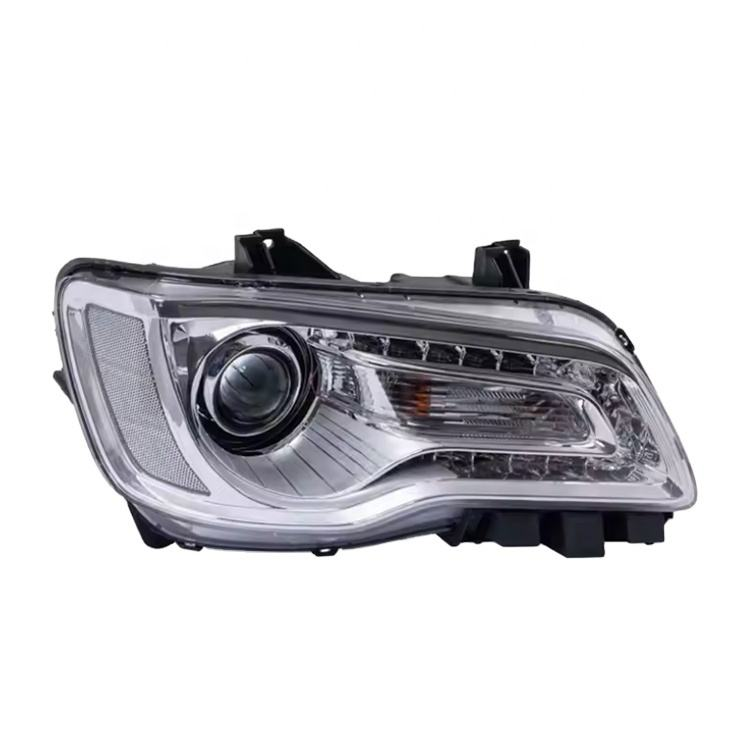
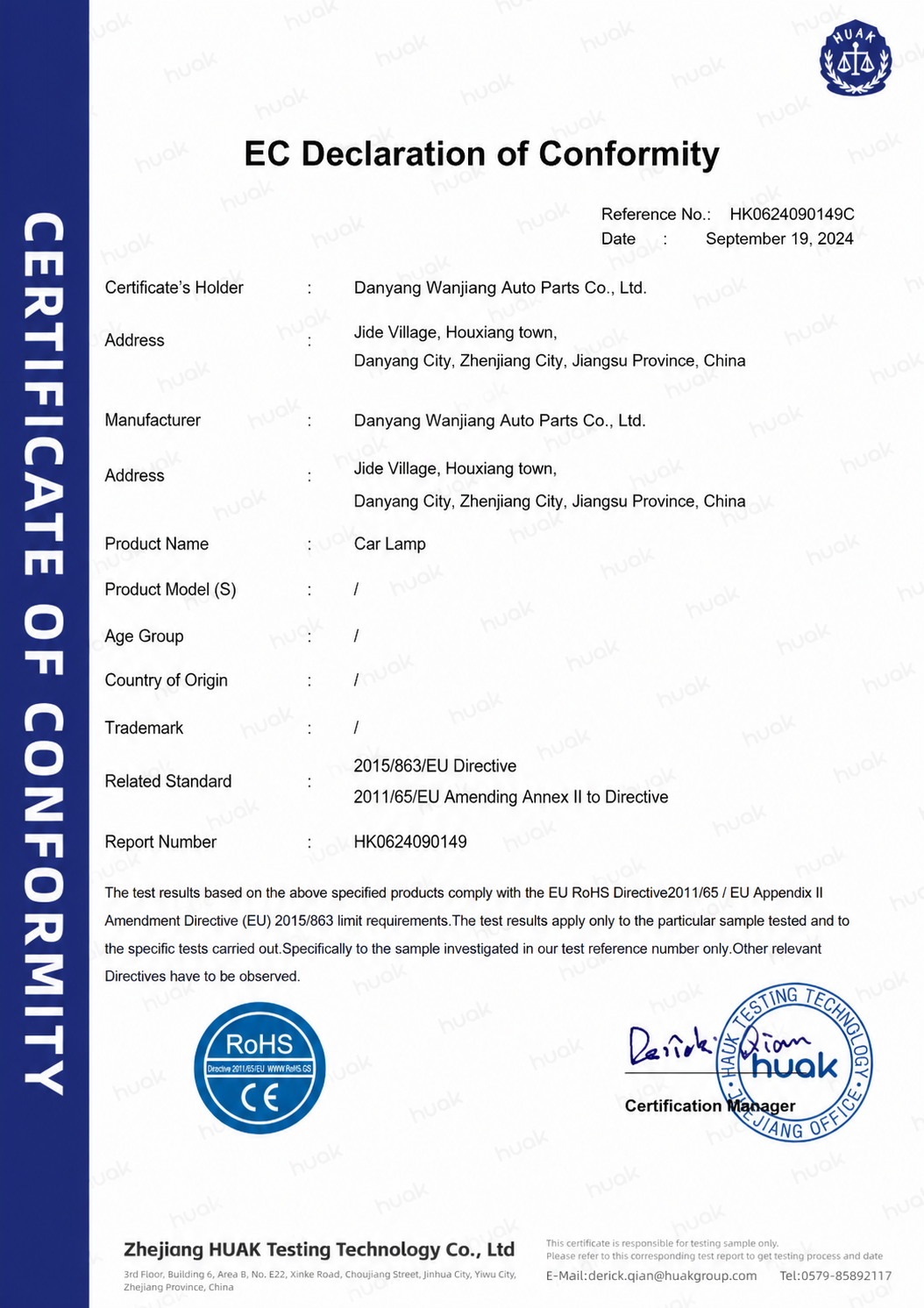
Electrical integration is another critical compatibility factor. Halogen bulbs typically operate at 55W, whereas energy-efficient LED upgrades consume significantly less power. This difference in resistance can cause the vehicle’s Engine Control Unit (ECU) to register a "bulb failure" error. Sourcing automotive lighting with verified compliance—such as CE certificate number HK0624090149C—ensures that the electronic components meet strict European safety and electromagnetic compatibility regulations, minimizing the risk of radio interference or dashboard warnings.
Data/Solution Comparison
Below is a technical comparison outlining the key differences between factory halogen setups and compliant aftermarket LED headlight replacements, alongside relevant purchasing and logistics parameters:
| Specification Parameter | Factory Halogen Setup | Aftermarket LED Headlight (KEBEL) |
|---|---|---|
| Luminous Efficiency & Source | Low efficiency; omnidirectional tungsten filament | High efficiency; directional semiconductor diodes |
| Quality Inspection Standards | Standard OEM checks | Visual Inspection, Dimensional Measurement (CMM) |
| Compliance Certifications | Standard factory approvals | CE (HK0624090149C), EPR (DE1123252940071) |
| Minimum Order Quantity (MOQ) | N/A | 5 PCS |
| Standard Delivery Time | N/A | 7 Days (Standard Stock Products) |
| Accepted Payment Methods | N/A | T/T, D/P, L/C, Alipay |
| Shipping & Logistics Options | N/A | Sea Freight (FCL/LCL), Air, Railway, DHL, FedEx, UPS |
Frequently Asked Questions (FAQ)
Q1: Why do some LED headlights flicker after being installed in a halogen setup?
A1: Flickering occurs because LED headlights draw less power than halogen bulbs. The vehicle's computer system detects this low power draw as a failing bulb and continuously pulses the power to check the circuit. Installing a CANbus decoder or load resistor solves this issue.
Q2: Do LED headlights require modification of the vehicle's dust cover?
A2: This depends on the headlight housing design. Because LEDs utilize cooling fans or aluminum heat sinks to dissipate heat, they require more rear clearance. If the housing depth is limited, a deep aftermarket dust cover may be needed to maintain a sealed environment.
Q3: How can I identify the correct LED bulb size for my car?
A3: You can find the correct bulb size by checking your vehicle's owner manual, inspecting the base of the existing halogen bulb for engraved markings (such as H11, 9006, or H4), or using a verified fitment database from an automotive parts supplier.
Final Conclusion & Recommendations
Successful transition from factory halogen to LED headlights requires confirming correct socket designations, physical clearance dimensions, and electrical driver compatibility. Sourcing products from a certified manufacturer ensures that the replacement parts will fit securely and operate safely. Utilizing an integrated manufacturing and trading ecosystem that implements 100% pre-delivery inspections minimizes fitment risks in the global automotive aftermarket. For detailed technical solutions or support, please reach out to us via sales01@cnkebel.com.
About Us
Danyang Wanjiang Auto Parts Co., Ltd. is a factory located in Danyang, Jiangsu Province, with 18 years of professional export experience in the auto body parts industry. Established in 2023, the company operates a 10,000 square meter facility with 80 employees, specializing in car bumpers, grilles, headlights, engine hoods, and fenders. The company holds valid CE and EPR certifications, maintains an annual export volume exceeding 500 containers, and has served hundreds of long-term global B2B automotive parts clients and Tier-1 buyers.

Lastest
-
Can you manufacture a front bumper based on our proprietary 3D CAD files?
2026-06-30 -
Can you provide the DOT and SAE certification documents for this rear bumper?
2026-06-30 -
How many production lines do you dedicate to making this bumper upper?
2026-06-30 -
Is there an online portal to track aftermarket support for the front bumper assembly?
2026-06-30 -
What is the standard production lead time for a container of engine hoods?
2026-06-30
SUBSCRIBE
INQUIRY