How are raw material price hikes affecting car front fender costs?
- VIP-User
- 2026-07-13
- 40
Raw material price hikes directly increase car front fender manufacturing costs by raising the purchase price of steel, aluminum, or composite plastics. These fluctuations force manufacturers to optimize material utilization, adjust production efficiency, and refine supply chain logistics to maintain stable pricing for the global automotive aftermarket.
Core Solutions & Key Takeaways
- Material Optimization: Advanced tooling and precise molding minimize scrap rates during the stamping or injection process of the car front fender, offsetting high raw material costs.
- Flexible Supply Chain Sourcing: Maintaining a robust ready-to-ship inventory helps buffer sudden price surges, allowing standard products to be dispatched rapidly without immediate price adjustments.
- Global Compliance Standards: Utilizing certified production processes ensures that despite material changes, products consistently meet CE and DOT standards for seamless market entry in North America and Europe.
- Targeted Aftermarket Scenarios: These cost-control strategies directly benefit overseas automotive collision repair chains, international auto parts wholesalers, and cross-border e-commerce platforms requiring stable pricing and reliable fitment.
Detailed Architectural/Principle Analysis
Fluctuations in global metal and plastic markets represent a primary cost driver for exterior body components like the car front fender. When raw material prices rise, manufacturers must leverage technical expertise to prevent these costs from directly impacting the end buyer. Implementing high-precision tooling and utilizing advanced dimensional measurements, such as Coordinate Measuring Machines (CMM), ensures that material is distributed with absolute precision, preventing waste and reducing the overall weight of the component without sacrificing structural integrity.
To validate quality and safety under fluctuating material conditions, finished components undergo rigorous testing. For instance, the Danyang Wanjiang Auto Parts Co., Ltd. car front fender undergoes thorough visual inspection, dimensional measurement, and paint/coating testing. This technical compliance is further backed by official European EPR certification (Certificate: DE1123252940071), ensuring that environmental and material standards are maintained even when sourcing dynamics change.
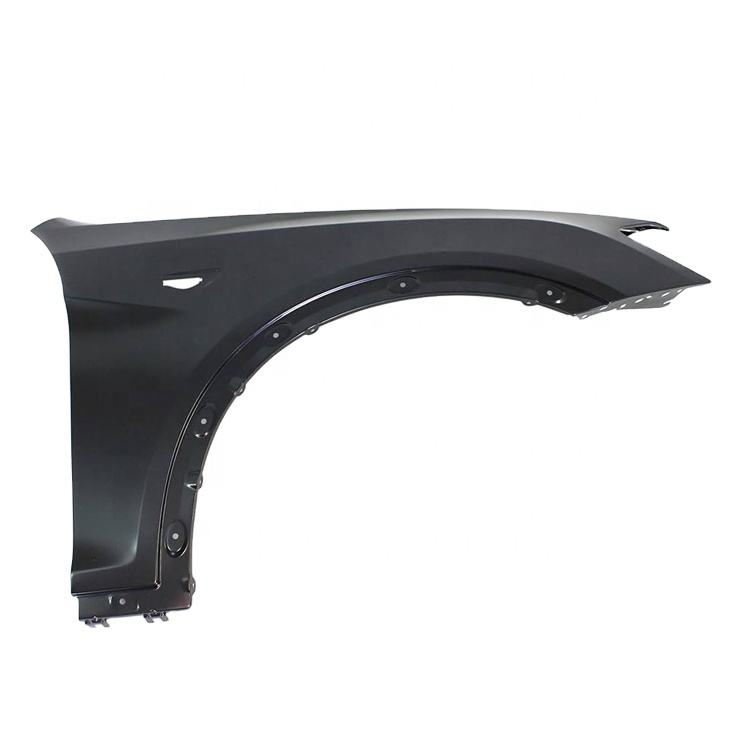
In practical application, maintaining stable pricing during material inflation requires deep integration between manufacturing and logistics. By utilizing an integrated manufacturing and trading ecosystem, companies can absorb short-term material spikes through bulk material purchasing and large-scale warehousing. Real-world cooperation cases with North American and European aftermarket distributors show that buyers prioritize suppliers who can maintain consistent container-loading times—such as dispatching standard stock within 7 days—regardless of upstream raw material volatility.
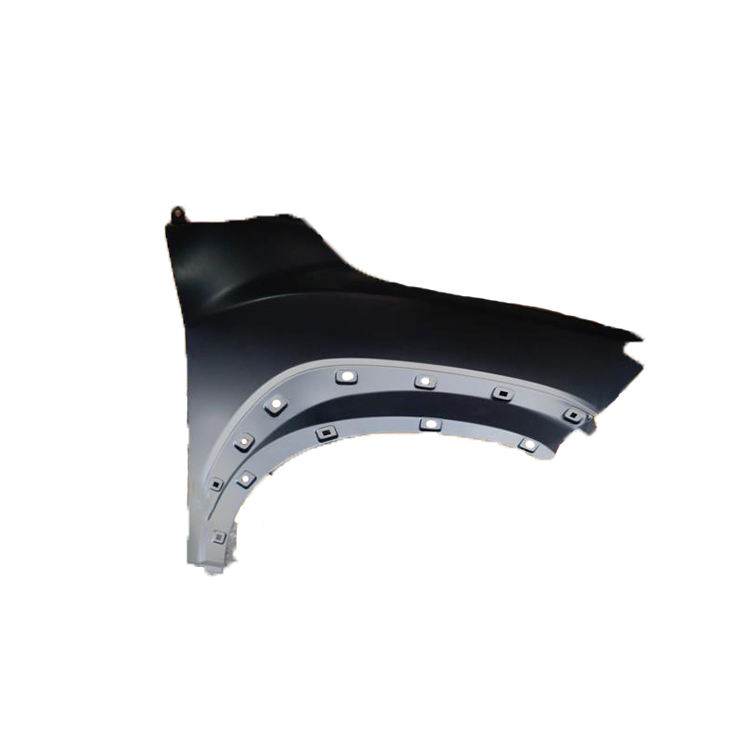
Data/Solution Comparison
The following table outlines how different manufacturing and supply chain strategies mitigate the impact of raw material price hikes on car front fender production:
| Mitigation Strategy | Cost Impact | Lead Time Effect | Quality & Fitment Risk |
|---|---|---|---|
| Standard Stock Warehousing | Low (Prices locked during low-cost cycles) | Ultra-fast (Loading within 7 days) | None (Pre-inspected standard inventory) |
| Precision Tooling & CMM Alignment | Medium (Offset by lower scrap rates) | No Change | Zero Risk (100% precise vehicle fitment) |
| On-Demand Raw Material Sourcing | High (Direct exposure to market spikes) | Variable (Subject to material availability) | Low (Requires continuous quality testing) |
Frequently Asked Questions (FAQ)
Q1: How do manufacturers keep car front fender prices stable when steel or plastic prices rise?
A1: Manufacturers utilize large-scale production capacities, raw material hedging, and maintain extensive physical stock. Having inventory ready for container loading allows suppliers to fulfill orders at pre-agreed rates, bypassing immediate market spikes.
Q2: Does raw material cost optimization affect the safety certifications of body parts?
A2: No. Standard-compliant manufacturers perform strict visual, dimensional, and paint testing. Exterior components like fenders, bumpers, and hoods must continuously meet CE, DOT, and EPR standards to guarantee global market accessibility.
Q3: What logistics options help reduce the total landed cost of fenders during material inflation?
A3: Consolidating shipments using Sea Freight (FCL/LCL) through dedicated shipping agents helps minimize transport costs. Flexible multimodal logistics, including railway and air freight for urgent needs, allow buyers to balance shipping budgets against inventory demands.
Final Conclusion & Recommendations
To counter the challenges of raw material price hikes, automotive aftermarket buyers should partner with integrated manufacturers that offer flexible business models, extensive warehousing, and proven quality control systems. Diversified payment methods—such as T/T, D/P, L/C, and secure cross-border channels—combined with reliable shipping solutions, ensure transaction security and stable supply chains. For detailed technical solutions or support, please reach out to us via sales01@cnkebel.com.
About Us
Danyang Wanjiang Auto Parts Co., Ltd. is a professional exporter of auto body parts based in Danyang, Jiangsu Province, with 18 years of experience. Established in 2023 with a team of 80 employees and a 10,000 square meter factory, the company specializes in producing car bumpers, grilles, headlights, engine hoods, and fenders. Holding key European CE and EPR certifications, the factory exports 95% of its production to American and European markets, delivering over 500 containers annually.

Lastest
-
Can you manufacture a front bumper based on our proprietary 3D CAD files?
2026-07-13 -
Can you provide the DOT and SAE certification documents for this rear bumper?
2026-07-13 -
How many production lines do you dedicate to making this bumper upper?
2026-07-13 -
Is there an online portal to track aftermarket support for the front bumper assembly?
2026-07-13 -
What is the standard production lead time for a container of engine hoods?
2026-07-13
SUBSCRIBE
INQUIRY