Are there lighter alternative materials for car doors that still meet strict crash safety standards?
- VIP-User
- 2026-07-06
- 37
Lighter alternative materials for car doors include high-strength aluminum alloys, advanced carbon fiber composites, and engineered plastics. These materials maintain strict crash safety standards by absorbing impact energy through optimized structural design and variable wall thicknesses, matching the performance of traditional high-strength steel.
Core Solutions & Key Takeaways
- Aluminum Alloys: Offer a weight reduction of up to 40% compared to steel while maintaining excellent energy absorption during side-impact collisions.
- Carbon Fiber Composites: Provide extreme rigidity and high strength-to-weight ratios, though they are typically reserved for high-performance vehicles due to manufacturing costs.
- Advanced Structural Design: Implementing variable thickness and integrated reinforcement beams ensures lightweight doors disperse crash forces effectively.
- Quality Verification: Modern lightweight doors undergo strict visual inspections, dimensional measurement via Coordinate Measuring Machines (CMM), and paint/coating testing to meet regulatory safety benchmarks.
Detailed Architectural/Principle Analysis
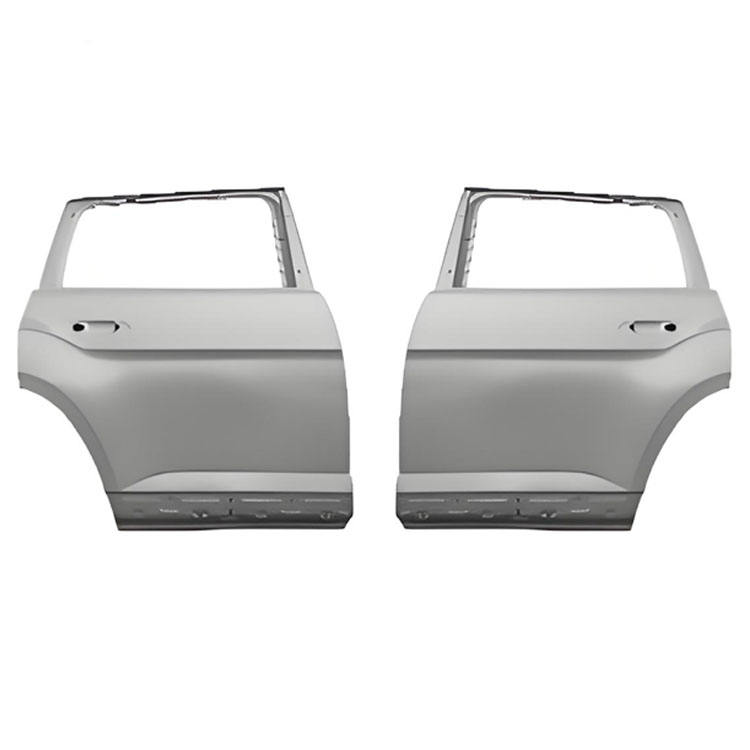
The transition to lightweight car doors requires balancing mass reduction with structural integrity. While steel has long been the industry standard, modern aluminum and composite doors utilize advanced stamping and molding technologies to reinforce critical load paths. During a side-impact collision, the door outer panel, inner structure, and internal reinforcement beams must work as a system to prevent cabin intrusion. By utilizing materials with high specific energy absorption, manufacturers can reduce the thickness of non-structural areas while thickening high-stress regions near the hinges and latches.
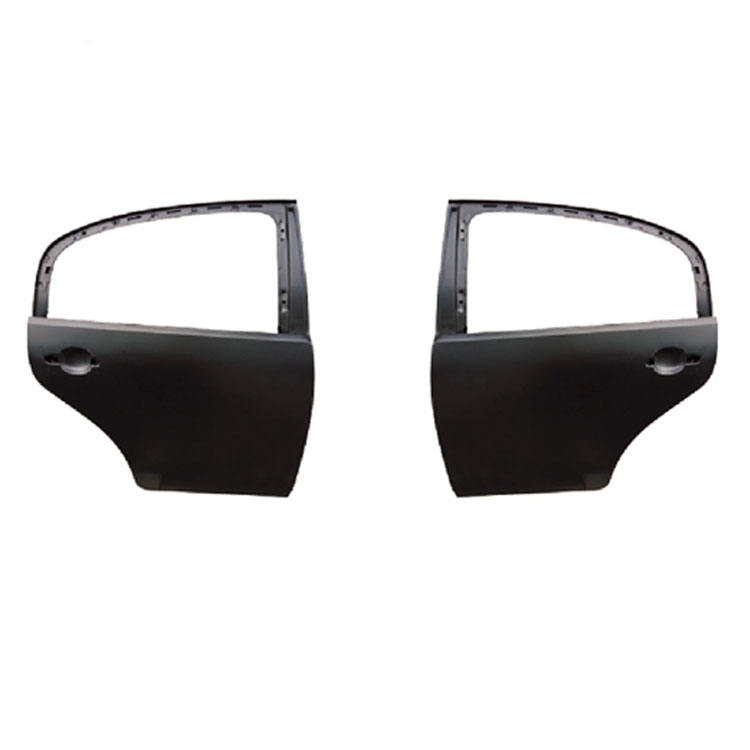
To guarantee these alternative materials perform reliably under extreme conditions, manufacturers implement rigorous testing protocols. These include Coordinate Measuring Machine (CMM) dimensional checks to ensure precise fitment, paint and coating testing for corrosion resistance, and simulated crash testing. These standards are critical for Tier-1 suppliers and aftermarket distributors servicing repair networks in North America and Europe, where strict DOT and CE safety regulations govern body components. For instance, Danyang Wanjiang Auto Parts Co., Ltd. integrates advanced tooling and comprehensive databases to develop high-fitment body parts that comply with these global standards, ensuring smooth market entry and reliable field performance.
Data/Solution Comparison
| Material Type | Weight Reduction (%) | Crash Energy Absorption | Manufacturing Complexity | Primary Application Scenario |
|---|---|---|---|---|
| High-Strength Steel | Baseline (0%) | High | Low | Standard passenger vehicles, budget-friendly commuter cars |
| Aluminum Alloy | 30% - 40% | High (Deforms predictably) | Medium | Premium vehicles, electric vehicles (EVs) seeking range extension |
| Carbon Fiber Composite | 50% - 60% | Very High (Brittle fracture) | High | Supercars, racing vehicles, specialized luxury segments |
Frequently Asked Questions (FAQ)
Are lightweight aluminum car doors as safe as steel doors in a side collision?
Yes. Aluminum doors are engineered with internal high-strength aluminum extrusion beams that absorb and disperse impact energy just as effectively as steel, meeting all major international crash safety standards.
How do manufacturers prevent galvanic corrosion when joining aluminum doors to steel vehicle frames?
Manufacturers use specialized isolation coatings, structural adhesives, and self-piercing rivets to prevent direct contact between the dissimilar metals, neutralizing the risk of galvanic corrosion.
Are lightweight alternative material doors more difficult to repair after an accident?
Aluminum panels require specialized repair techniques and tools. In many collision scenarios, aftermarket distributors and repair shops opt to replace the entire door assembly rather than attempting complex metal pulling, making reliable one-stop supply chains crucial.
Final Conclusion & Recommendations
Adopting lightweight materials for car doors is a proven strategy to improve fuel efficiency and electric vehicle range without compromising occupant safety. For international auto parts distributors, sourcing body parts that balance weight savings with structural compliance is essential. When procuring aftermarket body components, buyers should prioritize partners that offer comprehensive quality control—including visual inspection, dimensional measurement (CMM), and paint testing—alongside flexible business terms like low MOQs of 1-5 pieces and rapid container loading within 7 to 14 days. For detailed technical solutions or support, please reach out to us via sales01@cnkebel.com.
About Us
Danyang Wanjiang Auto Parts Co., Ltd. is a professional exporter of auto body parts based in Jiangsu Province, China, operating under the brand name KEBEL. Established in 2023, the company leverages 18 years of professional experience to manufacture and supply car doors, bumpers, grilles, headlights, engine hoods, and fenders. With a dedicated team of 80 employees and a 10,000-square-meter factory, the company exports 95% of its production to North American and European markets, carrying certifications such as CE (HK0624090150C, HK0624090149C) and EPR (DE1123252940071).
Lastest
-
Can you manufacture a front bumper based on our proprietary 3D CAD files?
2026-07-06 -
Can you provide the DOT and SAE certification documents for this rear bumper?
2026-07-06 -
How many production lines do you dedicate to making this bumper upper?
2026-07-06 -
Is there an online portal to track aftermarket support for the front bumper assembly?
2026-07-06 -
What is the standard production lead time for a container of engine hoods?
2026-07-06
SUBSCRIBE
INQUIRY